Albania's PM blames opposition as protests spread to four cities
Prime Minister Edi Rama on Friday blamed the opposition and unnamed foreign actors for violence in Tirana, where student protests spread to Durres, Shkoder, Korce and Elbasan on 15 October 2026.
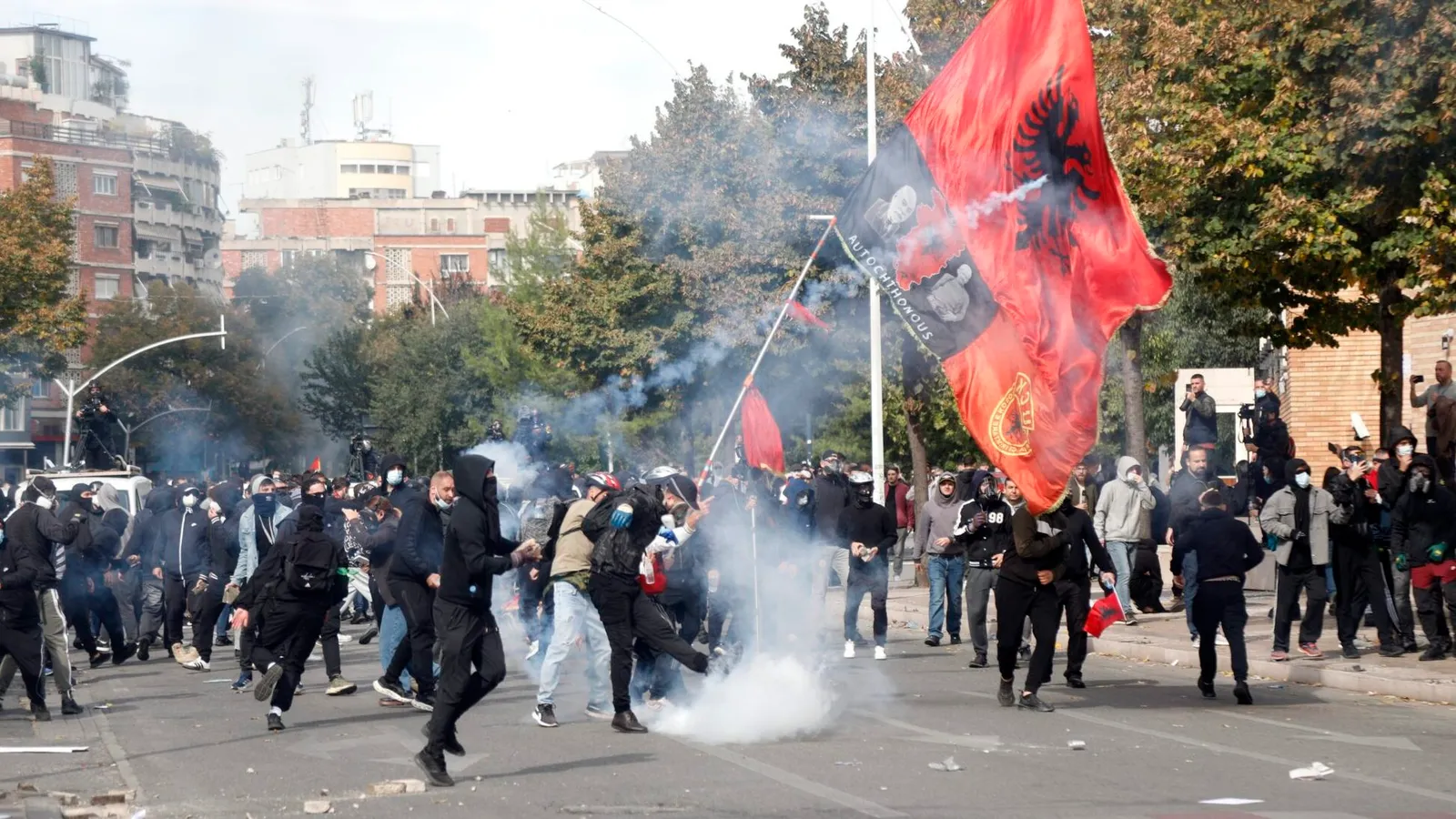 Photo: Balkan Insight
Key points
Albania's PM Edi Rama blamed the opposition and foreign actors for violence as student-led protests spread from Tirana to four other cities.
Prime Minister Edi Rama of Albania blamed the opposition and "foreign actors" on Friday for violence during student protests in Tirana. Demonstrations spread to Durres, Shkoder, Korce and Elbasan on 15 October 2026. Rama, speaking from a burned-down kiosk, vowed not to bow to demands for him to quit after a third night of clashes between student-led protesters and police in the capital.
The unrest matters because it has reached provincial cities beyond Tirana after three consecutive days, and because Rama frames it as an obstacle to Albania's progress toward the European Union. Unlike earlier environmental protests, the current movement demands the government's resignation, better university conditions and action on the high cost of living — a broader anti-government character that the Flamingo Revolution protests did not initially carry.
What the prime minister said
Rama accused his political opponents of exploiting young people's discontent for their own ends, suggesting students were not leading the violence. "This whole outbreak of flu is not a student-driven one. This entire hostage-taking of the city by masked individuals has nothing to do with the grievances," he declared. He extended his accusations to include "foreign actors" but did not identify them or present any evidence of their involvement.
Rama refused to resign, saying any change of government should come at the ballot box, noting his Socialist Party won re-election with a landslide victory last year. He also said anyone advising him to bow to violence for calm is wrong: "Because if you bow down in the face of violence for a bit of calm, it means you lose your way for a long time."
The Ministry of Health announced on Thursday that 79 people received medical treatment at Tirana's Trauma Hospital, including 61 police officers and 18 protesters, with 10 other people receiving treatment at Mother Teresa Hospital. On Wednesday, the first floor of the Education Ministry was set on fire, while the Prime Minister's office, parliament, the Constitutional Court, and the Finance, Interior, Infrastructure and Energy ministries were also attacked.
79 treated at Tirana's Trauma Hospital
Clashes continued until midnight on Wednesday as masked protesters throwing stones and petrol bombs faced police who deployed tear gas and water cannons. Police cars and a police station also came under attack. The violence led to the cancellation of a parliamentary session scheduled for Thursday, and on Thursday morning students marched toward parliament as protests continued into a third day.
Interior Minister Ervin Dema on Wednesday accused the opposition and "foreign actors" of inciting the clashes, claiming student discontent had been exploited to destabilise the country. "Today, all of Albania saw that, in the name of the students, the oldest political element in this country spoke the language of destruction, flames, and the ransacking of public and private property," Dema said.
Student demonstrations began outside the Ministry of Education on Tuesday, calling for the government's resignation, better university conditions and highlighting the high cost of living. The students were initially called to the streets by the so-called "Flamingo Revolution" protesters, whose daily protests started in June as environmental demonstrations but evolved into an anti-government movement demanding that Rama step down.
How the protests spread beyond Tirana
The protest in Tirana continued for more than 12 hours on Thursday with both university students and high school pupils involved, spreading to Durres, Shkoder, Korce and Elbasan. As in the capital, there were violent clashes, widespread use of tear gas and high-pressure water cannons, as well as arson and looting of public institutions and private businesses in those cities.
According to Albanian media, protesters staged successive marches through central Tirana on Thursday, with tensions concentrated around the Ministries of Education, Finance and Infrastructure and the area surrounding Parliament. Outside the Ministry of Finance, protesters threw stones at police, who used tear gas to push them back; near the Ministry of Economy, two masked individuals seized a metal railing and hurled it at police.
Attacks were also reported against commercial businesses and the headquarters of the ruling Socialist Party, and fires broke out at two bank branches. The most extensive damage during the previous 24 hours was recorded at the Ministry of Education, where protesters smashed windows and set part of the building on fire.
What happens next
Rama made clear in remarks on Thursday that he had no intention of resigning, arguing the violent incidents must not jeopardise Albania's path toward European integration and insisting his government would continue its work. In a recorded message filmed outside a damaged College of Europe building in Tirana, he accused the opposition of being behind the destruction while stating his government remained willing to dialogue over student demands. Albanian President urged calm on 14 October as clashes continued, and students marched toward parliament on the morning of 15 October as the protests looked set to continue.
Frequently asked questions
Why does Albania's PM blame the opposition for the protests?
Edi Rama accused the opposition of exploiting students' discontent and said the violence was not student-driven, claiming masked individuals were behind the hostage-taking of the city. He also blamed unnamed "foreign actors" without presenting evidence.
How many people were injured in the Albania protests?
The Ministry of Health announced on Thursday that 79 people received treatment at Tirana's Trauma Hospital, including 61 police officers and 18 protesters, with 10 others treated at Mother Teresa Hospital.
Will Edi Rama resign as Albania's prime minister?
No. Rama refused to resign, saying any change of government should come at the ballot box, and argued the violence must not jeopardise Albania's path toward European integration.