Apple releases HomeView security update before first deliveries
Apple released HomeView Software 27.2 on 12 November, fixing nine vulnerabilities ahead of the device's first customer deliveries on 13 November.
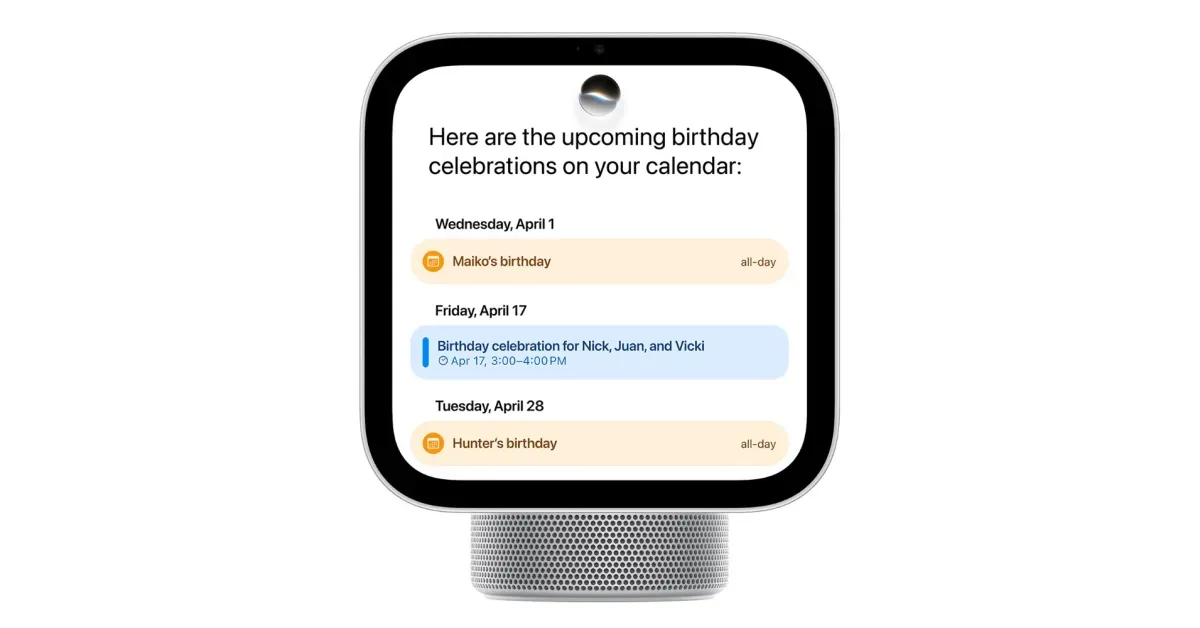 Photo: 9to5Mac
Key points
Apple released HomeView Software 27.2 on 12 November, fixing nine security vulnerabilities before the device's first customer deliveries.
Apple released HomeView Software 27.2 (build 24V526) on 12 November, fixing nine security vulnerabilities ahead of the device's first customer deliveries on 13 November. The update includes fixes Apple previously issued for iOS 27.2, macOS 27.2 Golden Gate, and iPadOS 27.2. The vulnerabilities affect AirPlay, Bluetooth, Messages, and other components. One flaw could let a remote attacker join an iMessage group chat and receive its messages. Another could allow a malicious Bluetooth device to pair without user interaction. Apple's security document lists each issue with a CVE identifier.
Nine vulnerabilities fixed
The update is the second 27.2 release for HomeView. Customers receiving the device this week must install it during setup because HomeView ships with software 26.5, which is about six months old. Apple advises updating as soon as possible since the vulnerabilities have been publicly disclosed. Apple also explained on 12 November how Secure Exclaves protect camera and microphone data on HomeView. Secure Exclaves are compartmentalized runtimes that process sensor data while isolated from the rest of the operating system. Data processed there is not available to the OS, apps, or Apple.
The HomeView uses facial and voice recognition to identify up to six people in a home. The camera exclave detects when a person is present but sends only metadata to the main OS. The person recognition exclave matches face and voice prints against an identity database, giving a confidence score without releasing raw audio or video.
Setup requires update
Secure Exclaves have two modes: ambient and active. In ambient mode, a sensor responds to triggers but shares only small amounts of metadata. In active mode, full sensor data goes to the OS and an indicator informs the user. Indicators are now backed by Secure Exclaves, ensuring data transfers only after the indicator is active.
Apple built the isolated environment because always-on camera and microphone indicators were not ideal for ambient sensing. The company says isolating memory for Secure Exclaves was a "serious engineering challenge." Full technical details are on Apple's security website. Apple confirmed on 12 November that a software update next month will add support for security accessories to HomeView's Siri AI. Currently, Siri refuses to unlock doors or open garage doors via voice commands. The update is likely to be HomeView 27.3.
Siri AI update next month
Amazon's pre-order discount for HomeView is still live, with the Space Gray model at $289.99 and delivery as early as 16 November. Apple lists delivery between 30 November and 7 December. The device is officially set for release on 13 November. Apple planned to release HomeView earlier but held back to debut Siri AI in iOS 27 first. The HomeView launches with Siri AI, but the security accessory support will arrive with the next month's update. Customers should install 27.2 immediately upon receiving the device.
Frequently asked questions
What vulnerabilities does HomeView Software 27.2 fix?
It fixes nine vulnerabilities, including a Bluetooth flaw that could allow pairing without user interaction, an iMessage issue that could let a remote attacker join group chats, and an AirPlay rate-limit bypass. Each is listed with a CVE identifier in Apple's security document.
When will HomeView receive the Siri AI security accessory update?
Apple said on 12 November that a software update coming next month will add support for security accessories to HomeView's Siri AI. Currently, Siri refuses to unlock doors or open garage doors via voice commands. The update is likely to be HomeView 27.3.
How does HomeView protect camera data?
HomeView uses Secure Exclaves, compartmentalized runtimes that process camera and microphone data while isolated from the rest of the OS. Only metadata like person identifier and confidence score is shared with the main OS; raw audio and video never leave the exclave.