Apple launches first touchscreen MacBook Pro at $2,899 starting price
Apple unveiled its first touchscreen MacBook Pro with a tandem OLED display on 30 October 2026, starting at $2,899, with TrendForce forecasting 1.2 to 1.5 million units shipped in 2027.
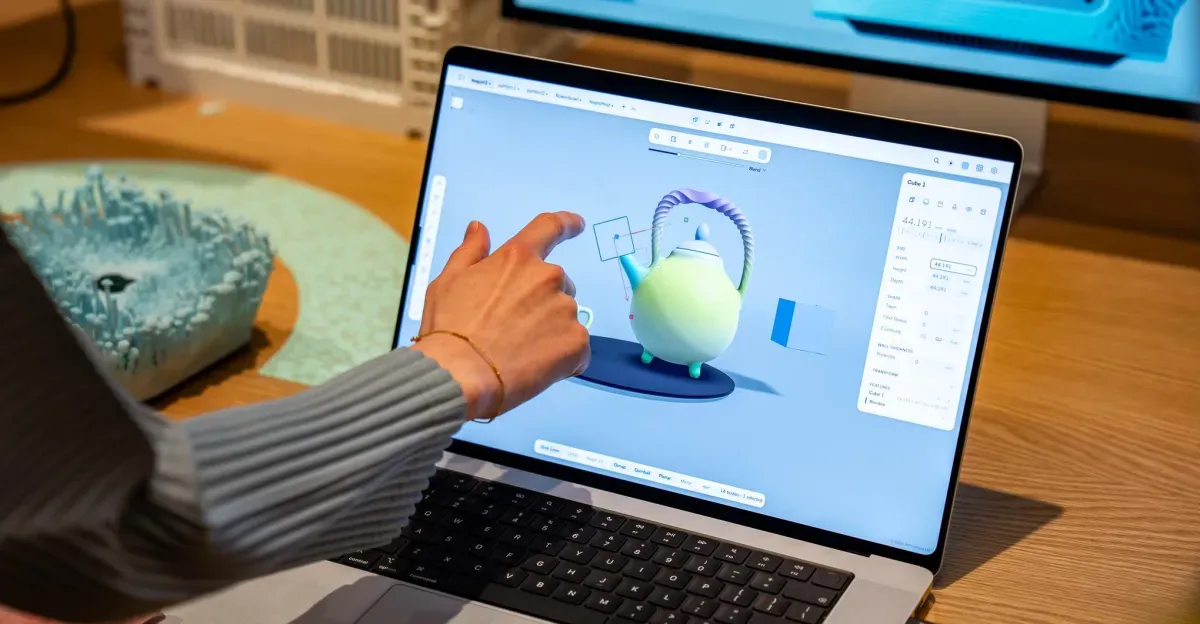 Photo: The Verge
Key points
Apple launched its first touchscreen MacBook Pro with a tandem OLED display, starting at $2,899, with TrendForce forecasting 1.2 to 1.5 million units shipped in 2027.
Apple launched its first touchscreen MacBook Pro on Wednesday, the MacBook Pro with PROLED XDR Display, starting at $2,899 for the 14-inch model and $3,399 for the 16-inch model. Pre-orders opened the same day, with launch set for Friday, November 6. The machine is the first MacBook Pro with a tandem OLED touchscreen and the first laptop display to support Apple CMF 2026 colour modes.
The touchscreen matters because Apple spent years saying laptops should not have touchscreens, and this release reverses that position without removing the keyboard or trackpad. It is an addition, not a replacement: Apple's own framing, reported by heise, is that touch is an ergonomics supplement, not a substitute. macOS 27 Golden Gate now ships with touch-aware interface elements, and developers receive new programming interfaces to build deeper touch support.
What the touchscreen actually does
The Verge's hands-on found the touchscreen behaves like any other touchscreen laptop: users poke and swipe directly at the screen. Some interface elements in macOS 27 Golden Gate and certain apps magnify or expand when tapped. Most touch gestures in the settings menu simply map to functions already available on the trackpad.
Heise's testing in Los Angeles found the touch response matched the iPhone and iPad in latency and pressure sensitivity, because Apple built the touch technology into the display itself rather than adding a separate touch layer. Apple reworked the hinge so the pressure from touching the screen does not push the lid backward or make it wobble. A repelling layer keeps fingerprints from accumulating, which Heise confirmed during testing.
TrendForce, a market intelligence firm, forecasts the new MacBook Pro could ship between 1.2 million and 1.5 million units in 2027. The overall laptop market has contracted for two consecutive years. TrendForce expects OLED laptop shipments to grow nearly 40% year-over-year in 2026, then more than 40% again in 2027.
Where the shipment forecast came from
Samsung Display is the exclusive panel supplier. The company designated Phase 1 of its G8.6 A6 production line at its Asan campus in South Korea as a dedicated facility for Apple, and the MacBook Pro is the first product to enter mass production on Samsung Display's G8.6 fine metal mask OLED line. TrendForce notes the tandem OLED architecture and 254 PPI pixel density impose demanding production requirements, particularly in material costs and manufacturing yields.
Rival panel makers are running qualification programs, but TrendForce believes the cost of meeting Apple's specifications and Samsung Display's established position create considerable barriers to entry. LG Display, BOE and TCL CSOT are instead directing their efforts toward the supply chain for the OLED MacBook Air, which is not expected to debut until at least 2028. Apple's arrival in the OLED laptop market, previously driven mainly by Lenovo, HP and ASUS, is expected to accelerate the segment.
Heise found touch most useful for gestures like zooming and pull-to-refresh, for dials such as colour grading in Final Cut Pro, for tapping piano keys in Logic Pro where multiple keys can be pressed at once, and for finger painting in Pixelmator Pro. Developers using Xcode can test apps directly on the Mac with realistic touch. Trimming a clip edge was harder with a finger than with a mouse, and navigating menus offered no real comfort gain.
Where touch helps and where it fails
Professionals who recently started using the touchscreen MacBook Pro still defaulted to keyboard and trackpad functions, and the touchscreen was a bonus rather than a workflow change. Asked whether they wished the MacBook Pro supported Apple Pencil, nearly all said it would be cool. Apple has not announced Pencil support or a 360-degree hinge.
Heise's Mac & i podcast noted the touch MacBook Pro starts at 3,300 euros, 400 euros more than the existing MacBook Pro with M5 Pro chip, and comes with no new chip, no mobile data and no Face ID. The new features are the OLED display, Dynamic Island and lower weight.
Pricing and the sale date
The touchscreen MacBook Pro goes on sale Friday, November 6, after pre-orders opened on Wednesday, 28 October 2026. TrendForce's 1.2 to 1.5 million unit forecast for 2027 will be tested against actual shipments once the product moves past its launch quarter, with the OLED MacBook Air supply chain, targeted for at least 2028, the next dated milestone in the OLED laptop transition.
Frequently asked questions
How much does the touchscreen MacBook Pro cost?
The 14-inch model starts at $2,899 and the 16-inch model at $3,399, announced on Wednesday. In euros, Heise's Mac & i podcast puts the entry price at 3,300 euros, 400 euros more than the existing MacBook Pro with M5 Pro chip.
When does the touchscreen MacBook Pro go on sale?
Pre-orders opened on Wednesday, 28 October 2026, with launch set for Friday, November 6. The machine was announced the same week, priced from $2,899 for the 14-inch model.
How many units could Apple ship in 2027?
TrendForce forecasts between 1.2 million and 1.5 million units in 2027. The overall laptop market has contracted for two consecutive years, but TrendForce expects OLED laptop shipments to grow nearly 40% year-over-year in 2026.