Bessent moves to military base after Iran threats reach advanced stage
Treasury Secretary Scott Bessent relocated to a military base after U.S. officials received an advance threat against his life from Iran, a senior official said.
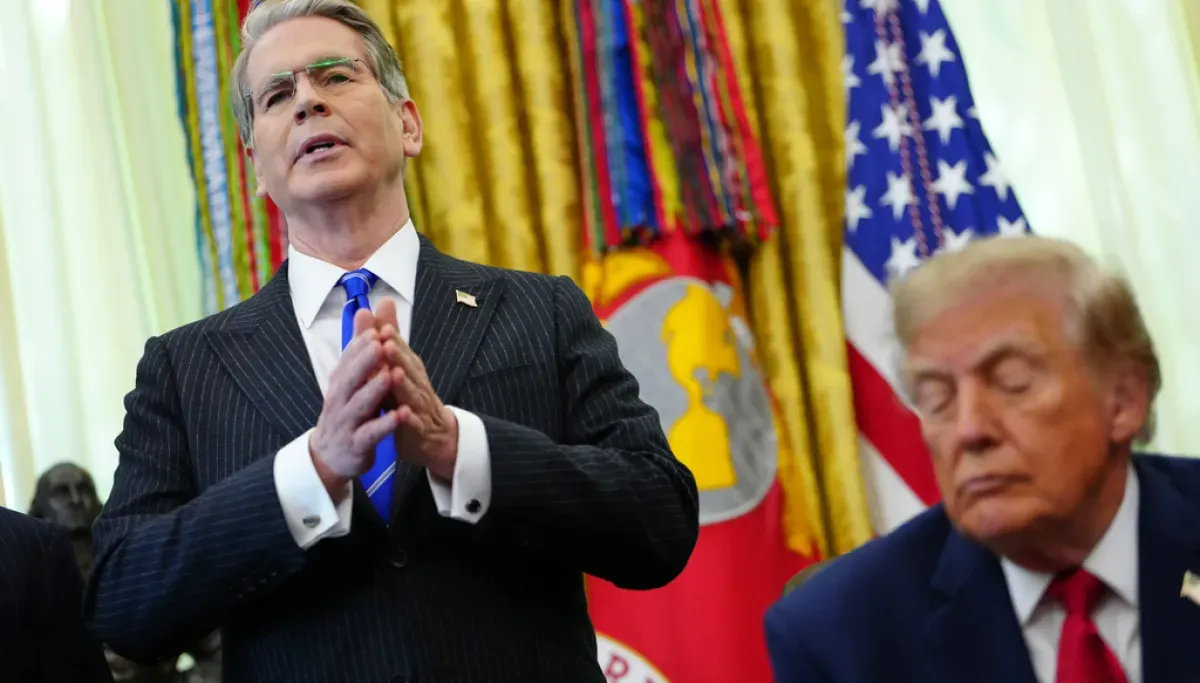 Photo: Washington Examiner
Key points
Treasury Secretary Scott Bessent moved to a military base after U.S. officials received an advance threat against his life from Iran.
Treasury Secretary Scott Bessent has relocated from his Washington-area residence to a military base after U.S. officials received an advance threat against his life from Iran, a senior administration official said on 10 November. The official said that threats against Bessent had reached 'more than an advanced stage,' prompting the move. The base's location and the date of the relocation have not been made public.
Bessent has played a central role in the Trump administration's efforts to weaken Iran economically. He has overseen initiatives dubbed 'Economic Fury' and 'Economic Outcast,' which seek to cut off Tehran's access to international financial networks, tighten sanctions, and restrict trade routes used by the Iranian regime. The Treasury Department confirmed Bessent's departure in a statement, adding that he refuses to 'be deterred by the Iranian regime's threats.'
Threats and relocation
A Treasury Department official described the relocation as evidence that the administration's pressure campaign against Tehran was having an effect. 'The move shows that Treasury's strategy regarding Iran is working because Iran is trying to get to the architect of that strategy,' the official told Fox News Digital. The official declined to specify when Bessent and his family moved to the military installation.
The security concerns extend beyond the treasury secretary. Director of National Intelligence Jay Clayton warned the State Department in late October that Iranian plans to target U.S. personnel overseas had reached 'advanced stages,' according to reports. An unclassified memo dated 23 October said Iran had 'substantially increased efforts to target U.S. personnel' and that lethal plotting against American citizens had reached advanced stages in the Middle East and certain other countries.
Bessent is the latest senior official to leave a private residence for more secure accommodation. At least six officials took similar steps last year, including Stephen Miller, now White House chief of staff, and Pam Bondi, who was then attorney general. Secretary of State Marco Rubio also relocated to military or protected housing in recent weeks.
Economic campaign continues
Secretary of State Marco Rubio addressed the administration's response to the threats on Monday, saying officials had taken steps to move Americans out of harm's way. 'We've addressed it by moving people away from the threat,' Rubio told reporters. On Tuesday, he downplayed the possibility of re-escalating the conflict, saying, 'We don't need to conduct military strikes if we're achieving the same objective through economic means and economic pressure.'
Bessent launched Operation Economic Outcast in August at President Donald Trump's direction, according to the Treasury Department. The initiative uses sanctions and other financial restrictions to target Iranian revenue, overseas transactions and networks accused of helping Tehran evade existing measures. Announcing the campaign, Bessent promised an 'economic onslaught' against Iran's financial connections.
The U.S. military has also repositioned several aircraft from RAF Mildenhall, an air base in England, to other locations in Europe following a security warning involving Iran. The military also relocated bombers from a base in the United Kingdom after a suspected terrorist plot targeting the facility. On 10 November, the Justice Department announced an eight-count indictment against three men accused of supporting Iranian-aligned terrorist networks, including a September plot targeting RAF Fairford in Britain.
Wider security measures
President Donald Trump said Monday that a return to military action against Iran was 'unlikely,' citing progress in negotiations and the preference of regional allies to maintain an economic blockade rather than resume direct fighting. 'At this point, taking military action doesn't seem to be a very necessary thing,' Trump told reporters at the White House. He cautioned that the United States remained prepared to respond if the situation deteriorated.
The war against Iran, which began on 28 February, has become deeply unpopular in the United States. The Iran war was a crucial factor in the House vote for 34% of voters, according to the Fox News Voter Poll, while about six in 10 said the U.S. had made the wrong decision to take military action against Iran. Bessent remains responsible for much of the financial campaign, but officials have not disclosed when he and his family might leave military accommodation.
The reported threats come amid heightened U.S. security concerns over possible Iranian attacks. Last month, Washington placed government personnel across the Middle East on heightened alert and reduced staffing at diplomatic missions following intelligence indicating that Iran was preparing attacks against Americans. The precise nature and severity of the threats against the Treasury secretary remain unclear, and no publicly disclosed evidence establishes that an assassination attempt was carried out.
Frequently asked questions
Why did Scott Bessent move to a military base?
Bessent moved after U.S. officials received an advance threat against his life from Iran. A senior official said threats had reached 'more than an advanced stage,' prompting the relocation.
What is Operation Economic Outcast?
Operation Economic Outcast is an initiative launched by Bessent in August to isolate Iran's economy through sanctions and financial restrictions. It targets Iranian revenue, overseas transactions, and networks helping Tehran evade existing measures.
Are other U.S. officials also relocating?
Yes. White House chief of staff Stephen Miller and Secretary of State Marco Rubio also relocated to military or protected housing in recent weeks. At least six officials took similar steps last year.