Seven flights across Europe hit by bomb threats, all false alarms
Seven passenger flights across Europe were hit by bomb threats on 3 November, forcing diversions and airport closures before all were confirmed as hoaxes.
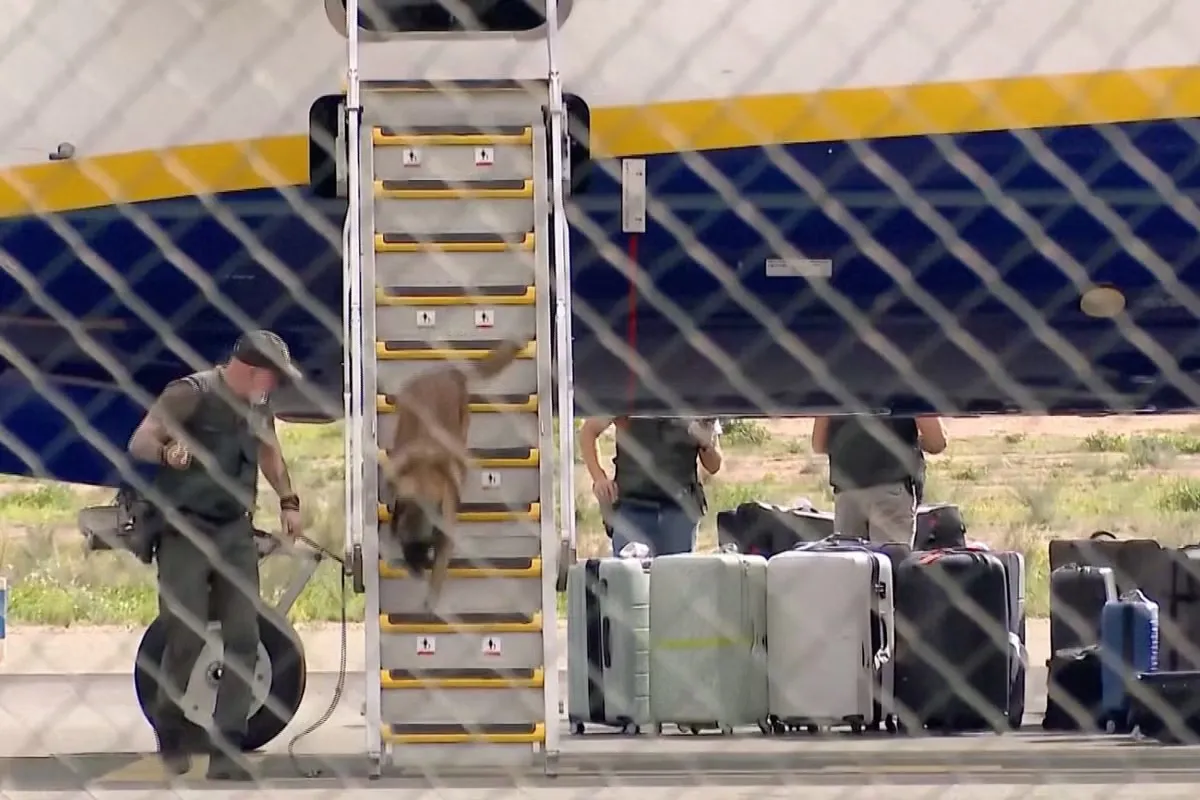 Photo: The Independent
Key points
Seven flights across Europe received bomb threats on 3 November, all confirmed as hoaxes after causing diversions and airport closures.
Seven passenger flights across Europe were hit by bomb threats on 3 November, forcing several planes to divert and an airport in Poland to close. All were later confirmed as false alarms. The threats affected flights from London, Manchester, Copenhagen, Dublin, Bergamo and Lisbon, with authorities searching planes after some emergency landings. The UK government described the incidents as "malicious hoax threats" in a statement.
The disruption raised concerns over the ease with which agitators can cause major disruption, as hundreds of passengers were affected. Two Ryanair flights from Dublin and Lisbon were searched following anonymous tips, the airline said. The Dublin flight had 185 passengers on board, the Bulgarian transport ministry said. No explosives were found on any of the planes.
Flights diverted and airports closed
A LOT Polish Airlines flight from London Heathrow, originally headed for Warsaw's Chopin airport, was carrying 181 people when it was diverted to Warsaw-Modlin airport on Tuesday morning. Modlin was briefly closed while the plane was searched, but reopened after no device was found. A Scandinavian Airlines flight from Copenhagen to Warsaw landed at Chopin as scheduled, with the airport remaining open.
In Spain, a Ryanair flight carrying 114 passengers from Manchester landed in Murcia, where parts of the airport were cordoned off. Officials said the report proved to be a hoax, and the airport resumed normal operations after authorities found no explosives on board. Passengers were not told about the threat until after landing.
Bulgarian Interior Ministry secretary general Lyubomir Nikolov said counter-terrorism police were searching an aircraft that landed in Sofia from Israel after a bomb threat was received by email. However, the Bulgarian transport ministry later said the threats were actually against two planes from Bergamo in Italy and Dublin in Ireland, not from Israel. The flights into Sofia were not diverted and no explosives were found.
Authorities respond to threats
Bulgaria's border police said in a statement that at around 10:35 local time (08:35 GMT) it had received an email about "the presence of an improvised explosive device on a flight returning from Bergamo". The statement said standard procedures were activated and an operational headquarters was convened. The same email also reported a similar threat against an aircraft arriving from Dublin.
Marco Chan, a former pilot and senior lecturer at Kingston University, said a bomb threat is considered "genuine until it is resolved, even though most turn out to be hoaxes". Crews will "quietly search" toilets, galleys and storage areas, and will not touch suspicious items unless necessary. The captain must assess factors such as available facilities at diversion airports.
Previous incidents and next steps
The incidents come a day after a Wizz Air flight from London to Sofia was diverted to Budapest after a bomb threat on 2 November. Hungarian defence minister Romulusz Ruszin-Szendi said in a Facebook post that Hungarian Air Force Gripen aircraft took to the air within minutes and ensured the landing. Wizz Air said later that security checks had been made and nothing was found.
It is unclear if the incidents are connected, but authorities from various countries will co-operate to assess whether this was a co-ordinated attack designed to disrupt airspace. The UK government said it has "one of the most robust aviation security systems in the world, with well-tested processes for dealing with any potential threats". All seven threats have been confirmed as false alarms.
All seven bomb threats have been confirmed as false alarms, with the tally including the LOT flight, the SAS flight, the Ryanair flights to Murcia and Rome, and the Wizz Air flight to Sofia. The incidents follow a similar threat on 18 October, when an Austrian Airlines flight from Tel Aviv to Vienna diverted to Sofia after a reported bomb threat while over Romania. Authorities have cleared all the affected airports and flights have resumed normal operations. The Bulgarian transport ministry confirmed the threats were against flights from Bergamo and Dublin, not Israel as initially reported. The investigation into the source of the threats continues, with no arrests reported so far.
Frequently asked questions
How many flights were affected by bomb threats on 3 November?
Seven passenger flights across Europe were hit by bomb threats on 3 November, including flights from London, Manchester, Copenhagen, Dublin, Bergamo and Lisbon. All were confirmed as false alarms.
Were any explosives found on the flights?
No explosives were found on any of the flights. All seven threats were confirmed as false alarms, and airports resumed normal operations after searches.
What did the UK government say about the threats?
The UK government described the incidents as 'malicious hoax threats' and said it has 'one of the most robust aviation security systems in the world'.