Brazil's Amazon deforestation falls 41.8% to record 3,335 sq km low
Brazil's Amazon lost 3,335 square kilometres of forest in the 12 months to July 2026, a 41.8% drop and the lowest since records began in 1988, before the 25 October run-off.
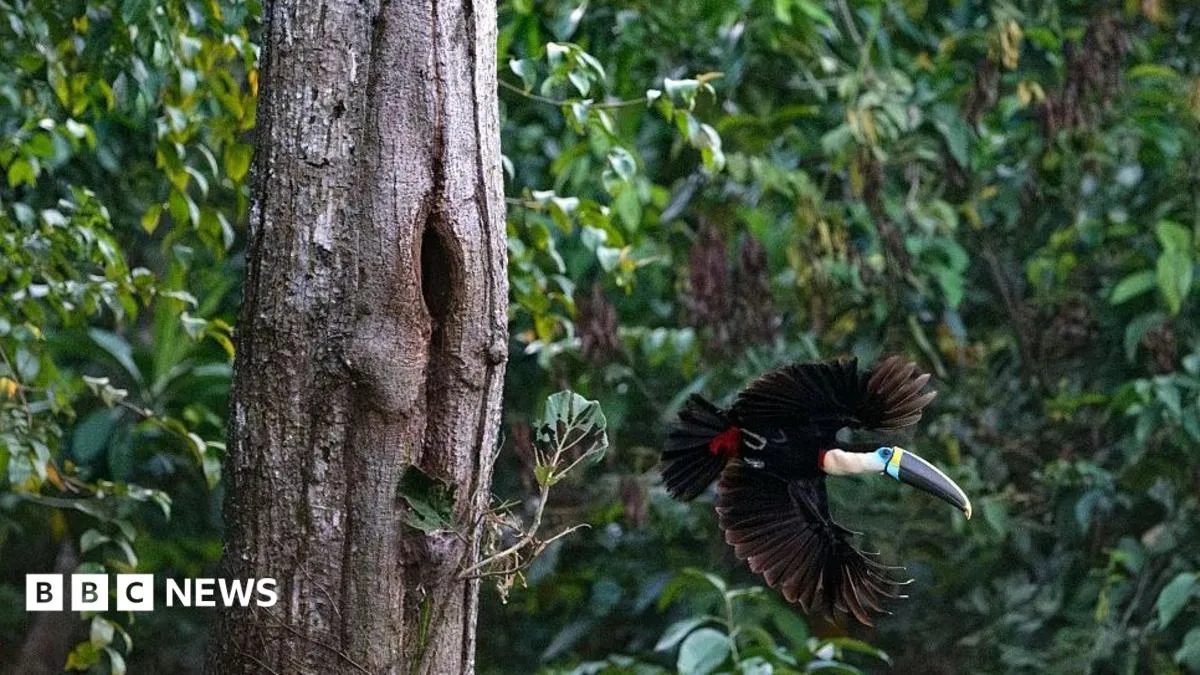 Photo: BBC News
Key points
Brazil's Amazon deforestation fell 41.8% to 3,335 square kilometres in the year to July 2026, the lowest since records began in 1988.
Brazil's Amazon rainforest lost 3,335 square kilometres of forest in the 12 months through July 2026, a 41.8% fall over the year and the lowest figure since satellite records began in 1988, according to Brazil's National Institute for Space Research (Inpe). The Cerrado savanna fell about 24% to 5,516 square kilometres, its lowest since 2001. The figures were released days before a presidential run-off on 25 October in which the rainforest's future is a central issue.
The result marks a reversal from the previous administration. Under Jair Bolsonaro from 2019 to 2022, the Amazon lost nearly 60% more forest than in the previous four years, according to official data cited by AFP. President Luiz Inácio Lula da Silva took office in 2023 pledging to end illegal deforestation by 2030, tightened environmental monitoring and penalties for illegal logging, and saw rates fall to a six-year low in his first year.
What the satellite data shows
The Prodes satellite programme, run by Inpe and considered the most accurate measure of deforestation, measures from August to July because cloud cover is lower in mid-year. It showed forest clearance fell 41.8% to 3,335 square kilometres, beating the previous record low of 4,571 square kilometres set in 2011-12 by 1,236 square kilometres — an area equivalent to Rio de Janeiro. Annual losses peaked at nearly 30,000 square kilometres in the mid-1990s.
Environment Minister Joao Paulo Capobianco called the decline in Amazon deforestation "absolutely stratospheric" at a news conference in Brasilia, adding: "It's like a dream." Marcio Astrini, executive secretary at climate advocacy group Observatorio do Clima, called it a "historic achievement" and said it shows that "with political will, it is possible to curb deforestation and greenhouse gas emissions".
Deforestation has fallen every year since 2022 and is down 71.2% over four years, according to Inpe data. The fall follows stronger enforcement measures and state investments in environmental agencies, with tighter monitoring and stiffer penalties for illegal logging. Lula reversed Bolsonaro's policies of promoting mining in indigenous lands while cutting resources to protect the forest.
Where the losses were concentrated
Three states accounted for most of the remaining Amazon clearance: Pará registered 33.9% of all Amazon deforestation in the year, Mato Grosso 25.5% and Amazonas 15.7%. Even in those states, figures were down by more than 45% on the previous year. Roraima was the only state where the problem grew worse, up 0.4%. The Cerrado has long been treated as an area of environmental sacrifice, where soya and beef producers could clear more forest than in the Amazon.
The Amazon rainforest is the world's largest and a crucial buffer in the global fight against climate change, with 60% of it located in Brazil. Tropical rainforests absorb vast quantities of planet-warming carbon dioxide. They have come under increasing pressure from decades of deliberate land clearance for agriculture and logging, as well as climate change, which scientists warn can create conditions for wildfires. During Bolsonaro's presidency, forest clearances soared as resources to protect the forest were cut.
On 25 October, Lula will face Bolsonaro's son Flavio in the run-off, with polls suggesting a neck-and-neck race. Lula fell behind in the first round of voting despite his record in slowing Amazon destruction while also reducing poverty and food insecurity. Flavio, a senator, pledged in his manifesto to strengthen environmental oversight in the Amazon, focus enforcement on organised crime rather than extractive workers and small farmers, and end "illegal deforestation" by 2029.
What the run-off could change
Flavio is expected to continue his father's policies if he wins, though he has pledged to fight organised crime in the Amazon. He has praised his father, who is serving a 27-year sentence under house arrest for coup plotting, for opposing what he calls a "radical environmental agenda". Former environment minister Marina Silva has warned that Flávio Bolsonaro will try to finish his father's "perverse project" to destroy the Amazon. Jair Bolsonaro oversaw a 59.5% increase in Amazon deforestation over his 2019-23 term.
Marcio Astrini of Observatorio do Clima said the figure makes it clear that ending forest destruction in Brazil is entirely possible, but added that everything depends on the election result: "The country will decide whether we move toward the end of deforestation or toward the end of the forest." Lula wrote on X: "Our goal is to achieve zero illegal deforestation by 2030." The run-off takes place on 25 October.
Frequently asked questions
How much Amazon deforestation was recorded in Brazil in the year to July 2026?
Brazil's Amazon lost 3,335 square kilometres of forest in the 12 months through July 2026, a 41.8% fall over the year and the lowest figure since satellite records began in 1988, according to Inpe's Prodes programme.
Why did Amazon deforestation fall in Brazil?
Deforestation fell largely due to stronger enforcement measures, state investments in environmental agencies, tighter monitoring and stiffer penalties for illegal logging after President Lula reversed the policies of his predecessor Jair Bolsonaro.
When is Brazil's presidential run-off and who is running?
President Luiz Inácio Lula da Silva faces Senator Flávio Bolsonaro, son of former president Jair Bolsonaro, in the run-off on 25 October, with polls showing them neck and neck.