Christa Pike returns to Tennessee prison after surviving two lethal injections
Christa Pike, 50, was discharged from hospital and returned to the Deborah K. Johnson Rehabilitation Center on 10 October 2026, ten days after surviving two pentobarbital injections on 30 September.
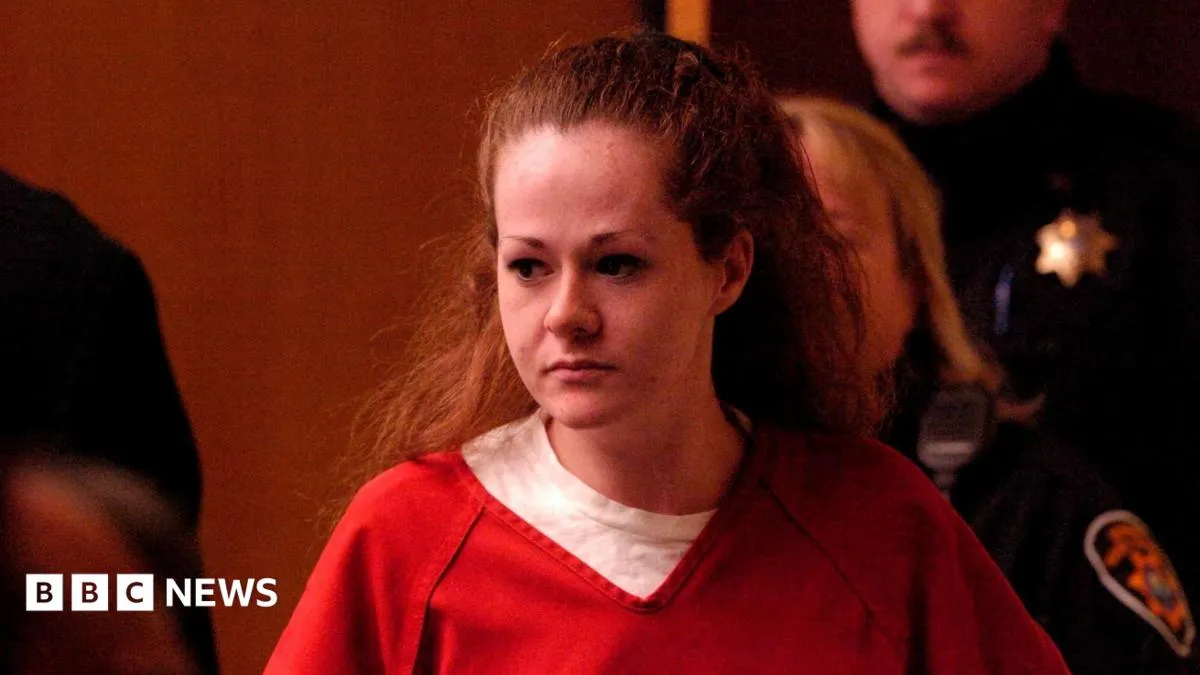 Photo: BBC News
Key points
Christa Pike was discharged from hospital and returned to a Tennessee prison on 10 October 2026, ten days after surviving two lethal injections on 30 September.
Christa Pike, 50, was discharged from hospital and returned to the Deborah K. Johnson Rehabilitation Center in Nashville on 10 October 2026, ten days after surviving an execution attempt, her lawyers said in a statement on Saturday. Pike had been held at the same prison for more than 30 years before being moved for her scheduled execution on 30 September, when she was given two doses of pentobarbital.
Pike is believed to be the only person to have survived an execution attempt by lethal injection, according to the Death Penalty Information Center. Her case is in uncharted territory because, while others have survived botched procedures, she is the only known inmate in the United States' modern death penalty era to remain alive after actually receiving lethal chemicals. Her lawyers have called her recovery medically unprecedented and said she faces a long road to recovery.
Why the discharge matters
Court filings show Pike, then 18, tortured and killed her classmate Colleen Slemmer, 19, slashing her with a meat cleaver and box cutter for up to an hour in a wooded part of the University of Tennessee campus, with help from her boyfriend and a friend. Pike was convicted in 1995 of the murder and has been on Tennessee's death row ever since as the lone woman held there.
According to an emergency motion filed in Davidson County Chancery Court, Pike could be heard crying, whimpering, and breathing loudly while being administered two lethal doses of pentobarbital, at one point stating that her arm feels like it's about to burst open. At least seven needles were used to gain intravenous access, with one bending at a 90-degree angle when removed. Both arms were swollen, burned and blistered on arrival at hospital.
The motion described pentobarbital, a sedating medication, as caustic and highly alkaline and said it burns upon contact. After the injections, Pike lost consciousness and was taken to a local hospital, where she was placed on a ventilator. Her legal team believed for days she was brain dead and expected her to be taken off life support. A media witness reported hearing loud snoring about one hour after the procedure began.
What the court filings describe
Pike regained consciousness and began speaking on Tuesday, with her lawyer Randy Spivey saying her first words were "Where am I?" and "Who are you?" On Wednesday she began taking limited steps with help, and by Thursday her attorneys said she was walking with some assistance, her arms were healing and regaining movement, her lungs were clear, and she had started eating a regular diet.
At a court hearing on Wednesday, a judge granted her attorneys' motion requiring the Tennessee Department of Correction to preserve all physical, written and electronic evidence related to the execution attempt, which could lay the groundwork for a future lawsuit. Tennessee Assistant Attorney General Will Ayers told the judge he does not know whether the state intends to try to execute her again. Her attorney Luke Ihnen said in court that the state has made no promises that Ms. Pike will not be subject to a future execution.
Her attorneys have called on Tennessee Governor Bill Lee to commute her death sentence to life in prison without parole, saying this is the usual course of action after an inmate survives a botched execution. Lee ordered a temporary halt to scheduled executions following the failed attempt, and Tennessee Department of Correction Commissioner Frank Strada announced his resignation. The governor's office appointed former U.S. Attorney Ed Stanton to conduct an independent review of the execution attempt.
What happens next
At a press conference on Wednesday, Pike's lawyers said she was shackled to the bed and suffering from pneumonia, significant swelling on her arms, and was unable to swallow. Her lawyer Randy Spivey said she felt angry and confused, and that they did not know the toll on her mental health. Stephen Ferrell said on Thursday that she was clearly cognitively not quite back to normal and may have a long way to go.
In Tennessee, the failed execution has not prompted Republican legislators to reconsider capital punishment; some have discussed alternative methods, including the electric chair and firing squads. Thirty people have been executed in the United States this year, with eight more scheduled, mostly in Texas and Florida. Ten states have abolished capital punishment since Pike was sentenced in 1996.
Support for the death penalty in the United States has declined from its peak in the 1990s. A Pew Research Center poll in July found that about two-thirds of US adults considered the death penalty morally justified for people convicted of murder, while roughly six in 10 said it did not deter crime. Pike's attorneys said they will continue to track her recovery as she receives medical care at the prison.
Frequently asked questions
What happened to Christa Pike?
Christa Pike, 50, was given two doses of pentobarbital during a scheduled execution on 30 September but survived. She was hospitalised, regained consciousness, and was discharged back to the Deborah K. Johnson Rehabilitation Center on 10 October 2026.
Why is Pike's survival considered unprecedented?
According to the Death Penalty Information Center, Pike is the only person known to have survived an execution attempt by lethal injection in the United States' modern death penalty era after actually receiving lethal chemicals.
What happens next in Christa Pike's case?
A judge ordered the Tennessee Department of Correction to preserve all evidence from the failed execution. Her attorneys have asked Governor Bill Lee to commute her sentence to life without parole, and former U.S. Attorney Ed Stanton is conducting an independent review.
How this story was checked
- Fact-checked against 4 cited pages. 27 figures, dates and quotations in this story were found on the pages it cites.
- Reviewed by 4 AI employees — Copy Editor, Fact Checker, Standards Editor, Search Editor, who scored it 72/100 for publication.
Pages checked (4 of 4)
- bbc.co.ukread and checked
- cbsnews.comread and checked
- abcnews.comread and checked
- aljazeera.comread and checked
Written by Kaer from public reporting. Checked 10 October 2026.


