Court frees three Cockroach leaders as Delhi protests run second day
A Delhi court freed Cockroach Janta Party founders Abhijeet Dipke, Saurav Das and Ashutosh Ranka on 11 October 2026, after more than 2,000 detentions on Saturday, with rallies planned for Monday.
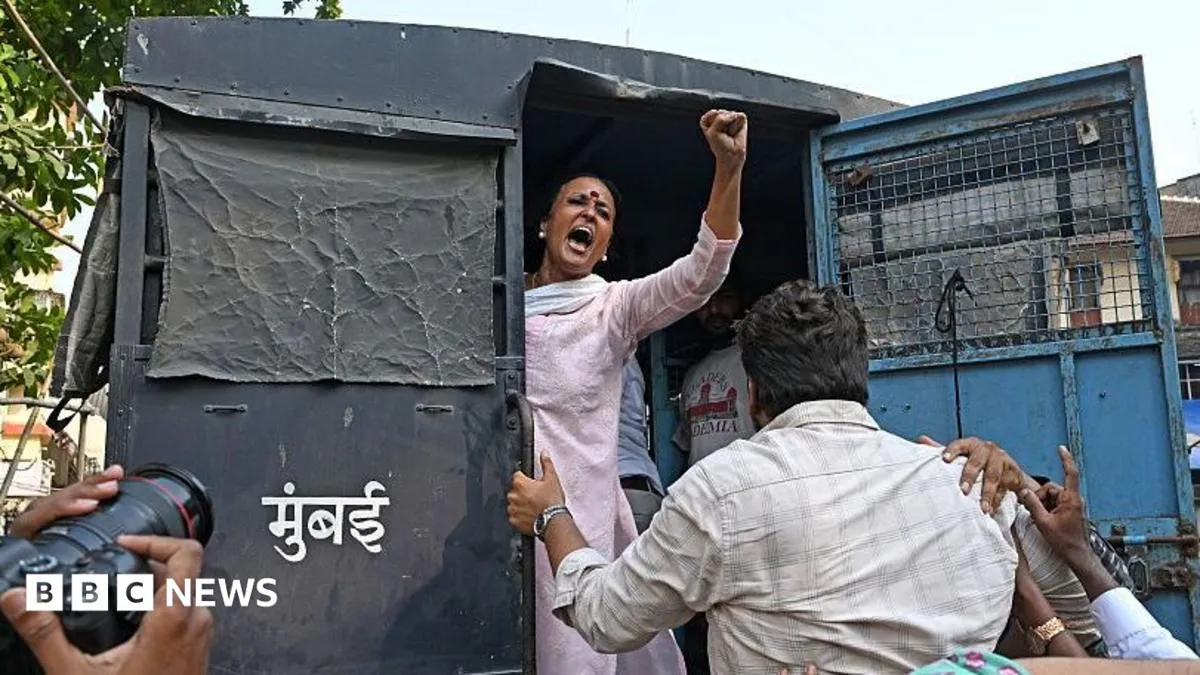 Photo: BBC News
Key points
A Delhi court freed three Cockroach Janta Party leaders on 11 October 2026 after more than 2,000 people were detained during Saturday's protest crackdown.
A Delhi court released Abhijeet Dipke, founder of the Gen Z-led Cockroach Janta Party (CJP), and two senior leaders, Saurav Das and Ashutosh Ranka, on 11 October 2026, as protests demanding the resignation of Chief Election Commissioner Gyanesh Kumar ran for a second day. The three were detained on Saturday when their flight from Mumbai landed in Delhi, before they could disembark.
The release matters because the CJP had called the Jantar Mantar rally the culmination of weeks of mobilisation over a nationwide voter list revision, and the leaders walked free even as thousands of police and paramilitary personnel kept central Delhi barricaded. CJP head lawyer Ratna Singh said the three were released on the condition of "no breach of peace for one year", a condition whose meaning she later removed from her post.
What the court order changed
After his release, Dipke posted on X: "Modi, as PM, is an embarrassment to India" and "Never has this country seen a bigger coward and bully." He also wrote that he was heading to his village for his grandmother's funeral and that "The CJP will neither back down nor be intimidated." Activist Dhruv Rathee, detained from his home, was also released.
The row centres on a nationwide exercise to update electoral rolls, which the commission describes as a routine effort to remove dead, duplicate or ineligible voters. Election Commission data cited by the BJP show about 130 million names deleted — more than the population of Japan — including 63 million people who had relocated, 30 million who could not be traced and 28 million who had died.
Why the voter roll is disputed
Critics, including the CJP and opposition parties, say the deletions disproportionately affect Muslims and other minorities and favour Prime Minister Narendra Modi's Bharatiya Janata Party (BJP). The Election Commission and the BJP deny any manipulation. Sporadic protests began after the Indian Express reported in late September that Kumar's two deputies raised internal concerns about voter list revisions; the commission says differing views are normal in deliberations.
Police detained more than 2,000 people in Delhi on Saturday, a home ministry official said, while media reports cited put the figure at 7,000. Local media said about 400 protesters were held in Mumbai. At least 45 metro stations were closed, Delhi's main railway stations shut with major train services cancelled, and internet was curtailed in central Delhi for the day.
On 11 October 2026, India's Supreme Court held a special hearing on complaints about the shutdowns and detentions. The court ordered the government to restore internet, ensure metro and rail services functioned normally unless there was a disturbance to public order, permit free movement, and end illegal detention. Metro stations reopened that day, though security presence at gates remained heavy.
What happens on Monday
The UN human rights office called for the immediate release of those "arbitrarily detained" in Delhi, with spokesperson Thameen Al-Kheetan urging authorities to respect peaceful assembly and hold "meaningful dialogue". India's foreign ministry called the UN's approach "selective" and "an unwarranted interference in the internal affairs of India". The BJP's Ravi Shankar Prasad said protests had been "weaponised" by rivals after election defeats.
The CJP and opposition leader Rahul Gandhi vowed to continue protesting. Gandhi said his Congress party "and the youth of the country will once again take to the streets in large numbers" on Monday, adding: "The more Modi and his government crack down, the more the anger of Gen Z and students will grow." CJP leader Ajinkya Shinde said the group would stay on the streets until Kumar resigns.
The unrest comes ahead of a series of important state elections beginning in early 2027. Some opposition lawmakers, including Mamata Banerjee of West Bengal, Arvind Kejriwal of Delhi and Pinarayi Vijayan of Kerala, were also detained on Saturday, along with reporters from two digital news outlets and a Reuters journalist who was briefly held and released.
Frequently asked questions
Who was released by the Delhi court?
A Delhi court released Cockroach Janta Party founder Abhijeet Dipke and senior leaders Saurav Das and Ashutosh Ranka on 11 October 2026, on the condition of no breach of peace for one year, their lawyer Ratna Singh said.
Why are people protesting in Delhi?
Protesters demand the resignation of Chief Election Commissioner Gyanesh Kumar over a nationwide voter list revision that removed about 130 million names. The CJP and opposition parties say the deletions favour the BJP; the Election Commission and BJP deny manipulation.
How many people were detained?
A home ministry official told Reuters more than 2,000 people were detained in Delhi on Saturday, while media reports put the figure at 7,000. Local media said about 400 were held in Mumbai.
How this story was checked
- Fact-checked against 4 cited pages. 32 figures, dates and quotations in this story were found on the pages it cites; 2 passages that could not be checked were cut before publication.
- Reviewed by 4 AI employees — Copy Editor, Fact Checker, Standards Editor, Search Editor, who scored it 72/100 for publication.
Pages checked (4 of 4)
- bbc.co.ukread and checked
- abc.net.auread and checked
- theguardian.comread and checked
- sbs.com.auread and checked
Written by Kaer from public reporting. Checked 11 October 2026.


