COP31 runs into overtime as draft drops fossil fuel wording
Negotiators in Antalya worked past Friday's scheduled close after a pared-down draft dropped all mention of coal, oil and gas, drawing opposition from about 130 countries.
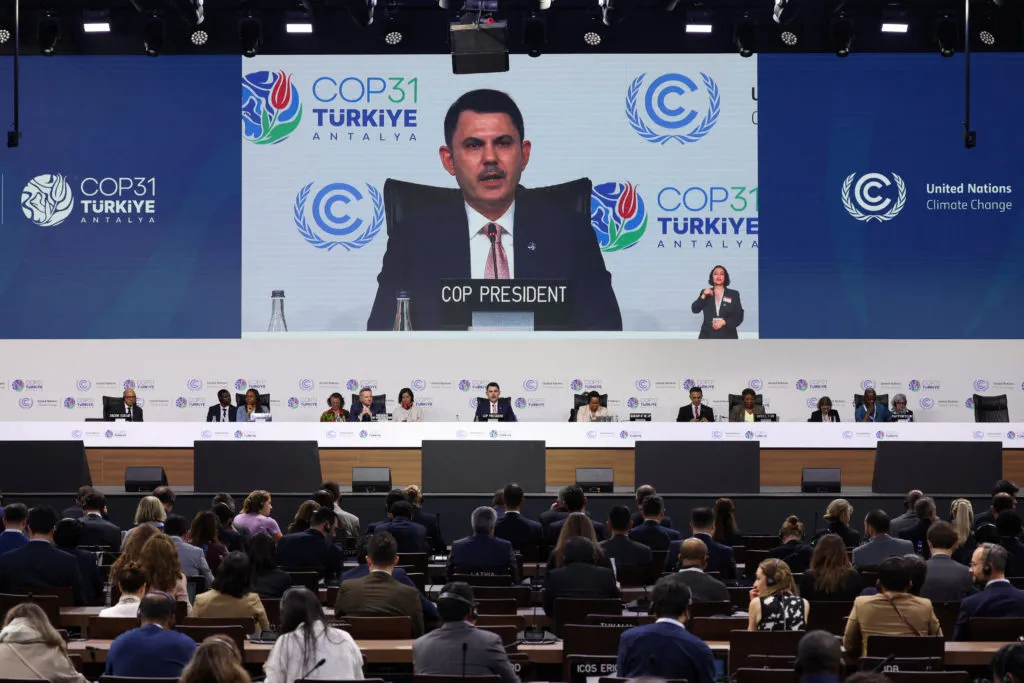 Photo: PBS NewsHour
Key points
COP31 talks in Antalya went into overtime after a revised draft removed all references to coal, oil and gas, with about 130 countries demanding a phase-out mention.
Negotiators at the COP31 United Nations climate summit in Antalya, Turkey, worked into overtime after the talks passed Friday's scheduled closing time without an agreement. A dispute over fossil fuels stalled the final text, and COP31 co-hosts Australia and Turkey are scrambling to produce a revised draft deal as delegates prepare to leave after two weeks of negotiations.
The deadlock centres on a draft climate deal unveiled earlier this week that called for a faster phase-out of fossil fuels. A second, pared-down version released Thursday stripped away all mentions of coal, oil and gas. That omission sparked protests and threats to walk away from the table, and negotiations dragged through the night without breaking the impasse.
What the pared-down draft removed
Fossil fuels are the main driver of climate change but remain a flashpoint at the UN talks. Tuvalu's Climate Minister Maina Talia told reporters the omission was "a red line for us", adding: "We're talking about the root cause of all of this." Talia said that if the world cannot address fossil fuels "then we are wasting our time here".
Ireland's Climate Minister Darragh O'Brien said there were around "130 countries at this COP who want – at the very least – a reference to fossil fuel and phase-out" in the final text. A dozen European and developing countries, from France to Panama and the Solomon Islands, released a letter on Friday insisting the deal include "a clear transition away from fossil fuels".
COP31 President and Turkish Environment Minister Murat Kurum urged countries to compromise. "Getting bogged down in individual words and expressions and undermining this process serves no one's interests," he said, calling on delegates to "act responsibly". European Union climate envoy Wopke Hoekstra said of the divisions: "Clearly there's no compromise yet," adding: "It's better to have no deal than to have a bad deal."
Electrification target and carbon capture
Facing pressure over fossil fuels, the hosts have pitched electrification as a way to cut heat-trapping emissions and bolster energy security. The latest draft cover decision proposes boosting the share of electricity in total final energy consumption to 35% by 2035, replacing technologies that burn fuels directly, such as diesel cars and gas heating, with electric alternatives.
The electrification proposal does not require that the additional electricity come from renewable energy rather than coal or gas, spurring some countries to demand an explicitly clean target. Around one-third of global electricity is produced using coal and another fifth using fossil gas. A call in the last draft to ramp up carbon capture, a technology championed by the fossil fuel industry, also faced staunch opposition over its high cost and meagre record in cutting emissions.
Li Shuo, an analyst at the Asia Society Policy Institute, described the split. "There are several fights but the primary one is still the one between mostly the EU and Saudi Arabia" over fossil fuels and carbon capture, he said. Panama's environment minister, Juan Carlos Navarro, accused a "petroleum mafia" of blocking progress and threatened to walk away unless a stronger deal was made.
Finance and science reports in dispute
Developing nations also voiced anger over the removal of a $120 billion climate adaptation funding target. Attempts by Saudi Arabia, India and Kenya to delay the next set of reports by the Intergovernmental Panel on Climate Change, the UN body that assesses climate science, have been another source of friction. Countries have disagreed too over how to respond to the looming breach of the 1.5C warming target set under the Paris climate accord.
The latest draft expressed "deep concern" over missing the goal but dropped an earlier call to return warming below 1.5C as soon as possible this century. In a letter sent on Saturday to Turkey and Australia, 100 civil society groups warned the hosts were "on course to preside over one of the most disappointing COPs" the UN has ever held, with only hours left "to save this COP from becoming a low point of three decades of climate negotiations."
Work crews boxed up the venue on Saturday as the hallways stood largely empty. "COP31 is in a bleak overtime, with dwindling food and water, and no sign of any progress since the alarmingly underwhelming texts we saw earlier," said Rachel Cleetus of the Union of Concerned Scientists, who is at the venue in Antalya. The United States, the world's largest economy, did not participate directly in this year's talks.
The next climate summit will take place in Ethiopia's capital, Addis Ababa, in November 2027. Before then, the co-hosts must still convert the contested draft into a text that nearly 200 governments can accept, with the fossil fuel question, the electrification target and the adaptation funding figure all unresolved as delegates prepared to leave Antalya.
Frequently asked questions
What happened at COP31 in Antalya?
Talks ran past Friday's scheduled closing time after a revised draft released Thursday dropped all mentions of coal, oil and gas. Co-hosts Australia and Turkey are scrambling to produce a revised deal.
Why do countries want fossil fuels named in the COP31 text?
About 130 countries want at least a reference to fossil fuel and phase-out, according to Ireland's climate minister Darragh O'Brien. Tuvalu's Maina Talia called the omission a red line because fossil fuels are the root cause of climate change.
When is the next UN climate summit?
The next climate summit will take place in Ethiopia's capital, Addis Ababa, in November 2027, after COP31 in Antalya ran into overtime.