Justice Department drops lawsuit over 20,000 disputed California ballots
The US Justice Department withdrew its lawsuit seeking to halt counting of about 20,000 ballots suspected to be from noncitizens, days after Republican losses.
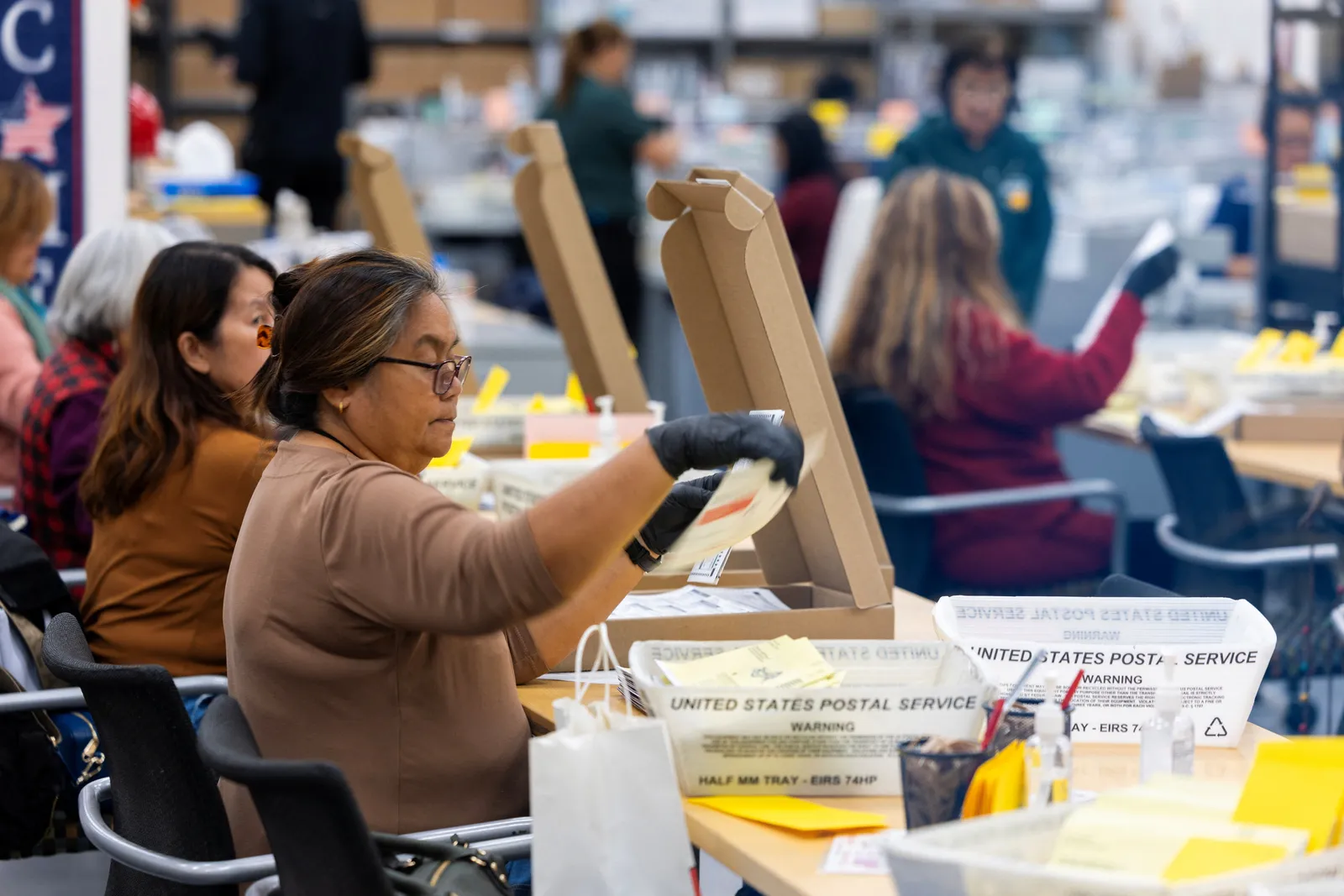 Photo: Arab News
Key points
The US Justice Department moved to dismiss its lawsuit seeking to stop California from counting roughly 20,000 ballots it alleged went to noncitizens.
The US Department of Justice on Friday moved to dismiss its own lawsuit that sought to stop California from counting roughly 20,000 ballots it alleged went to noncitizens until their immigration status could be verified. The request to dismiss the case comes days after Republicans' significant losses in the midterm elections and about a week before a scheduled hearing where a special master was slated to evaluate the accuracy of the list.
The case was at the forefront of President Donald Trump's administration's effort to assert control over state-run elections across the country, which Trump has said are rife with illegal voting without providing evidence. The dismissal signals the close of a legal battle a federal judge characterized as part of "a broad, ongoing pattern of attempted election interference."
What the dismissal means
In the two-page filing, Assistant US Attorney Julie Hamill wrote that "the United States exhausted its appeals to obtain timely relief all the way to Supreme Court." Also, she wrote, by the time a previously scheduled court hearing on Nov. 13 would have taken place, "California will have already commingled the challenged ballots with lawful ones. There is then no way to get the challenged ballots segregated."
How the case unfolded
In a forceful opinion, US District Judge David O. Carter said the federal government's request "would wreak havoc and disrupt the election that is already underway, create a chilling effect on election workers and voters alike, and discount the votes of United States citizens." Carter, who was appointed by former President Bill Clinton, argued that separating ballots at that late stage would risk disenfranchising citizens.
California had processed roughly 9 million ballots as of early Friday, with nearly 5 million still left to be counted, according to state election officials. Bill Essayli, the top federal prosecutor in Los Angeles, previously argued in court that the lawsuit would be irrelevant after election day, because there would be no way to sequester the ones allegedly belonging to noncitizens. Once a ballot is processed, it is completely anonymized.
What happens next
Essayli said at the time the lawsuit was filed that his goal was to "safeguard the integrity of the election so it doesn't have an effect on the upcoming election." "We want to stop the illegal voting. We don't want to chase it later," he said outside of court the week before the election. The lawsuit was filed in mid-October, when ballots had been sent to all of the state's 23 million registered voters, and after hundreds of thousands of ballots were already processed.
The Department of Justice remains enmeshed in litigation with multiple immigrant and voting rights groups seeking to limit its use of the list of what it says are suspected noncitizens. Another controversial suit it filed in Alaska at Trump's direction before the election to block the victory of the Democrat in that state's Senate race was swiftly dismissed by a federal judge. The administration is appealing that ruling but has yet to file a full brief at the 9th Circuit Court of Appeals.
California prosecutors in recent weeks have arrested over 30 noncitizens who are accused of illegally registering to vote. Some who were arrested were also accused of voting in previous elections. Elections clerks around California in the week before the election were sent subpoenas to testify before grand juries slated to convene in November. It's not clear who is being criminally charged in those cases, but the department does not typically subpoena people whom it regards as targets of a criminal investigation.
The US Attorney's Office for the Central District of California referred all questions to the Department of Justice in Washington, DC, which did not respond to an emailed request for comment on Friday evening. The Justice Department sued at least 30 states that refused to turn over voter data, losing almost all of the cases. The special master would have also considered whether or not California election officials did in fact have a mechanism for separating the ballots.
Frequently asked questions
Why did the Justice Department drop the lawsuit against California?
The DOJ moved to dismiss its lawsuit because California will have already commingled the challenged ballots with lawful ones by the time of the scheduled hearing, making the relief sought no longer available.
How many ballots were disputed in the California lawsuit?
The lawsuit sought to stop California from counting roughly 20,000 ballots the DOJ alleged went to noncitizens until their immigration status could be verified.