Meloni says EU leaders light-years from €2 trillion budget deal
Italian prime minister Giorgia Meloni told reporters in Brussels on 26 November that EU leaders were light-years from a deal on the bloc's €2 trillion long-term budget.
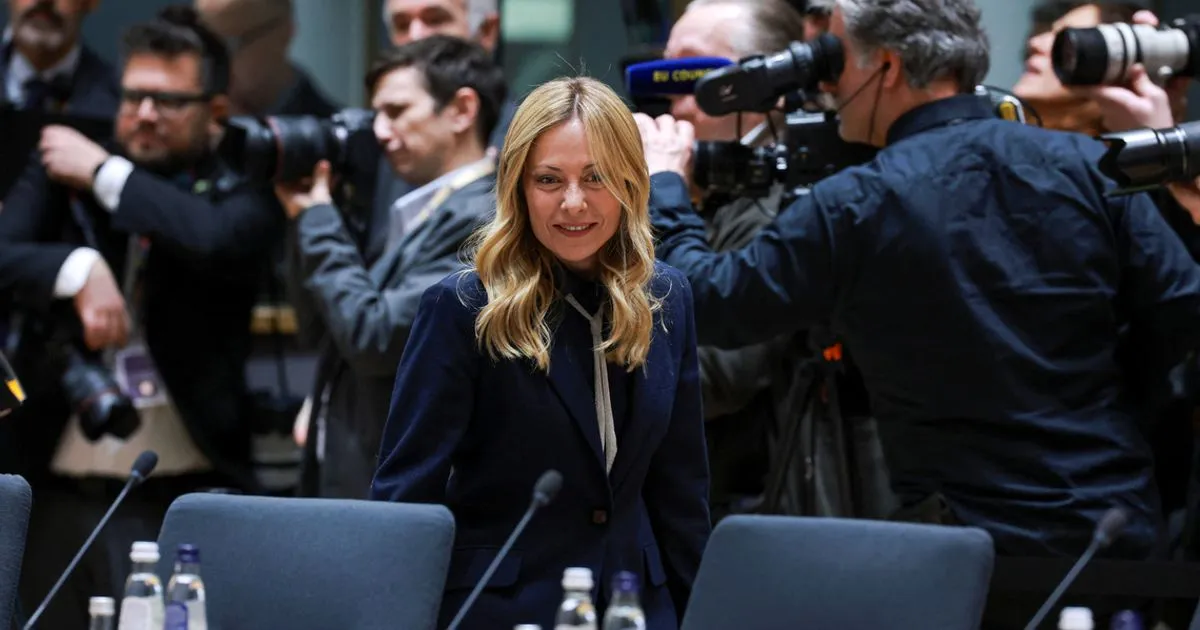 Photo: The Straits Times
Key points
EU leaders in Brussels on 26 November remain far from agreement on the bloc's next long-term budget and a €45 billion loan for Ukraine.
Italian prime minister Giorgia Meloni told reporters in Brussels on 26 November that EU leaders were "light-years away" from a solution on the bloc's next long-term budget, as a two-day Special European Council opened. "We are not willing to sign off on a budget under which we would have to give more to receive less," she said. The European Commission proposed a €2 trillion spending plan for 2028-2034 last year, and most capitals dislike it.
A €2 trillion plan most capitals dislike
Leaders have spent nearly all of 2026 butting heads over the plan's size. The seven-year budget requires unanimous approval from all 27 member states, so one refusal blocks the whole package. The EU wants an agreement by December to avoid negotiations spilling into a year of elections across Europe, including in France, where far-right leader Marine Le Pen is ahead in polls. Elections are also due next year in Italy, Poland, Greece, Estonia, Finland and Slovakia, which could complicate talks.
German Chancellor Friedrich Merz linked any resolution of the budget stand-off to a deal on Ukraine funding by all 27 EU countries. Member states are being asked to back an extra €45 billion loan to keep Ukraine funded through 2027, but several capitals want an opt-out from it. The countries seeking to be left out include the Czech Republic, Hungary and Slovakia, a trio that opted out of a similar giant loan last year. Slovakia's prime minister Robert Fico accused Germany of "blackmail", while Czech prime minister Andrej Babiš dismissed Merz's comments.
Merz ties budget to Ukraine
Leaders are working from the latest budget proposal by European Council chief António Costa, who sought to bridge divisions by slashing the budget by €204 billion and proposing revenue from a tax on digital companies. The tax could target American tech giants, and the US has warned the EU against continuing such talks.
Taoiseach Micheál Martin told reporters on 26 November that he met Costa and indicated Ireland's "strong opposition" to a digital tax. He said he "identified the common agricultural policy (CAP) as a key concern, and that agriculture and the agri-food industry are of paramount importance to us". French President Emmanuel Macron threatened on Wednesday to walk away from the talks if there is no deal before 2027. An EU diplomat cautioned against expecting a deal so soon, saying: "This summit is designed to fail."
Costa's cut and the digital tax
Costa's proposal also cuts the European Competitiveness Fund, the pot for clean tech, health, defence, digital and research projects, by about €60 billion compared with the Commission's plan. In the Commission's proposal, 43% of that fund was meant for climate and environmental projects, so a smaller fund means less cash for the bloc's green priorities.
A German government official appeared more optimistic than the Italian premier. "What we are hoping is there can already be some convergence by the end of the week," the official said. A second EU diplomat said it was "normal" to link Ukraine and the budget, warning not to expect a decision on one without the other being settled.
European Parliament President Roberta Metsola told journalists after meeting leaders that negotiations should move from "red lines to landing zones". She warned that securing the 361 votes required to pass the budget in the Parliament would be difficult, and said she would not speculate on what could happen if countries do not listen to MEPs.
A final leaders' meeting is already planned in late December to get the budget over the line. The race to replace European Central Bank chief Christine Lagarde is also on the leaders' menu, with eurozone leaders set to back Spanish candidate Pablo Hernández de Cos, current head of the Bank for International Settlements, over former Dutch central bank chief Klaas Knot.
Frequently asked questions
What did Giorgia Meloni say about the EU budget talks?
The Italian prime minister told reporters in Brussels on 26 November that leaders were "light-years away" from a solution, and that Italy was not willing to sign a budget under which it would give more to receive less.
How big is the EU's proposed long-term budget?
The European Commission proposed a €2 trillion spending plan for 2028-2034 last year. European Council chief António Costa's latest proposal cut it by €204 billion.
Why is Ukraine funding tied to the budget deal?
German Chancellor Friedrich Merz linked any resolution of the budget stand-off to a deal on Ukraine funding by all 27 EU countries, including an extra €45 billion loan to keep Ukraine funded through 2027. The Czech Republic, Hungary and Slovakia want an opt-out.