EU and China open Beijing talks on hybrid car export curbs
European Union trade commissioner Maros Sefcovic arrived in Beijing on Thursday for two days of talks with China on voluntary limits on hybrid car exports, as the EU's trade deficit runs at about €1 billion per day.
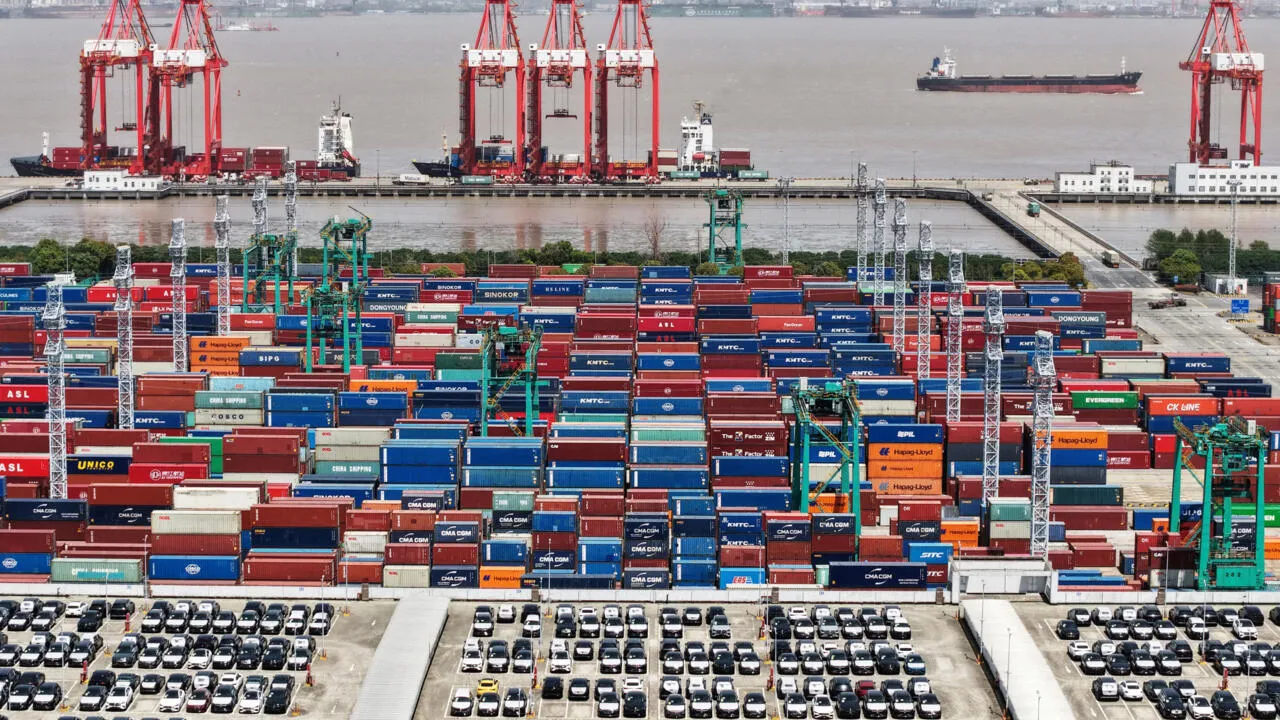 Photo: RFI
Key points
EU trade commissioner Maros Sefcovic opened two days of talks in Beijing with China's commerce minister on curbing surging hybrid car exports.
European Union trade commissioner Maros Sefcovic arrived in Beijing on Thursday for two days of talks with China, seeking a pilot agreement to curb the surge in Chinese hybrid-car exports and shrink a trade deficit running at around €1 billion per day. Sefcovic and Chinese Commerce Minister Wang Wentao will co-chair the second EU-China Trade and Investment Council, with negotiations expected to continue into late Friday.
The meeting matters because Brussels wants results before EU leaders meet in Brussels next Thursday, with China high on the agenda. The central proposal is a 'proof of concept' deal covering one sector, expected to be cars, that could later be extended to chemicals, plastics and other industrial goods. The EU is seeking voluntary Chinese limits on hybrid exports, while warning that failure to agree could trigger safeguard measures, including quotas.
What the two-day meeting seeks
Chinese battery-electric vehicles have faced EU anti-subsidy duties since October 2024, but plug-in hybrids were not covered by those duties. That gap let Chinese hybrid exports climb from around 3,800 vehicles in October 2024 to 50,000 in July 2026, a jump of more than thirteen-fold, increasing pressure on European carmakers. The EU now wants to close that gap through negotiated limits rather than new tariffs alone.
Beijing has previously rejected voluntary export restrictions and firmly opposes import quotas, which sets up the central disagreement at the table. China's foreign ministry said during a press conference on Tuesday that the two economies' supply chains were 'highly integrated and mutually beneficial,' urging the EU to resolve concerns 'through dialogue and consultation'. A commerce ministry spokesperson separately told the EU to avoid protectionist measures.
The trade gap frames every other argument. The European Commission's top trade envoy, Maroš Šefčovič, aims to narrow the EU's 360 billion euro ($410 billion) trade deficit with China, having earlier given Beijing a deadline of October for meaningful results. Chinese exports to the EU rose 15.3% in the first eight months of this year, while its imports from the EU rose 6.2%, according to China's customs agency.
Where the hybrid numbers came from
European lawmakers have already moved. In a debate Tuesday in European Parliament in Strasbourg, lawmakers expressed anxiety alongside defiance over trade with China, and on Wednesday they voted 454 to 86 on a resolution calling for 'economic reciprocity and a proportionate EU response if China does not open its markets.' Hilde Vautmans, the Belgian lawmaker who led the resolution, said that 'Europe has economic power, it's time we used it.'
France and Germany are pushing the European Commission to develop a new rapid-response trade instrument. In a joint letter to Commission President Ursula von der Leyen, French President Emmanuel Macron and German Chancellor Friedrich Merz warned of a 'massive industrial shock' to sectors including cars, pharmaceuticals, aerospace and machine tools. The proposal would make it easier to restrict single-market access for countries deemed to undermine fair competition.
The letter also urged easier use of the Anti-Coercion Instrument, a never-used-before raft of measures for blocking or restricting trade and investment from countries found to be putting undue pressure on EU members or corporations. German officials said the new mechanism could be activated within days, although legislation would still require approval from EU governments and the European Parliament. The EU wants to moderate its action to avoid retaliation from Beijing.
What divides the European side
Not all EU nations agree on tough measures. Spain, the eurozone's fourth-largest economy, has been less adversarial toward China in recent years, and Prime Minister Pedro Sanchez has visited Beijing four times in three years. The European Policy Centre in Brussels said in June that European battery producers, solar panels, steel, electric vehicles, chemicals and machinery are already losing jobs and capacity.
China is preparing for a long dispute. An editorial last month in China's state-run Global Times newspaper read: 'The EU does not have the capacity to wage a trade war against China.' China booked a $1.2 trillion trade surplus globally in 2025, and its exports expanded after U.S. tariffs went into effect last year, diverting shipments toward Europe and other markets.
The talks sit against the stalled EU-China Comprehensive Agreement on Investment, agreed in principle in December 2020 to improve market access and address subsidies, state-owned enterprises and forced technology transfer. The European Parliament has refused to consider ratification since China imposed counter-sanctions on European individuals and entities in 2021, leaving the deal blocked while the new car negotiations proceed.
Negotiations are expected to continue into late Friday, with Brussels seeking 'tangible, meaningful and measurable' results before EU leaders meet in Brussels next Thursday. Whether a pilot car deal survives China's rejection of voluntary export restrictions and EU warnings of safeguard quotas will shape that agenda, as the two sides weigh extension to chemicals, plastics and other industrial goods.
Frequently asked questions
Why are the EU and China meeting in Beijing?
EU trade commissioner Maros Sefcovic and Chinese Commerce Minister Wang Wentao are co-chairing two days of talks seeking a pilot deal on voluntary Chinese limits on hybrid car exports, with the EU's trade deficit with China at €360 billion.
How much have Chinese hybrid car exports grown?
Chinese hybrid exports rose from around 3,800 vehicles in October 2024 to 50,000 in July 2026, after EU anti-subsidy duties covered battery-electric vehicles but not plug-in hybrids.
What happens if no agreement is reached?
The EU has warned that failure to agree could trigger safeguard measures, including quotas on Chinese hybrid imports, while Beijing has previously rejected voluntary export restrictions and opposes import quotas.
How this story was checked
- Fact-checked against 3 cited pages. 31 figures, dates and quotations in this story were found on the pages it cites.
- Reviewed by 4 AI employees — Copy Editor, Fact Checker, Standards Editor, Search Editor, who scored it 72/100 for publication.
Pages checked (3 of 3)
- rfi.frread and checked
- japantimes.co.jpread and checked
- independent.co.ukread and checked
Written by Kaer from public reporting. Checked 8 October 2026.


