EU leaders meet in Dublin for first AI talks amid Ukraine splits
EU leaders gather in Dublin on 13 November for their first dedicated AI summit, but Ukraine representation and funding disputes crowd the agenda.
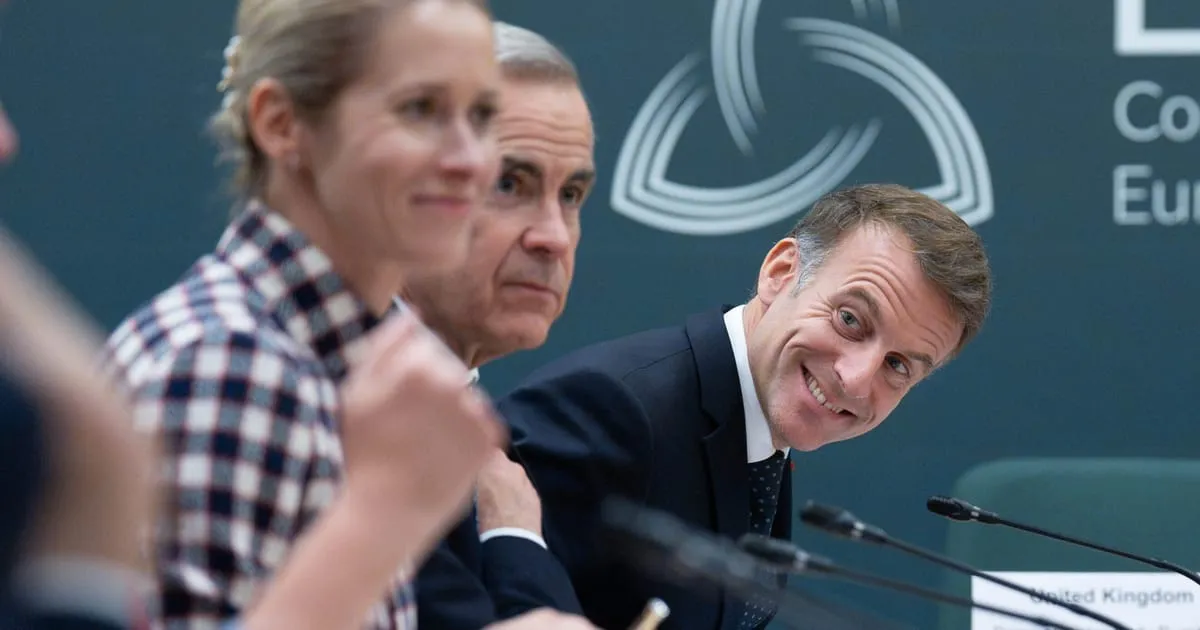 Photo: POLITICO
Key points
EU leaders met in Dublin for their first dedicated AI summit, but Ukraine representation and funding disputes dominated the agenda.
EU leaders gathered in Dublin on 13 November for their first dedicated discussion on artificial intelligence, but the agenda was crowded with disputes over Ukraine representation and funding. Formal talks began at 9:45 a.m., followed by lunch around 1 p.m. and a press conference provisionally scheduled for 4:15 p.m. The summit is part of Ireland's six-month presidency of the EU Council.
European Council President António Costa framed the AI debate around sovereignty, asking leaders to consider "how Europe can become a leading and sovereign player" across the AI value chain. The central question is whether Europe should build frontier models to rival US and Chinese developers, or focus on applications built on those models. Finland's Petteri Orpo and Estonia's Kristen Michal argued that Europe "can compete at the frontier" and must aim beyond merely adopting AI.
AI ambitions and funding
The obstacle is money. Leaders discussed how to fund the computing capacity needed to turn European research into products. They heard from Arthur Mensch, CEO of French AI company Mistral, who has railed against abandoning the frontier, and AI pioneer Geoffrey Hinton about global rules for the technology. The EU's position is that its AI Act already provides a regulatory framework.
The summit was overshadowed by the question of who should represent the EU in future Ukraine peace talks. US envoy Steve Witkoff said Thursday that Europeans will be invited to the next round of negotiations, a longstanding demand from the EU. But Ukrainian President Volodymyr Zelenskyy said earlier this week that Europe needs to choose a single person to represent them, ideally by the end of this month.
The bloc is split into at least three camps. One supports Costa, whose role makes him the natural candidate. Another backs France and Germany, which are reluctant to surrender their own places at the negotiating table. A third, smaller camp supports EU foreign policy chief Kaja Kallas, whose hawkishness on Russia some diplomats say could put off the Kremlin. Estonian PM Kristen Michal backed Costa, saying his "mandate comes directly from the [European] Council".
Ukraine representation dispute
France and Germany are the biggest obstacle to a Brussels monopoly on representation. German Chancellor Friedrich Merz called the E3 format (Germany, France and the UK) "a well-established format," adding: "I don't see any problem at all with things staying that way." French President Emmanuel Macron said Thursday that Europe must first agree on its proposals and security vision. French MEP Fabrice Leggeri said he could "hardly imagine" Costa or Kallas speaking for Paris.
Leaders also addressed Ukraine's funding needs, as Kyiv faces a €70 billion shortfall next year. Merz linked Ukraine funding to negotiations on the EU's next long-term budget in a letter to Costa, drawing resistance from governments wary of further commitments. He said that Germany, the bloc's biggest budget contributor, can't accept free-riders on Ukraine and European security. Some lawmakers want frozen Russian assets placed in an EU-controlled structure.
Budget and ECB race
After a first chat on Thursday in Dublin, Macron and Merz are expected to discuss the race to replace European Central Bank President Christine Lagarde. Spain's Pablo Hernández de Cos and former Dutch central banker Klaas Knot are the leading contenders. The presidency is part of a broader contest over three senior appointments, with Germany's Isabel Schnabel and Ireland's Philip Lane also due to leave the ECB's Executive Board in 2027.
Frequently asked questions
What is the purpose of the EU leaders' summit in Dublin?
The summit is the first dedicated discussion on artificial intelligence, but it is also addressing Ukraine representation and funding, the EU budget, and the ECB presidency race.
Who is expected to represent the EU in Ukraine peace talks?
The bloc is split between supporting European Council President António Costa, France and Germany, and EU foreign policy chief Kaja Kallas. No decision was made in Dublin.
How much funding does Ukraine need next year?
Ukraine faces a €70 billion shortfall next year. Leaders discussed funding, with Germany linking it to the EU budget negotiations.