France's cost-of-living protests draw 82,500 on sixth weekend
The Interior Ministry counted 82,500 demonstrators across France on 21 November, down from 106,000 a week earlier, as unions and students held a sixth weekend of rallies.
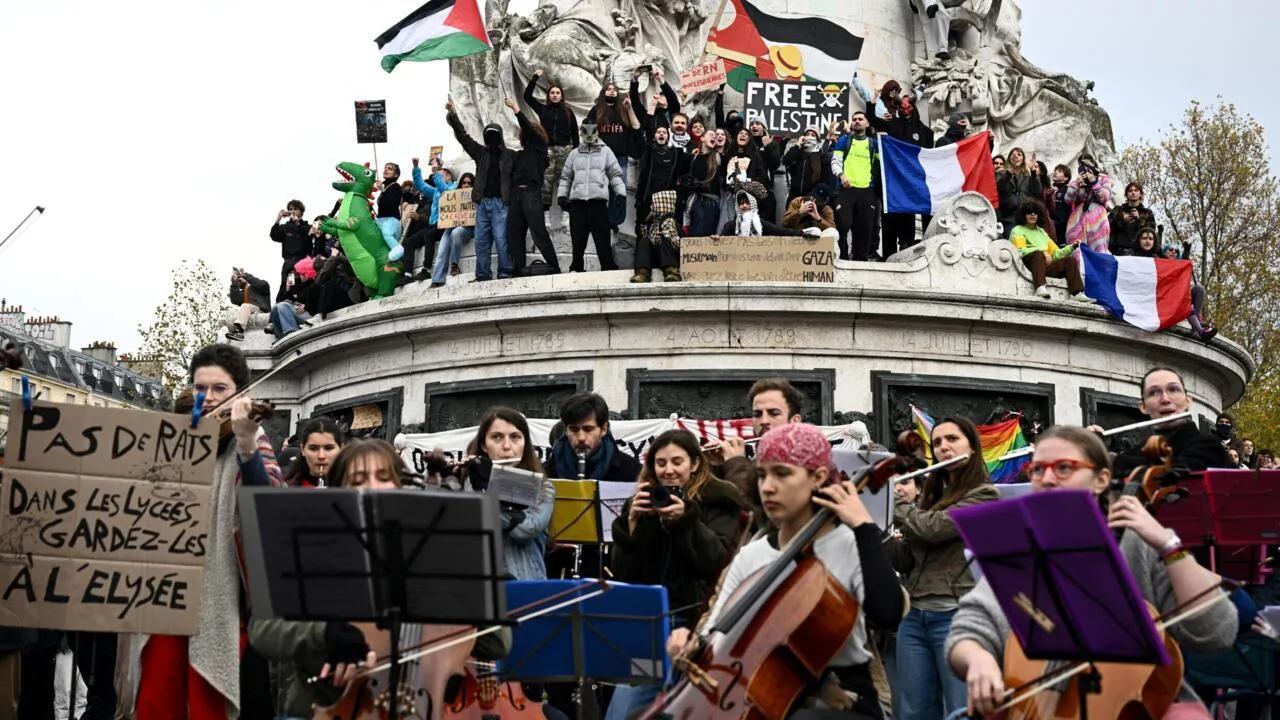 Photo: RFI
Key points
The Interior Ministry counted 82,500 protesters across France on 21 November, down from 106,000 the previous Saturday, in a sixth weekend of cost-of-living rallies.
Thousands of demonstrators took to the streets across France on 21 November for a sixth consecutive weekend of protests against rising living costs, deteriorating public services and growing inequality. The Interior Ministry said 82,500 people took part nationwide, including 21,500 in Paris, while organisers put the figure at 150,000, including 45,000 in the capital.
Two counts of the crowd
Turnout fell from the previous Saturday, when the ministry counted 106,000 protesters across France and 24,000 in Paris. Organisers had put that 14 November figure at 200,000. The lower numbers gave the government some respite after weeks of demonstrations that have sometimes turned violent. The ministry recorded 44 demonstrations nationwide and seven arrests by 2pm local time, and described the situation as generally calm. About 70,000 security forces were deployed across France to keep the protests safe and deter disorder. Sporadic acts of violence were reported, including in the southern city of Marseille.
In Paris, several thousand demonstrators converged on Place de la République, where musicians, food trucks and colourful costumes created a festive atmosphere. Trade union banners and flags of left-wing parties mingled with those of student organisations and the Yellow Vest movement, which emerged eight years ago over fuel prices, taxation and declining purchasing power.
How the movement began
Some demonstrators carried homemade placards demanding greater investment in education, healthcare and social protection. One sign read: "I want to live, not survive." Another group erected mock gravestones symbolising the death of France's public services, including its education and social security systems. The protests began in mid-September, when secondary school students mobilised to demand better learning conditions, more resources and improvements to the education system. University students, trade unions and political organisations then joined, turning an initially youth-led campaign into a broader movement against rising prices, inadequate public services and allegations of excessive police force.
Participation has declined since the movement's early weeks, but organisers have kept bringing demonstrators onto the streets. On 17 October the Interior Ministry said some 565,000 people protested, the largest count of the campaign. Student representatives say the difficulties are shared well beyond France's borders. "In a number of countries, young people are going through the same thing, namely precarity," said Manon Moret, general secretary of the Unef student union. "You have to choose between having a roof over your head, getting medical care, and being able to eat your fill." Rent rights organisations joined the sixth Saturday of protests, and demonstrations took place in seven European countries, including Spain, Portugal, Greece and Germany.
Police law adds tension
The mobilisation came a day after parliament adopted legislation strengthening legal protections for police officers who use their firearms. The government and conservative lawmakers backed the measure; the left strongly criticised it. In Paris, one protester carried a placard reading "No to the licence to kill", reflecting fears that the law could weaken police accountability.
Ahead of the rallies, Interior Minister Laurent Nuñez instructed regional prefects to remain "particularly vigilant regarding the groups most hostile to law enforcement" following the adoption of the new police legislation. The issue has grown more prominent since clashes between riot police and demonstrators at earlier rallies, and some gatherings last month descended into violence, with shops looted and buildings attacked or set alight.
The weekend also coincided with the eighth anniversary of the Yellow Vest movement, a reminder of how grievances over purchasing power and inequality have repeatedly fuelled social unrest in France. The French rallies followed a series of demonstrations across Europe on 20 November, when protesters challenged government policies on living costs, military spending and climate change. Organisers have not announced the date of the next national mobilisation. The Interior Ministry's count of 82,500 on 21 November stands as the benchmark against which the next weekend's turnout will be measured.
Frequently asked questions
How many people protested in France on 21 November?
The Interior Ministry said 82,500 people took part across France, including 21,500 in Paris. Organisers put the figure at 150,000 nationwide, including 45,000 in the capital.
Why are protests taking place in France?
The movement began in mid-September when secondary school students demanded better learning conditions and more resources. It broadened into protests against rising living costs, inadequate public services and alleged excessive police force.
How does turnout compare with earlier protests?
The ministry counted 106,000 protesters nationwide and 24,000 in Paris on 14 November. On 17 October it said some 565,000 people protested, the largest count of the campaign.