France blames Iran for freezer hacks at 700 supermarkets
France formally blamed Iran's Islamic Revolutionary Guard Corps for October cyberattacks that disrupted refrigeration at more than 700 supermarkets, causing food losses and at least 15 fires.
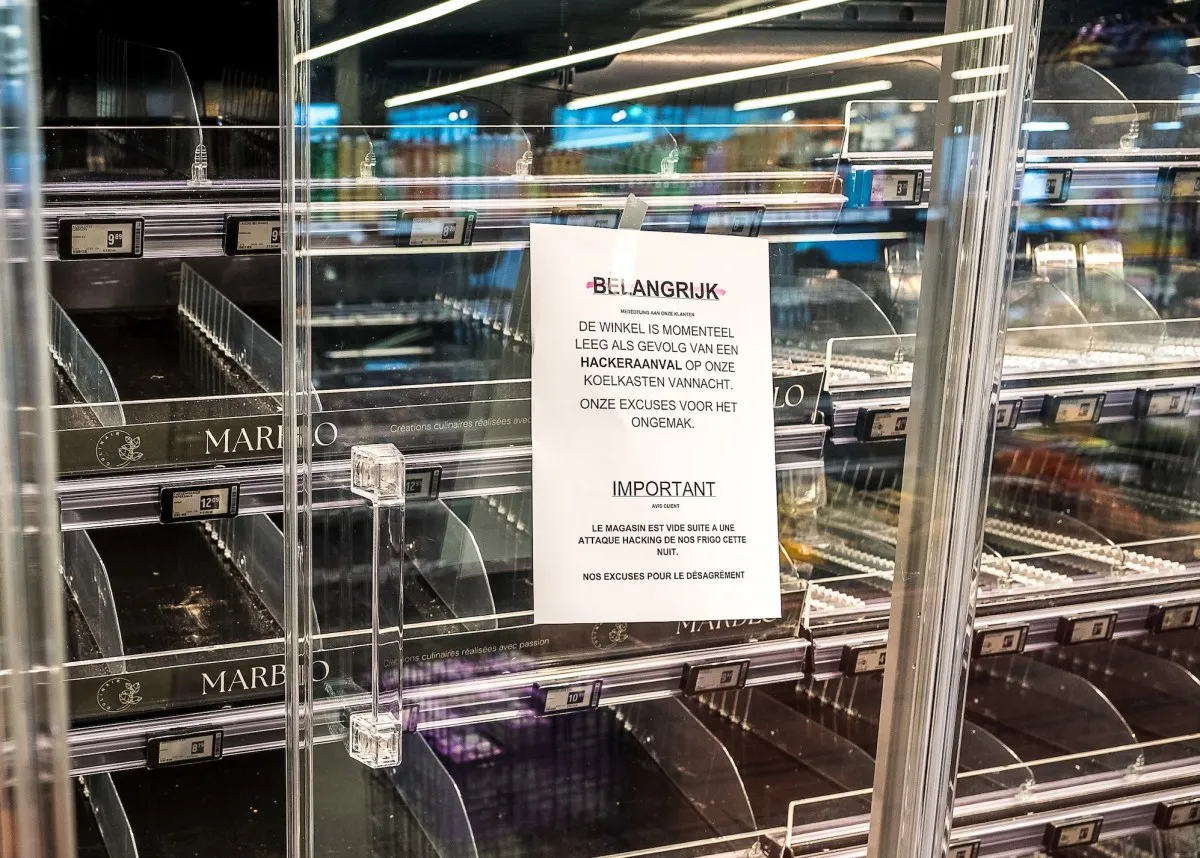 Photo: TechCrunch
Key points
France attributed October cyberattacks on supermarket refrigeration systems to Iran's IRGC Shahid Kaveh unit, affecting more than 700 stores and causing at least 15 fires.
France's foreign minister formally blamed Iran's Islamic Revolutionary Guard Corps for cyberattacks that disrupted refrigeration at more than 700 supermarkets and other retail locations across France, causing food losses and at least 15 fires. Jean-Noël Barrot told reporters in Paris on Monday: "I am able to confirm that responsibility for this act lies with the Islamic Revolutionary Guard Corps." The attacks occurred overnight on October 11–12, when hackers remotely changed defrost settings to high temperatures on industrial refrigeration controllers.
The French government's statement, issued by the Ministry for Europe and Foreign Affairs, called the campaign unprecedented. "This was an attack of unprecedented scale and aggression; it represents the first large-scale act of sabotage on our national territory and constitutes a major assault on the nation's interests and the security of the French people," Barrot said. The ministry added that France would "use all available means of response, including within the European Union and alongside its European and international partners."
Attribution to Shahid Kaveh
France's Cyber Crisis Coordination Center (C4), which includes the national cybersecurity agency ANSSI, military cyber command, and intelligence agencies, attributed the attacks to the Shahid Kaveh unit, a cyber-offensive group affiliated with the IRGC's electronic and cyber center. The unit operates through online hacktivist identities including CyberAveng3rs, Soldiers of Solomon, Mr. Soul, and Cyber Isnaad Front, according to CERT-FR. French national security officials say the unit is led by Reza Salarvand and Mahdi Lashgarian.
The C4 report detailed the evidence linking Shahid Kaveh to the attacks. Investigators found that the infrastructure used in the October attacks was also used for reconnaissance against Schneider Electric industrial systems, using techniques previously associated with the unit. They also discovered traces of Farsi in the attack infrastructure and noted that Iranian media outlet CyberbanNews, linked to Shahid Kaveh, publicized the incidents as early as October 13. The attackers used the FOFA internet-connected device search platform, which CERT-FR says the group commonly uses.
The attacks targeted web-based controllers that manage industrial cold and chilling units at grocery stores and retail supermarkets. Hackers raised temperatures to spoil food and destroy goods. Affected chains included Casino, Leclerc, Coopérative U, Metro, Carrefour, and Intermarché, along with smaller butcher shops, a slaughterhouse, and cooperative food-processing facilities, according to a CERT-FR technical report. French authorities say the attacks caused tens of millions of euros in food losses and significant material damage.
Mechanism of the attacks
Security researchers have warned that the web-based controllers are vulnerable to remote hacks, with some affected models made by Danish company Danfoss no longer receiving security fixes. The French government said the attacks were the first large-scale cyber offensive campaign carried out purely for the purpose of sabotage on national territory. The ministry noted that Iran had previously carried out destabilizing acts against France, including targeting the weekly magazine Charlie Hebdo in 2023 and the organization of the Paris Olympic Games in 2024.
French investigators also detected attacks against Schneider Electric industrial equipment at small hydroelectric installations during the same period, which they linked to the same campaign. These incidents reportedly had moderate effects on the targeted equipment. The October attacks were followed by a second wave of refrigeration system attacks reported in November, affecting more than 115 stores across six European countries, including Belgium, Ireland, Luxembourg, and Sweden, with temperatures spiked as high as 122°F (50°C).
France's national blood service, the French Blood Establishment, reported a similar incident that altered temperature and defrost settings at three facilities used to store blood products, but the attacks were stopped before any blood was spoiled. The U.S. government linked the attacks to pro-Iranian hacktivists working for Tehran, likely in response to the U.S./Israel-led war against Iran which killed its supreme leader in February. The U.S. is also reportedly looking into whether freezer units on military bases were hacked, but the intelligence community has not made a formal attribution.
Response and consequences
France summoned Iran's ambassador to protest the attacks. Barrot said the matter was now in the hands of the French justice system. Paris prosecutor Laure Beccuau announced the opening of a preliminary investigation targeting the head of Shahid Kaveh and his two deputies, and requested international arrest warrants against them. The French government said it would propose new European Union sanctions against Iranian individuals and organizations involved in malicious cyber operations.
A spokesperson for Iran's consulate in New York did not immediately respond to a request for comment. The European Commission said it was in direct contact with national authorities, and a spokesperson noted that discussions and coordination had taken place within the network of member states' authorities responsible for cyber crises. France reserved the right to take additional measures, public and non-public, deemed necessary and proportionate to respond to the attacks, according to the ministry's statement.
Last week, the FBI and CISA warned of ongoing cyberattacks targeting industrial refrigeration and cold-chain monitoring systems worldwide. The French government said it would "use all available means of response" and did not rule out responding with more than harsh words. "France reserves the right to take any additional measures, public and non-public, deemed necessary and proportionate to respond to these cyberattacks," the ministry said. The investigation continues, with the prosecutor's office seeking international arrest warrants.
Frequently asked questions
Who did France blame for the supermarket freezer hacks?
France blamed Iran's Islamic Revolutionary Guard Corps, specifically the Shahid Kaveh cyber unit, for the attacks. Foreign Minister Jean-Noël Barrot confirmed the attribution on Monday.
How many supermarkets were affected by the cyberattacks?
More than 700 supermarkets and other retail locations in France were affected. The attacks occurred overnight on October 11–12, causing food losses and at least 15 fires.
What did the hackers do to the refrigeration systems?
Hackers remotely broke into web-based controllers and changed defrost settings to high temperatures, disrupting systems used to preserve food. This caused food to spoil and sparked fires.