France protests leave 1,200 arrested as fires sweep cities
An estimated 550,000 people joined cost-of-living and school protests across France on Saturday, with at least 1,200 arrested, 150 police officers injured, and town halls and shops burned.
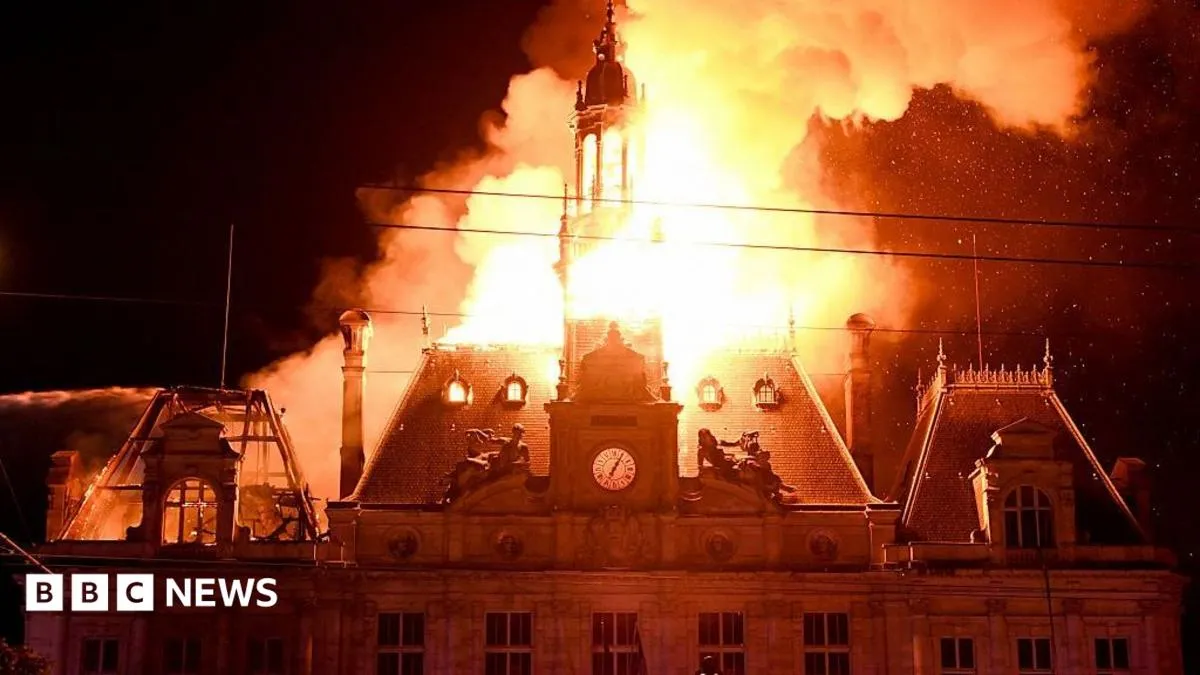 Photo: BBC News
Key points
At least 1,200 people were arrested during violent protests across France on Saturday, with an estimated 550,000 joining marches and buildings set ablaze.
Violence broke out across France on Saturday during demonstrations against hardship in schools and the cost of living, with at least 1,200 people arrested and an estimated 550,000 taking to the streets. The French government described an "escalation in violence" as riot police used tear gas and water cannon on crowds in Paris and other cities.
The protests matter because they combine long-simmering anger over school conditions with cost-of-living grievances, arriving as France enters a period of deep political uncertainty. Hundreds of thousands of students had protested in recent weeks over staff shortages and dilapidated facilities in lycées, secondary schools for 15 to 18-year-olds, and on Saturday their numbers were bolstered by trade union members and other groups.
Why the protests escalated
The unrest drew together several movements. Students had protested for more than three weeks over classroom conditions, teacher absences and university admissions, according to Bloomberg. The Yellow Vests movement, which began in 2018 to fight rising living costs after a planned fuel-tax rise under President Emmanuel Macron, also joined, alongside unions including the CGT focusing on public spending and the cost of living.
The CGT trade union estimated around 550,000 people took part nationwide, while authorities had not immediately released their own estimate. A Cluster 17 poll published October 11 found about 57% of French people support the student protesters. The government has promised to consider the students' complaints but cannot greatly raise the education budget.
In Paris, the main march appeared largely peaceful during the afternoon, but as the day wore on some groups lit fires in the street and torched vehicles, including at the Place de la République. Shops were ransacked, at least one restaurant was gutted by fire, and riot police were seen charging at one crowd in central Paris, hitting several people with batons.
Where the damage was worst
Damage spread across many cities. In Limoges, a large fire in the town hall caused the roof to partly collapse, and the local prefecture said the building was "largely lost". In Lyon, Mayor Grégory Doucet called the burning of the city's tourist office "a tragedy", telling BFMTV "it breaks our hearts because it's a very iconic, well-known historic building". Town halls in Marseille and Lille were broken into, and an Apple store in Lille was emptied.
Prime Minister Sébastien Lecornu said 150 police officers were injured in the unrest, while Interior Minister Laurent Nuñez said 60 law enforcement officers were injured, including two taken to hospital unconscious. In Saint-Étienne, Mayor Régis Juanico said a young man "had his hand blown off by a grenade", adding: "Such a tragedy should never have happened." A similar injury hit a 15-year-old in Lens on October 5.
President Emmanuel Macron said: "Those who have broken, attacked the prefectures as well as businesses, looted even our town halls, will be prosecuted and punished." Lecornu blamed "ultraleft groups" and backed a "pay-the-damagers" bill making those responsible for destruction bear the financial cost. Jean-Luc Mélenchon accused police of "unleashing" on protesters, while Marine Le Pen said legitimate demands had been "held hostage by the far left".
What the government promised
The government has made apparent attempts at concessions, with Education Minister Édouard Geffray promising 3,000 extra supply teachers during a television interview on 8 October. However, the protests have continued and intensified. Macron will leave office next year, and polls suggest April's presidential election could come down to a contest between Le Pen and Mélenchon.
Frequently asked questions
How many people were arrested in the France protests?
At least 1,200 people were arrested during the day of demonstrations across France, according to the French government, which described an escalation in violence. The interior ministry had earlier reported 272 arrests as of 3pm.
How many people joined the protests in France?
An estimated 550,000 people took to the streets across France, joining cost-of-living and school-hardship demonstrations. The CGT trade union estimated around 550,000 participated nationwide, though authorities had not immediately released their own figure.
Why were protesters demonstrating in France?
Protesters marched against hardship in schools and the rising cost of living. Hundreds of thousands of students had protested for weeks over staff shortages and dilapidated facilities in lycées, joined by trade union members and Yellow Vest activists.