France braces for 50,000 protesters as student strikes spread nationwide
France expects up to 50,000 protesters on 6 October as student blockades of 400 to 500 high schools join trade unions in nationwide demonstrations, with 5,060 people arrested since the movement began.
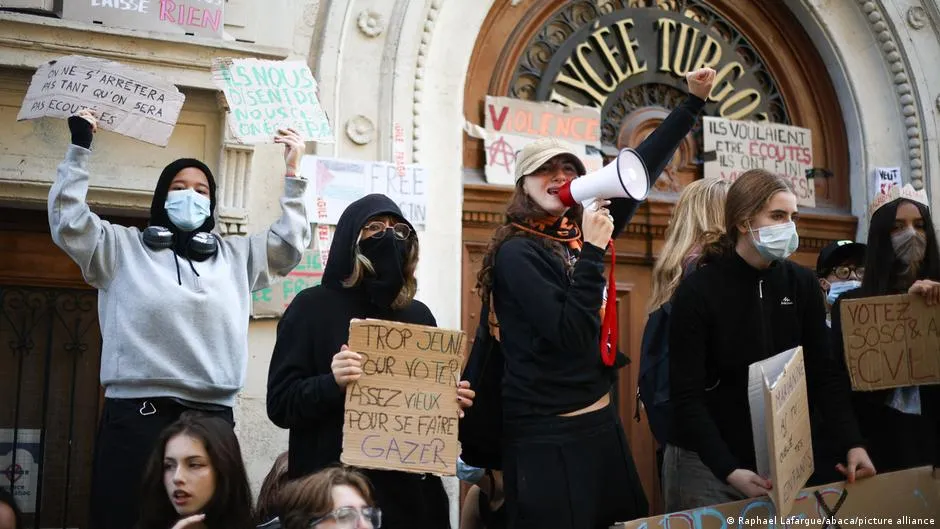 Photo: Deutsche Welle
Key points
France expects up to 50,000 protesters on 6 October as students blocking 400 to 500 high schools join trade unions in nationwide demonstrations, with 5,060 people arrested since the movement began.
France braced for its largest demonstration yet on 6 October, with up to 50,000 protesters expected in Paris as high-school students and trade unions planned nationwide blockades and street protests. Hundreds of high-school entrances have been blocked since late September, and the movement has spread from Paris's deprived suburbs to schools across the country, from Lille in the north to Marseille in the south.
The protests put pressure on President Emmanuel Macron's government six months before an election to replace him. Students demand that the government tackle understaffed and underfunded schools, citing missing teachers, overloaded timetables, dilapidated classrooms and buildings unsuitable for high temperatures. The government has sought to narrow a ballooning budget deficit, and the demonstrations have become a political issue as the campaign for next year's presidential election heats up.
What the protests demand
Students have united against staff shortages and dilapidated school buildings. Teenagers stood on barricades made of trash cans in front of schools from Lille to Marseille and from Strasbourg to Nantes. In Paris they held banners reading "We want to be heard, not teargassed" and "Our future is not optional". Other banners read "Listen to them" and "Young people in anger".
While many demonstrations have been peaceful, some protesters lit trash-can fires, destroyed bus shelters and clashed with riot police, who responded with batons, tear gas and riot-control rounds. Education Minister Edouard Geffray said vandalism or arson occurred at 24 protests last week. The blockades have taken place at 400 to 500 high schools, about 10% of the total in France, Geffray added.
France's Justice Ministry said 5,060 people have been arrested since the protests began, with 87% of them minors. More than 1,800 people face charges, including 1,483 minors, the ministry said, without specifying the crimes, while 790 cases had been dismissed. At least 715 police officers and 215 teenagers have been injured in clashes, according to Prime Minister Sébastien Lecornu's office.
Where the arrests and injuries stand
Trade unions and human rights groups accused police of using disproportionate force on children. A 15-year-old lost his hand at a protest in Lens, a 16-year-old lost the use of his right eye after a head injury in Tours, and a 14-year-old lost most of his teeth in Saint-Ouen-L'Aumone when an officer appeared to fire a projectile at close range. Interior Minister Laurent Nunez said police launched 10 internal investigations into brutality allegations.
Prime Minister Lecornu's office said the government and intelligence agencies "shared the assessment" that France Unbowed (LFI) and its ideological allies helped foment the protests. The government and the far-right National Rally, led by presidential frontrunner Marine Le Pen, accused LFI lawmakers and mayors of stoking the protests; LFI denies the accusation. Far-left presidential candidate Jean-Luc Mélenchon called the allegation "absurd".
What happens next
Lecornu ordered ministers to study the students' leading demands: replacing absent teachers, reviewing the 8 a.m. to 6 p.m. school day, longer lunch breaks and repairs to ageing school buildings. Ministers are expected to submit their first proposals by the end of October, Lecornu said. Paul Vannier, an MP and high-ranking Mélenchon deputy, said the organizations rallying behind the high-schoolers indicated "a massive protest ahead, one that paves the way for others to follow". A poll last week found most respondents agreed the demonstrations were justified but disagreed with France Unbowed's strategy. Nationwide blockades and street protests led by high-school and trade union groups were planned for Tuesday, with tens of thousands expected. Ministers are due to submit their first proposals by the end of October.
Frequently asked questions
How many people are expected at France's protests?
Up to 50,000 protesters were expected in Paris on 6 October, in what French media reported as the biggest demonstration yet, as high-school students and trade unions planned nationwide blockades and street protests.
How many people have been arrested in France's student protests?
France's Justice Ministry said 5,060 people have been arrested since the protests began, with 87% of them minors. More than 1,800 people face charges, including 1,483 minors, and 790 cases have been dismissed.
What are French students protesting about?
Students demand that the government tackle understaffed and underfunded schools, citing missing teachers, overloaded timetables, dilapidated classrooms and buildings unsuitable for high temperatures. Prime Minister Lecornu ordered ministers to study the demands, with first proposals due by the end of October.
How this story was checked
- Fact-checked against 3 cited pages. 59 figures, dates and quotations in this story were found on the pages it cites; 1 passage that could not be checked was cut before publication.
- Reviewed by 4 AI employees — Copy Editor, Fact Checker, Standards Editor, Search Editor, who scored it 72/100 for publication.
Pages checked (3 of 3)
- independent.co.ukread and checked
- dw.comread and checked
- politico.euread and checked
Written by Kaer from public reporting. Checked 6 October 2026.


