France deploys troops as Paris extends curfew after riots
France will send troops alongside police for a massive security operation on Saturday 24 October, after rioting and looting swept Paris, Marseille and Lyon on 17 October, the government said on Tuesday 20 October.
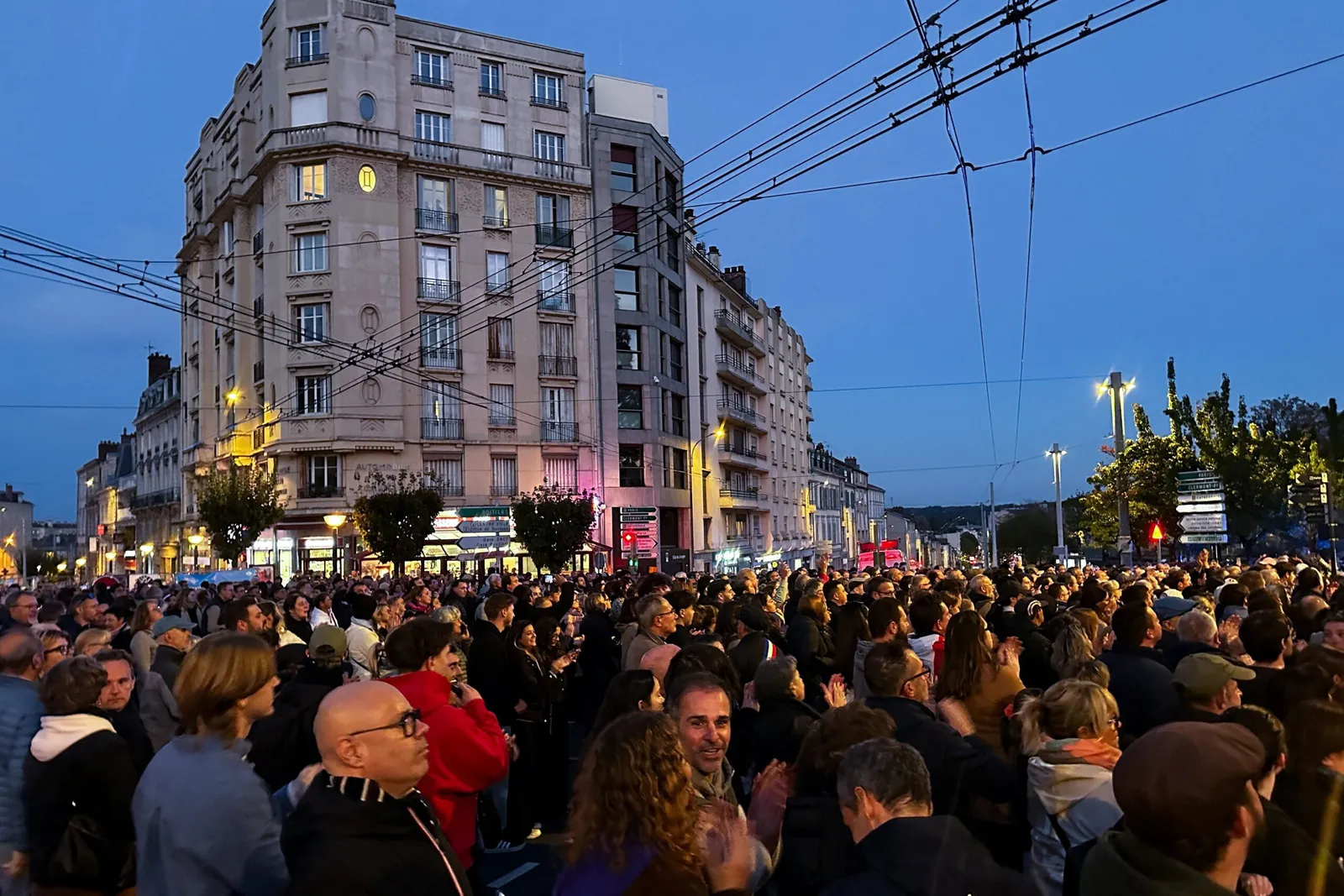 Photo: Rappler
Key points
France will deploy troops alongside police for a massive security operation on Saturday 24 October after rioting and looting swept several cities on 17 October.
France will deploy troops alongside police for a massive security operation on Saturday, 24 October, after rioting and looting swept Paris, Marseille, Lyon and other cities on 17 October, Prime Minister Sebastien Lecornu said on Tuesday, 20 October. "The deployment next Saturday (October 24) will be massive," Lecornu said, adding that the immediate priority was to restore order.
The deployment matters because it follows a weekend of violence the government says it failed to contain, and because new protests are planned for the same Saturday. Interior Minister Laurent Nunez said the military would be deployed alongside police, while the government pledged to overhaul tactics after criticism that city centres had been left vulnerable. Lecornu framed the crisis as a choice "between violence and the Republic."
Why the deployment matters now
Targeted curfews imposed in several affected areas helped restore calm, the government said, and a night of relative calm followed. The localized curfews, some directed at children and teenagers under age 18, were extended to Tuesday night, police said. Paris police on Tuesday extended an overnight curfew for a second day to keep a lid on unrest. The curfews in Paris helped police regain control of key areas where they clashed with protesters on Saturday and Sunday.
The government acknowledged failures in its response. Lecornu said there had been intelligence failures, that police deployments had been too static, and that authorities had erred by not cancelling planned police leave. Nunez apologised for the mistakes: "I deeply regret what happened. I accept my share of responsibility," he said. Parliament is setting up a commission of inquiry to establish the causes of the unrest, and authorities have assigned 200 investigators to identify and track down those involved.
Police arrested on Tuesday a man suspected of starting a blaze that destroyed a historic town hall in the central city of Limoges during the rioting. Officials said he had been on a security watch list and belonged to an ultra-left group. Police in Limoges announced on Tuesday that the suspect in the destruction of the town hall in an arson attack on Saturday night was a member of an "ultra-left" group who had been on a security watch list.
What the government admitted
Lecornu blamed the unrest on far-left groups, who in turn accused the government of underestimating public anger over high living costs and declining public services. Raphael Glucksmann, co-leader of centrist Place Publique Party, said: "These thousands of rioters couldn't care less about the ongoing social movement or the high school students' demands." Some rioters were motivated by theft, while others were driven by political agendas including far-left ideology.
Businesses reported heavy losses. Supermarket chain Carrefour said it had lost tens of millions of euros through theft and damage, warning it faced an "unprecedented situation." French borrowing costs rose further on Tuesday, with the yield on benchmark 10-year government bonds touching its highest level in 24 years. Stores selling brand-name clothing and footwear, including Lacoste, Tommy Hilfiger, New Balance and Hoka, were among those ransacked in wealthy parts of Paris.
Shop owners around the Place de la Republique, a focal point for the destruction, expressed anger at police for failing to come to their help when looters ransacked their stores. A manga store manager, Kevin, said he and his colleagues called the police five times on Saturday night but were told the authorities were overwhelmed. Rare Pokémon cards priced at up to €3000 were stolen, he said.
New protests are being planned for Saturday by left-wing groups involved in the "yellow vest" rallies over the cost of living in 2018, and France's main student union UNEF has called for further protests on Saturday. Groups identifying themselves as "Gilets Jaunes" called for protest actions over rising fuel costs. Lecornu promised a "massive" deployment on Saturday to ensure control in the event of further protests.
Protests planned for Saturday
The unrest is shaping the race for the presidency at national elections due early next year. The first major poll since the Saturday riots showed Le Pen and National Rally with a lead of between 34 and 38 per cent, according to research firm Ifop for Le Figaro, which said Le Pen would win in all second-round head-to-head scenarios tested.
President Emmanuel Macron continued with a state visit to Qatar rather than stay in Paris to deal with the unrest, drawing fierce criticism. National Rally accused the government of being too slow to respond. Sylvain Maillard, a Renaissance deputy for Paris, said some apps had become "a walkie-talkie system for rioters and looters." Northern Italian cities, including Milan, were also hit by riots last weekend. Defense Minister Guido Crosetto described the disturbances as a form of "hybrid warfare" conducted through social media platforms. The next dated event is the planned protest and the government's "massive" security deployment on Saturday, 24 October.
Frequently asked questions
When will France deploy troops?
France will reinforce police with troops for a massive security operation on Saturday, 24 October, Prime Minister Sebastien Lecornu said on Tuesday, 20 October, ahead of planned protests.
Why were curfews imposed in Paris?
Targeted curfews, some directed at children and teenagers under age 18, were imposed in several affected areas and extended to Tuesday night after rioting and looting on 17 October.
What did the government admit went wrong?
Prime Minister Lecornu acknowledged intelligence failures, police deployments that were too static, and a failure to cancel planned police leave. Interior Minister Laurent Nunez said he accepted his share of responsibility.