Google and Blue Origin to launch orbital data centers in 2029
Google and Blue Origin will launch solar-powered AI data centers into orbit on New Glenn in Q1 2029, targeting eight times more solar power.
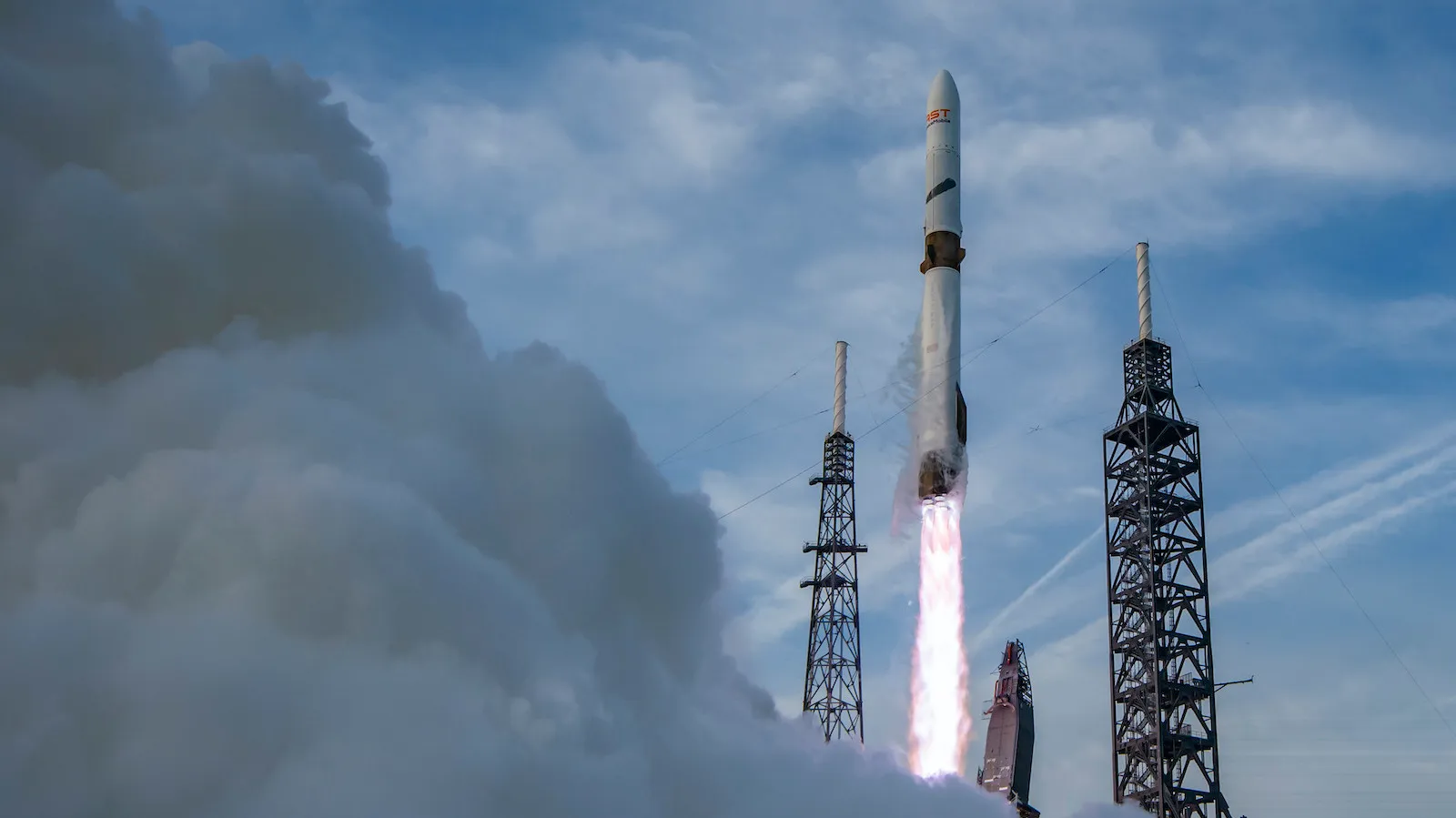 Photo: Engadget
Key points
Google will launch its first heavy-lift Project Suncatcher mission on Blue Origin's New Glenn in Q1 2029, deploying solar-powered AI data centers.
Google has signed a launch services agreement with Blue Origin to deploy small satellite data centers into space as part of Project Suncatcher, an experiment aimed at running AI systems in orbit. The first heavy-lift launch is targeted for Q1 2029, using Blue Origin's New Glenn rocket to place the satellites into sun-synchronous orbit. Each satellite will carry Google's Tensor Processing Units, or TPUs, along with data center servers, providing computing capacity roughly at the scale of a data center rack.
The announcement came on 19 November 2026, with Google's Travis Beals, senior director of paradigms of intelligence, describing Project Suncatcher as a long-term moonshot to scale AI infrastructure in space by tapping into the abundant solar power in orbit. The dedicated launch builds on Google's ongoing work with other satellite and launch partners, according to the company's blog post. Blue Origin confirmed the agreement on the same day, stating that the launch services agreement covers deployment of solar-powered satellites equipped with Google's AI chips.
The launch agreement
Project Suncatcher is Google's research into whether an interconnected network of solar-powered satellites could scale machine-learning compute in space. The project aims to move beyond the single-prototype stage, with the heavy-lift launch intended to serve a multi-satellite deployment. Google says satellites in low Earth orbit can access near-constant sunlight and generate up to eight times more solar power than on Earth, forming the project's energy rationale. The benefits would be significant, as data centers on Earth are notorious for their consumption of electricity, land and cooling systems.
The New Glenn rocket's specifications give it general lift ratings of 45 metric tons to low Earth orbit and more than 13 metric tons to geostationary transfer orbit. Its seven-meter payload fairing provides twice the volume of smaller five-meter-class fairings, while the reusable first stage is designed for a minimum of 25 flights. Jordan Charles, senior vice president of New Glenn at Blue Origin, said the rocket's heavy-lift capacity and large payload volume give customers the flexibility to bring new capabilities to orbit. For Suncatcher, that combination is intended to support a multi-satellite deployment.
The agreement follows Google's September 2026 Project Suncatcher prototype preview and its subsequent in-orbit TPU response. A prototype satellite launched on 1 October 2026; by 30 October 2026, Google had powered the host and TPU trays and run early machine-learning tests during commissioning. Its onboard Gemma 4 model generated a haiku, which Google described as the first AI response from a data-center-class TPU in orbit. The disclosed plan continues with thermal-stress and radiation testing, followed by a planned 2027 milestone of two interconnected satellites.
Prototype progress
The prototype satellite was sent into low-Earth orbit and can only operate for 15 minutes at a time, according to Engadget. Scaling up the affiliated cooling systems looks to be incredibly difficult, as standard heat dissipation doesn't work in space. Heat has to be released through pipes and panels rather than conventional cooling systems. There's also the matter of radiation, which causes something called bit flip, where binary code flips from a one to a zero or vice versa, a major issue for binary-coded systems.
The proposed future designs place dozens of TPUs on each satellite and use lasers for high-bandwidth communication over short distances between spacecraft orbiting in clusters. In a vacuum, chips cannot rely on airflow; engineers have tested heat pipes and radiators in a thermal vacuum chamber. The laser links must maintain high bandwidth over short distances between moving spacecraft, requiring precise knowledge of each satellite's position relative to its neighbors. These engineering problems are central to whether Suncatcher can progress from individual machines running in orbit to a networked machine-learning system.
The cost of launches remains a significant hurdle. Just one Falcon 9 launch costs around $74 million and the maximum payload can barely cover the hardware for a small server room, let alone a hyperscale data center. Brandon Lucia, a professor of electrical and computer engineering at Carnegie Mellon University, said that expanding from one satellite to a vast network of them that operate like a giant data center will take years and enormous funds. He added that if done on a large scale, there are additional engineering problems.
Engineering challenges
There is also a risk to humans on Earth from space debris. Scientists have been considering a theoretical scenario called Kessler syndrome for decades, where the density of objects in low-orbit gets so high and collisions become so commonplace that it creates a chain reaction of debris. This theory was posited back when there were just under 2,000 items circling a low-Earth orbit. That number has since risen to over 47,000, and Elon Musk recently floated an idea to add millions of new satellites into the mix.
Google is not the only company exploring orbital data centers. Elon Musk's SpaceX has been experimenting with the idea, though it may involve putting a gigantic catapult on the moon. There are also startups fiddling with the technology, like Starcloud. The first launch isn't scheduled until early 2029, so there are a couple of years to see if the project works. The upcoming tests will be central to determining whether Suncatcher can progress from individual machines running in orbit to a networked machine-learning system.
Frequently asked questions
What is Project Suncatcher?
Project Suncatcher is Google's research moonshot to scale AI infrastructure in space by using solar-powered satellites equipped with Tensor Processing Units (TPUs). The goal is to run machine-learning compute in orbit, tapping into abundant solar power.
When will the first heavy-lift launch happen?
The first heavy-lift launch is targeted for Q1 2029. Blue Origin's New Glenn rocket will deploy the satellites into sun-synchronous orbit.
How much solar power can satellites get in orbit?
Google says satellites in low Earth orbit can access near-constant sunlight and generate up to eight times more solar power than on Earth.