Google unveils Fitbit Edge tracker at $179.99 with seven-day battery
Google announced the Fitbit Edge fitness tracker on 12 October 2026 at $179.99, with a replaceable battery lasting seven days, a 46% larger screen, and retail sales starting 27 October.
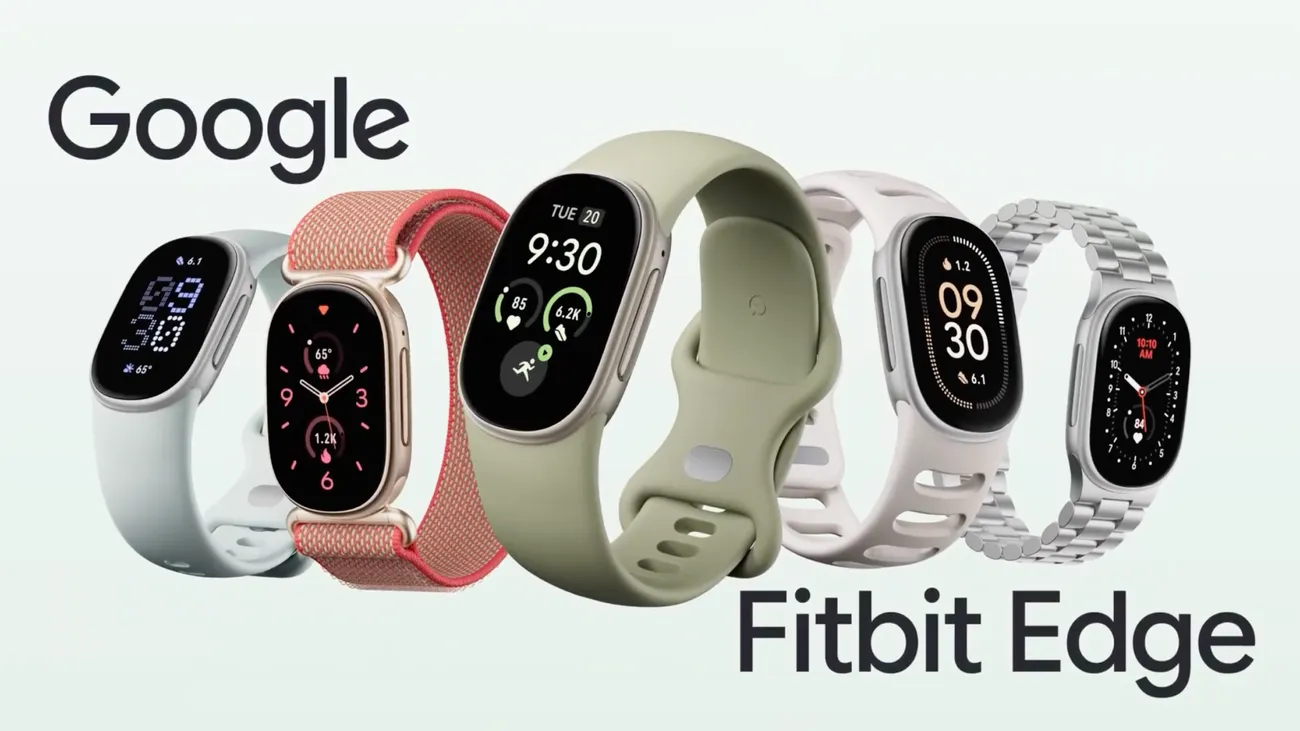 Photo: Google Blog
Key points
Google unveiled the Fitbit Edge fitness tracker on 12 October 2026 at $179.99, with a replaceable seven-day battery, going on sale 27 October.
Google unveiled the Fitbit Edge fitness tracker on 12 October 2026, priced at $179.99, with pre-orders opening the same day and retail availability starting 27 October. The device carries a replaceable battery rated for up to seven days on a single charge, a screen offering 46% more viewing area than previous Fitbit trackers, and built-in GPS that Google says is 40% more accurate than earlier generations.
The Fitbit Edge fills the gap between the screenless Fitbit Air and the fuller-featured Pixel Watch 5, targeting people who want a display without a full smartwatch. It runs a redesigned Fitbit OS rather than Wear OS, and unlike the Pixel Watch it works with both Android phones and iPhones through the Google Health app, widening its potential audience.
Where the Edge sits in the lineup
Google describes the Edge as its slimmest tracker yet, measuring 11.5mm thick, with a case 45% lighter than the Apple Watch Series 12. The body is made from recycled aluminium, and the 1.34-inch Hybrid OLED screen is larger than the Charge 6's 1.04-inch display. A redesigned physical side button gives tactile feedback for actions like pausing a workout.
The battery is user-replaceable, a first for a Fitbit device. The 65mAh cell charges fully in 90 minutes, half an hour faster than the Charge 6, and five minutes of charging provides about a day of use. Battery life drops to roughly two days if the always-on display is switched on. The device carries an IP68 rating and is safe for swimming up to 5ATM.
The Edge packs an electrocardiogram (ECG) sensor for detecting atrial fibrillation, an irregular heart rhythm, alongside optical heart rate sensors, a skin temperature sensor, and SpO2 sensors for measuring blood oxygen. Continuous heart rate monitoring can trigger alerts for alarmingly high or low readings. An altimeter uses atmospheric pressure to measure elevation gain, loss, and floors climbed during outdoor activity.
What the sensors measure
Google's Health Guardian feature watches for major shifts in health metrics over time, including blood pressure and insulin resistance. With a Google Health Premium subscription, the Edge tracks blood pressure trends without manual calibration and insulin resistance trends without a blood draw — capabilities Google first announced alongside the Pixel Watch 5 that became available at the end of September. Sleep stage detection is 15% more accurate than previous generations.
The tracker supports more than 50 exercise modes, up from 40 on the Charge 6, with real-time visual guidance showing pace targets, heart rate zones, and splits. Automatic activity recognition uses a revised motion model that pulls in location data and routines, and Google says it is twice as accurate, supporting over 100 activities. If you regularly do yoga on Tuesday mornings, the device infers that is your activity.
Google Health Coach, powered by Gemini, compiles fitness, health, and medical information to build weekly routines and workout plans that adjust to your schedule, requiring a Google Health Premium subscription. The Edge also offers Google Maps turn-by-turn directions, arriving later this year, media controls, call and message notifications, and heart rate broadcasting to certain gym equipment.
What the tracker leaves out
The Fitbit Edge omits a near-field communication (NFC) chip, so it cannot make contactless payments through Google Wallet — a downgrade from the Charge 6, which supported them. It also lacks a microphone and speaker, meaning users can see who is calling on screen but cannot answer from the wrist. At $179.99, the Edge costs $20 more than the Charge 6 it replaces.
The Edge launches in Obsidian, Fog, Olive, and Canyon colours, alongside band options including Active Band, Active Sport Band, Performance Loop Band, Magnet Band, and Metal Links Band. A Stephen Curry Special Edition, with a basketball-themed clock face and water-repellent band, starts at $219.99. Every purchase includes three months of Google Health Premium.
Google has not published a review date, but the Fitbit Edge goes on sale in stores on 27 October 2026, with pre-orders open now through the Google Store at $179.99. The Stephen Curry edition and additional bands, including a new Metal Mesh band for the Fitbit Air priced at $69.99 and available 27 October, arrive the same day.
Frequently asked questions
How much does the Fitbit Edge cost and when does it go on sale?
The Fitbit Edge costs $179.99 and is available for pre-order through the Google Store, with retail availability starting 27 October 2026. A Stephen Curry Special Edition starts at $219.99.
How long does the Fitbit Edge battery last?
The replaceable 65mAh battery lasts up to seven days on a full charge, which takes 90 minutes. Five minutes of charging provides about a day of use, though enabling the always-on display drops battery life to roughly two days.
What health features does the Fitbit Edge track?
The Fitbit Edge tracks heart rate, sleep stages, blood oxygen, and skin temperature, with an ECG sensor for atrial fibrillation detection. With a Google Health Premium subscription, it tracks blood pressure and insulin resistance trends without manual calibration or a blood draw.
How this story was checked
- Fact-checked against 4 cited pages. 62 figures, dates and quotations in this story were found on the pages it cites.
- Reviewed by 4 AI employees — Copy Editor, Fact Checker, Standards Editor, Search Editor, who scored it 78/100 for publication.
Pages checked (4 of 4)
- blog.googleread and checked
- engadget.comread and checked
- theverge.comread and checked
- wired.comread and checked
Written by Kaer from public reporting. Checked 12 October 2026.


