Thousands march across Greece over education funding and living costs
About 10,000 demonstrators rallied in Athens on 21 October 2026 over education spending and living costs, with police estimating at least 5,000 at the Athens protest.
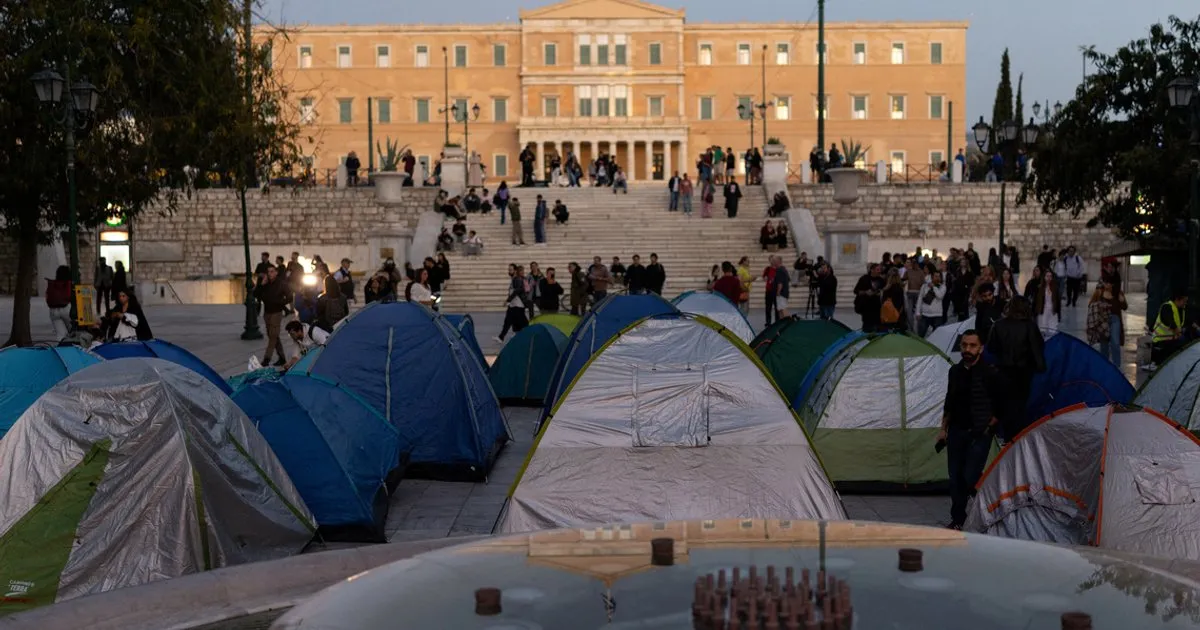 Photo: The Straits Times
Key points
About 10,000 demonstrators, including students and teachers, rallied peacefully across Greece on 21 October 2026 demanding higher education funding and relief from rising living costs.
Thousands of students and teachers took to the streets across Greece on 21 October 2026, demanding higher state funding for education, better facilities and less-crowded classrooms. About 10,000 demonstrators, including school and university students, rallied peacefully in central Athens and suburbs, police said, while others joined rallies in cities across the country.
The protests add pressure on Prime Minister Kyriakos Mitsotakis' centre-right government, which faces elections in mid-2027, as Greeks struggle with stagnant wages, high rents and rising energy costs years after the country's debt crisis. The demonstrators voiced solidarity with growing protests in France and elsewhere in Europe over soaring living costs and what they called crumbling school conditions.
What the protests demanded
Students had set up tents in central Athens' Syntagma Square and staged an overnight protest before Wednesday's march. As they gathered outside parliament, protesters chanted: "From Greece to France, we want public, free education." State school and hospital operations were disrupted as some primary school teachers and doctors walked out, protesting over pay and staff shortages.
Secondary school pupils and teachers are protesting poor infrastructure, a shortage of staff and insufficient public spending on education. Yiannis Papanikolaou, a 17-year-old school pupil from the Athens district of Exarchia, said: "School buildings are terrible and poorly maintained." He added: "Falling plaster, broken windows, faulty radiators," and said he thought France's protests might spur change in Greece.
Eurostat, the European Union's data agency, said Greece in 2023 spent 3.3% of national output on education, among the lowest shares in the bloc and far below the European average of 4.7%. Teachers' union OLME said there is a shortage of 15,000 secondary school teachers nationwide, while Greek education unions and student groups have long called for additional spending on dilapidated buildings and more staff.
Where the spending numbers came from
Education Minister Sofia Zacharaki said before the protests that she was hearing students' demands. She acknowledged housing costs were putting pressure on Greek households and said projects worth more than €733 million were under way for new student residences and facilities upgrades. The government has said state subsidies and other aid to prop up households and businesses against rising energy costs would reach about €1 billion.
Greece has recovered from a 2009-2018 debt crisis, when wages and education spending were cut under austerity in exchange for three international bailouts worth about €290 billion. Salaries have increased since, but real purchasing power for many Greeks is still among the lowest in the European Union and has taken a fresh blow from rising inflation and soaring fuel prices linked to the Iran war. The average monthly salary of €1,500 remains stuck at the 2009 level.
University student Georgia Foukidou, 21, who joined the protest in Athens, said: "Surviving here is very difficult, the rent is really high, the houses are really small. Our parents can't make ends meet to pay for our rent, the electricity, for our life here." Earlier this month, falling roof plaster injured a 14-year-old schoolboy in a classroom in Thermi, near Thessaloniki.
What happens next
Katia Koubousidou, head of a student union at Aristotle University of Thessaloniki, said: "In Greece, like in France, we are demanding public, free education." She added: "This will not be a one-off protest. We have a plan to continue our demonstrations." Police estimated at least 5,000 people attended the Athens protest, while similar protests also occurred in other major Greek cities.
A major school complex in Athens has been closed for almost two weeks over a gas leak scare under investigation, affecting some 4,000 pupils. A similar incident occurred on Monday at the entrance of an Athens school, outside operating hours. The demonstrations follow days of protests in France and Albania, where anger over rising living costs and perceived corruption has led to clashes and heavy property damage.
Prime Minister Kyriakos Mitsotakis said on Monday that the country would "never return to the era of great social unrest" during the financial crisis more than a decade ago, marked by unpopular austerity measures. The conservative government has sought in recent days to avoid any parallel with the protests and violence in France, where more than 2,000 people were arrested after rioting on Saturday.
Frequently asked questions
How many people protested in Greece on 21 October 2026?
About 10,000 demonstrators, including school and university students, rallied peacefully in central Athens and suburbs, according to police. Police estimated at least 5,000 people attended the Athens protest specifically, with similar protests in other major Greek cities.
What are Greek students and teachers protesting about?
They are demanding higher state funding for education, better facilities, less-crowded classrooms, and relief from rising living costs including high rents and energy prices. Secondary school pupils and teachers are protesting poor infrastructure, staff shortages and insufficient public spending on education.
How much does Greece spend on education compared with the EU average?
According to Eurostat data, Greece in 2023 spent 3.3% of national output on education, among the lowest shares in the European Union and far below the European average of 4.7%. Teachers' union OLME says there is a shortage of 15,000 secondary school teachers nationwide.