Houthis claim attack on Riyadh financial district, damaging Aramco tower
Yemen's Houthis claimed responsibility on 8 November for an attack on Riyadh's financial district that damaged an Aramco tower, with Saudi air defences intercepting missiles.
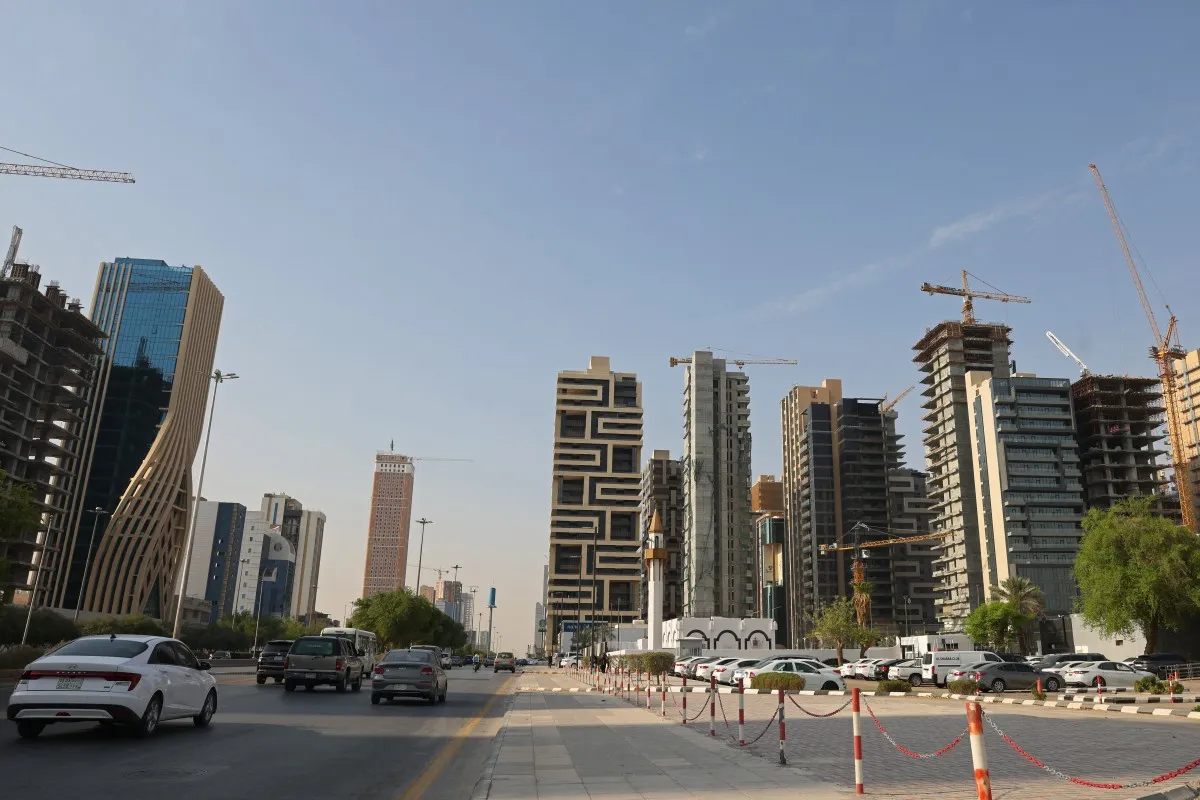 Photo: Arab News
Key points
Yemen's Houthis claimed responsibility for an attack on Riyadh's financial district on 8 November that damaged an Aramco tower, with Saudi air defences intercepting the missiles.
Yemen's Houthis on Sunday claimed responsibility for an attack on the financial district of the Saudi capital, Riyadh, that eyewitnesses said caused damage to a skyscraper belonging to oil giant Aramco. "The Yemeni Armed Forces, with the help of Allah Almighty, carried out four qualitative military operations, using a number of ballistic and cruise missiles and drones," the group said in an English-language statement, listing targets including the financial centre, Riyadh airport, Aramco oil storage tanks and the eastern Saudi city of Abqaiq.
A state source from Saudi Arabia's energy ministry said debris from an intercepted missile caused damage to the tower, which had been intended to hit the building. The strike caused 'limited' damage and no one was injured or killed in the attack, the source said. A witness reported that windows were blown out across several floors of the Aramco Tower, one of the tallest buildings in Riyadh's King Abdullah Financial District.
What the attack involved
The Saudi-led coalition fighting Iran-aligned Houthis in Yemen said air defences intercepted a Houthi missile on Sunday in the capital. Multiple loud explosions were heard across the capital earlier on Sunday, according to a witness, shortly after Saudi Civil Defense issued an early-warning alert over a potential threat in the region. Authorities later announced that the danger had passed.
The latest incident comes amid an escalation in attacks by Yemen's Iran-aligned Houthi rebels against Saudi airports, ports and oil facilities since fighting resumed in July, opening another front in the wider Middle East conflict reignited by US and Israeli attacks on Iran in February. Saudi Arabia has also carried out airstrikes against Houthi targets in Yemen.
Earlier on Sunday, Saudi Civil Defense issued and subsequently lifted warnings across several areas of the oil-rich Eastern Province, including Dhahran, where Saudi Aramco's headquarters is located. The Eastern Province holds most of Saudi Arabia's oil and gas reserves. Aramco's headquarters reportedly suffered extensive damage in an attack in October.
Escalation in the conflict
The renewed hostilities have also affected civilian infrastructure, with an attack on Riyadh's King Khalid International Airport on October 10 killing 13 people and injuring more than 300, according to Saudi authorities. The escalation has effectively shattered a United Nations-brokered truce reached in 2022, which had largely halted fighting between the Saudi-led coalition and the Houthis.
Saudi Arabia led a coalition of Arab states into Yemen in 2015 to restore the internationally recognised government after the Houthis seized the capital, Sanaa. The latest developments came a day after Yemen's Houthi-run Health Ministry said Saudi airstrikes killed at least 33 people near Sanaa. Saudi authorities said they were investigating the reported casualties.
Qatar, Bahrain, and Syria condemned the Houthi militia attacks on Saudi Arabia, which included two ballistic missiles targeting Riyadh's financial district and an Aramco facility. They reiterated the importance of Saudi security for regional stability and criticised the Houthi actions as aggressive and a violation of international law, with Bahrain calling for UN action against such attacks.
Regional response
Schools in the kingdom had resumed in-person classes on Sunday after weeks of home learning and several Saudi government agencies returned to in-office work, which had been suspended after earlier Houthi attacks. Video footage from Riyadh showed smoke rising from the tower, a landmark edifice known as Villas in the Sky. The Houthis have ramped up strikes on Aramco facilities in recent weeks, including the oil giant's headquarters in Dhahran in the Eastern Province of Saudi Arabia. The attack on the Riyadh financial district marks another escalation in the conflict between the Iran-backed Houthi rebels in Yemen and the Kingdom.
Frequently asked questions
What did the Houthis claim responsibility for?
The Houthis claimed responsibility for an attack on Riyadh's financial district on 8 November, saying they carried out four operations using ballistic and cruise missiles and drones, listing targets including the financial centre, Riyadh airport, Aramco oil storage tanks and Abqaiq.
What damage was caused to the Aramco tower?
Windows were blown out on several floors of the Aramco Tower in Riyadh's King Abdullah Financial District, with a state source saying debris from an intercepted missile caused limited damage and no injuries or fatalities.
How did Saudi Arabia respond to the attack?
Saudi air defences intercepted the missiles, and Saudi Civil Defense issued and later lifted warnings across areas of the Eastern Province. The Saudi-led coalition said it intercepted a Houthi missile on Sunday.