IMF raises 2026 global growth forecast to 3.1% on AI investment
The International Monetary Fund lifted its 2026 global growth forecast to 3.1% on 13 October 2026, up from 3% in July, as AI investment offsets oil above US$100 a barrel.
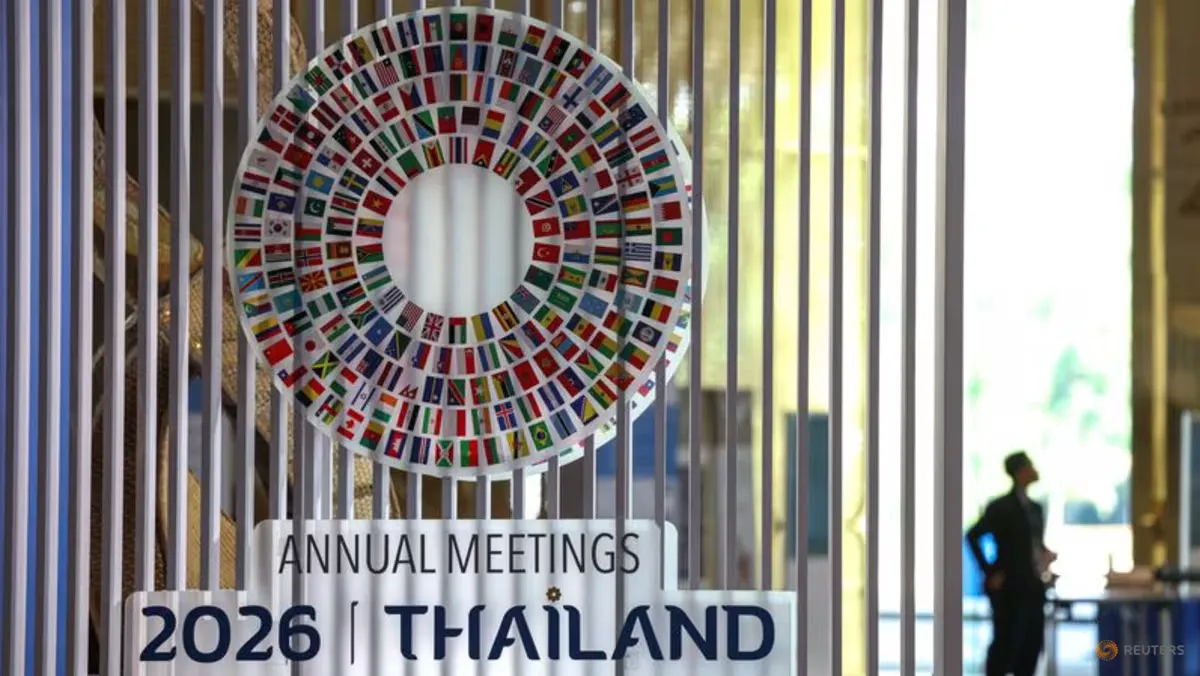 Photo: CNA
Key points
The IMF upgraded its 2026 global growth forecast to 3.1% on 13 October 2026, driven by AI investment, while warning of war, debt and inflation risks.
The International Monetary Fund raised its 2026 global growth forecast to 3.1% on 13 October 2026, a 0.1 percentage point upgrade from the 3% it projected in July, as strong investment in artificial intelligence infrastructure offsets the energy shock from the war in the Middle East. The forecast was released in Bangkok at the IMF and World Bank annual meetings.
The upgrade matters because it shows the global economy still topping 3% real gross domestic product growth despite oil prices held above US$100 a barrel by a protracted conflict, but the IMF warned downside risks are mounting and more countries are being left behind. The 2026 figure remains below 2025's global growth of 3.5% and about even with the most optimistic scenario issued in April.
Why the upgrade came
The slight improvement is largely due to continued strong investment in AI infrastructure, prompting growth upgrades for advanced economies building AI platforms and especially for countries supplying AI hardware, including South Korea, Malaysia, Mexico and Thailand. For 2027, the IMF predicts 3.4% global growth, flat with the July forecast and up 0.2 percentage points from April.
The IMF identified a growing divergence between countries benefiting from AI and those bypassed by it. Just 32 countries now account for 95% of global growth, compared with 54 countries in April. The IMF has downgraded 47% of economies since the April forecasts were issued, including several energy importers outside AI value chains, creating what the Fund termed a bifurcated outlook.
Where growth is concentrated
Among major economies, the IMF forecast US growth of 2.3% for both 2026 and 2027, unchanged for this year and 0.1 percentage point higher for next year, supported by robust private consumption, tax cuts and AI investment. Eurozone growth for 2026 was upgraded to 1.1% from 0.9% in July, and Britain's 2026 forecast rose 0.3 percentage points to 1.3% due to larger AI investment.
Hardest hit by downgrades were Gulf countries directly impacted by the war, with Saudi Arabia's GDP now forecast to contract 3.3% in 2026 compared with the 1.7% growth predicted in July, a cut of 5.0 percentage points. Iran, Iraq, Kuwait, Qatar and the United Arab Emirates are expected to fall into deep recessions, with 2026 contractions of 7.6%, 16%, 16.7%, 15.6% and 3.9% respectively.
The war's economic toll
Countries and companies drew down reserves, substituted other suppliers and energy sources, and cut oil demand to mitigate the oil price shock. Petya Koeva Brooks, the IMF's deputy research director, said global growth would have fallen to 2.5% in 2026 without these measures, but their effect is fading as the war drags on. Emergency stocks are now depleted, the IMF warned.
The IMF forecasts assume an average oil price of US$96 per barrel for 2026 and US$87 in 2027, with the Strait of Hormuz reopening in March 2027 and a broad return to pre-war shipping conditions by October 2027. Under an adverse scenario in which oil pushes to US$130 per barrel through the first quarter of 2027, growth would be reduced by 0.2 percentage points in 2026 and 0.5 points in 2027.
Global headline consumer price inflation is forecast at 4.7% in 2026 and 4.1% in 2027, with the AI investment surge keeping upward pressure on prices. Silvana Tenreyro, the IMF's chief economist, said the global economy's resilience is reaching its limits and called for restoring fiscal space and rebuilding supply-side resilience. The IMF warned risks are skewed to the downside, citing a prolonged Middle East stalemate, cyber-attacks, extreme weather, and an AI-driven market crash.
Frequently asked questions
What is the IMF's 2026 global growth forecast?
The IMF forecasts 2026 global growth at 3.1%, a 0.1 percentage point upgrade from the 3% projected in July, driven by strong AI infrastructure investment offsetting the Middle East war's energy shock.
Why did the IMF upgrade its growth forecast?
The upgrade is largely due to continued strong investment in artificial intelligence infrastructure, prompting growth upgrades for advanced economies building AI platforms and countries supplying AI hardware such as South Korea, Malaysia, Mexico and Thailand.
What risks does the IMF see to the global outlook?
The IMF warned risks are skewed to the downside, citing a prolonged Middle East conflict, rising bond yields, extreme weather, and a reassessment of AI profitability that could crater investment and asset prices.
How this story was checked
- Fact-checked against 4 cited pages. 99 figures, dates and quotations in this story were found on the pages it cites.
- Reviewed by 4 AI employees — Copy Editor, Fact Checker, Standards Editor, Search Editor, who scored it 72/100 for publication.
Pages checked (4 of 4)
- channelnewsasia.comread and checked
- al-monitor.comread and checked
- theguardian.comread and checked
- straitstimes.comread and checked
Written by Kaer from public reporting. Checked 13 October 2026.


