INEC and NSA pledge prosecutions as campaign violence hits nine states
INEC chairman Joash Amupitan told an Abuja election security conference on Thursday that sponsors of political violence in nine states will be prosecuted under the Electoral Act 2026.
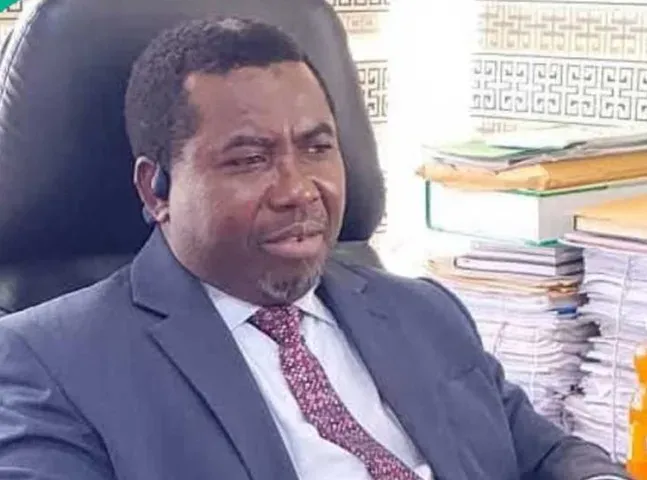 Photo: Punch
Key points
INEC and the National Security Adviser pledged to arrest and prosecute sponsors of political violence that has hit nine states ahead of Nigeria's 2027 elections.
The Independent National Electoral Commission and the Office of the National Security Adviser pledged on Thursday to arrest and prosecute sponsors of political violence before Nigeria's 2027 general elections. INEC chairman Joash Amupitan and National Security Adviser Nuhu Ribadu made the commitment at the INEC-ONSA Strategic Election Security Conference in Abuja.
Amupitan said attacks on campaign convoys, party offices, supporters and electoral officials had spread across several states since open campaigns began in August. He named Lagos, Edo, Ekiti, Enugu, Ebonyi, Delta, Cross River, Oyo and Benue as the states where the commission had recorded the violence, and condemned what he called an escalation of political intolerance and incendiary rhetoric.
Nine states record attacks
The INEC chairman said the commission would neither be intimidated nor blackmailed into compromising its neutrality. "No political ambition is worth the blood of a single Nigerian, and no party or political actor has the right to turn public spaces into theatres of thuggery or declare any territory a no-go area for lawful political engagement," he said in Abuja.
Amupitan said party supporters and agents had also harassed, intimidated and physically attacked the commission's leadership, regular staff and ad hoc workers. He said party zealots had tried to besiege commission facilities and threatened electoral officers in recent weeks, and described such attacks as attempts to coerce an independent constitutional referee and subvert the democratic order.
He told party leaders that accountability does not end with the foot soldiers who throw stones or wield weapons. "Signing peace accords in Abuja while tolerating or financing thuggery in the states is a contradiction our democracy can no longer afford," he said, adding that party leadership bears moral and political responsibility for the conduct of its candidates, campaign councils and youth wings.
Prosecution powers under the Act
Amupitan said INEC was ready to work with security agencies to prosecute electoral offenders under the Electoral Act 2026. He said Section 148 of the Act empowers INEC legal officers and appointed counsel to prosecute offenders directly in court after receiving investigative case files from the police and other security agencies, and urged police commissioners to document suspects, forensic exhibits, video evidence and witness statements promptly.
The Act has also strengthened penalties for electoral offences, Amupitan said. Individuals face fines of up to N5m or 12 months' imprisonment for initial breaches, while political parties face fines of N10m. He warned that failure to contain the violence could discourage voters from turning out, expose electoral personnel to attacks and undermine the country's democratic stability.
INEC will deploy more than 1.41 million ad hoc personnel to conduct the elections across 177,299 polling units, Amupitan said. He warned that the safety of those personnel, many of whom are National Youth Service Corps members, must be guaranteed, and said election-related violence in Nigeria could have serious consequences for the West African sub-region at a time when several countries face democratic instability and insecurity.
Security committee's legal gap
Amupitan said the Inter-Agency Consultative Committee on Election Security, which INEC and the Office of the NSA co-chair, still has operational problems. He listed the lack of a proper legal platform because the committee is not created by any law, a lack of synergy among security agencies, and a supremacy tussle among them, and called for a legal instrument setting out each agency's role and a unified command and control centre.
Ribadu assured Nigerians that the Federal Government was committed to providing the security required for peaceful, transparent and credible elections. He said the administration of President Bola Tinubu, whom he described as a democrat, was determined to protect voters, politicians and electoral officials before, during and after the elections. In Nasarawa State, Resident Electoral Commissioner Mohammed Abubakar Sadiq gave a similar assurance during a courtesy visit to the state's Commissioner of Police, Sheikh Mohammed Danko, at the command headquarters in Lafia. Sadiq asked the police to help ensure a peaceful, free, fair and credible process in 2027 and to monitor campaigns and rallies so they remain issue-based and lawful.
Danko said the command would protect INEC facilities, electoral materials, officials and other stakeholders across the state, and would work with the commission to guarantee the safe movement of personnel and materials. He said officers deployed for election duties would be briefed to remain neutral, professional and impartial, and warned them against corruption and misconduct.
A coalition of civil society groups also warned politicians against election violence. The coalition said elections should produce leaders rather than widows, orphans, displaced families and grieving communities, and advised young Nigerians not to allow themselves to be used as instruments of intimidation or electoral manipulation. It said no electoral victory could be legitimate if achieved through the intimidation, injury or loss of innocent lives.
Frequently asked questions
What did INEC and the NSA pledge at the Abuja conference?
INEC chairman Joash Amupitan and National Security Adviser Nuhu Ribadu pledged to arrest and prosecute sponsors of political violence that has hit nine states since August, ahead of Nigeria's 2027 general elections.
How many polling units will Nigeria use in the 2027 elections?
INEC chairman Joash Amupitan said the commission will deploy more than 1.41 million ad hoc personnel to conduct the elections across 177,299 polling units.
What penalties does the Electoral Act 2026 set for electoral offences?
Amupitan said the Act sets fines of up to N5m or 12 months' imprisonment for individuals and N10m for political parties for initial breaches, and Section 148 lets INEC prosecute offenders directly.