US Army plans Iowa lead azide detonation by Tuesday despite court pause
The Department of the Army told a federal court it will detonate nearly five tons of unstable lead azide at the Iowa Army Ammunition Plant by Tuesday, citing an emergency exemption from its paused EPA permit.
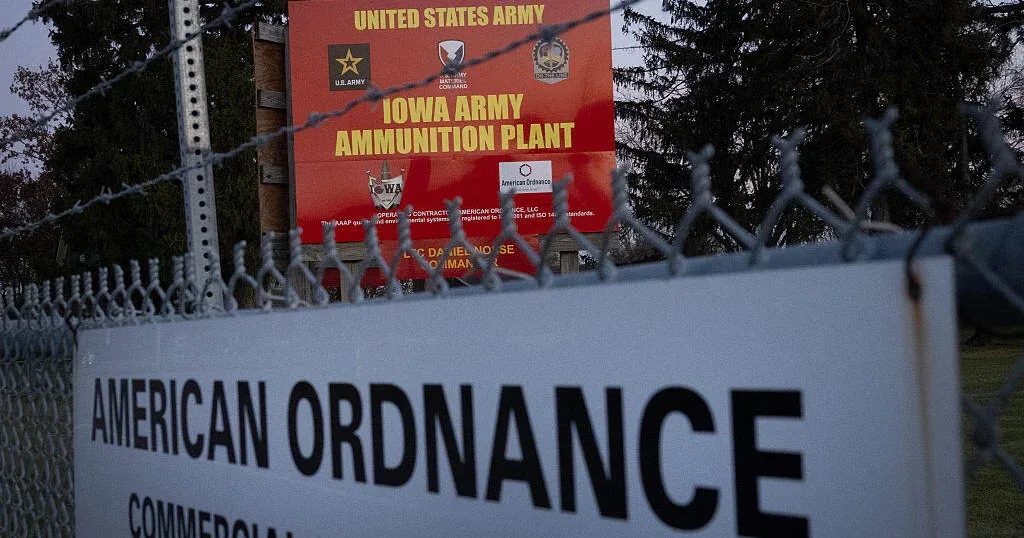 Photo: CBS News
Key points
The Army says it will detonate nearly five tons of unstable lead azide at its Iowa ammunition plant by Tuesday, using an emergency exemption from its court-paused EPA permit.
The Department of the Army told a federal court it plans to detonate nearly five tons of unstable lead azide at the Iowa Army Ammunition Plant in Middletown on or by Tuesday, despite a court order that paused the operation's environmental permit indefinitely. The government said in a filing late on Saturday that it does not need to follow the pause because of the public safety risk that the explosives could detonate on their own.
The Army intends to use an emergency munitions and explosives exclusion to the Environmental Protection Agency permit, according to the court records. The government argues a controlled detonation protects the public from a larger threat, an uncontrolled explosion. The Saturday filing is the first notice that the Army intends to invoke that exemption, which federal rules allow when an agency determines there is an immediate threat to human health, public safety, property or the environment.
Why the Army cites cold
The material is lead azide, a compound used to detonate munitions. The Army discovered in March, during routine stockpile surveillance, that 68 drums at the plant had started to recrystallise, according to Acting Army Secretary Adam Telle. The plant, built in 1941, produces medium- and large-calibre munitions. The Army says the degraded material is extremely unstable and sensitive to even slight friction or movement, and that packing and transporting it poses an unacceptable risk of accidental detonation.
The Army's stated reason for acting by Tuesday is temperature. Federal lawyers said temperatures are expected to fall below 30 degrees in the next several days. The Army says crystals that formed in the lead azide during storage can fracture more easily in freezing conditions and set off an uncontrolled explosion. The filing also says the concrete storage bunkers are more exposed to temperature swings because blast doors were removed to prepare for the operation and cannot be put back.
The 8th U.S. Circuit Court of Appeals temporarily suspended the EPA's November 13 emergency permit while it considers a request from two Iowa environmental groups to block the blasts. The permit would have allowed the detonation between November 13 and February 11, 2027. The Justice Department argued the order suspends only the permit and leaves the Army free to act under a separate emergency exemption for explosives.
What the groups dispute
The Army originally scheduled two controlled explosions for Friday, then delayed them until Monday before the court stepped in. The Justice Department asked the appeals court on Sunday to lift its pause. In its filing, the government said the real choice is not between a detonation and no detonation but between a planned and mitigated detonation and an unplanned and unmitigated explosion. The Army says it intends to follow the suspended permit's safeguards, including measures to limit and monitor lead dust.
The Iowa Environmental Council and the Sierra Club's Iowa chapter filed a motion on Sunday seeking to supplement their emergency request. It includes three expert and local government declarations challenging the Army's assessment of the risk of delaying the detonation, as well as concerns about public notice and potential health and environmental impacts. The groups said the Army had yet to release updated plume maps as of 11 a.m. Central time on Sunday, even though shifting winds could change which communities are in the path of lead dust.
Mark J. Thomas, a retired EPA on-scene coordinator who worked on air monitoring during chemical emergencies, disputed the Army's argument that colder weather requires it to act quickly. In an affidavit, he said the earth-covered concrete bunkers would slow changes in the temperature inside and that the Burlington area had already seen similar lows this month. The groups also question whether all alternatives were given appropriate consideration.
What happens next
Thien Chau, a senior attorney at Earthjustice, which represents the environmental groups, said the Army seemed more concerned over the weekend with finding a way to sidestep the judicial process than with meeting the public's demands for greater transparency and notice. Michael Schmidt, general counsel for the Iowa Environmental Council, said the public deserves to know immediately which communities will be impacted and how residents can protect themselves.
Lead is the substance behind the health warnings. There is no known safe level of lead exposure, and the element persists in the environment and can accumulate in the body. The neurotoxin can damage the developing brain and is especially harmful to young children and during pregnancy. Exposure can cause learning and behavioural problems and raise the risk of miscarriage or premature birth, according to health officials.
The dispute has drawn in state and federal agencies. Iowa Governor Kim Reynolds activated a state emergency operations centre on Friday, and officials in nearby Illinois are warning residents about dust spilling over into their state. The Federal Aviation Administration has restricted flights around Middletown from Monday through Wednesday, according to a temporary flight restriction notice. The Army says it has been planning the operation since March and is working with the Department of Health and Human Services and the EPA.
The City of Fort Madison said on Saturday it was notified that the detonation would most likely occur either Monday or Tuesday, but that if it does not happen this week, another time will need to be arranged with additional planning. The Army had previously awarded a contract to MuniRem Environmental, a Georgia-based firm that uses chemicals to neutralise munitions, but later cancelled the deal citing safety concerns and opted to detonate the lead azide instead. The appeals court has yet to rule on the request to lift its pause.
Frequently asked questions
What does the Army plan to detonate in Iowa?
The Army plans to destroy 68 drums holding nearly five tons of lead azide, a compound used to detonate munitions, at the Iowa Army Ammunition Plant in Middletown. The material began recrystallising and is unstable.
Why does the Army say it must act by Tuesday?
Federal lawyers said temperatures are expected to fall below 30 degrees in the next several days. The Army says crystals in the lead azide can fracture more easily in freezing conditions and set off an uncontrolled explosion.
Why did a court pause the detonation?
The 8th U.S. Circuit Court of Appeals suspended the EPA's November 13 emergency permit while it considers a request from the Iowa Environmental Council and the Sierra Club's Iowa chapter to block the blasts over lead dust risks.