US Army detonates nearly five tons of lead azide in Iowa
The Army blew up 68 barrels of degraded lead azide at the Iowa Army Ammunition Plant in Middletown on 25 November after a federal appeals court cleared the blast.
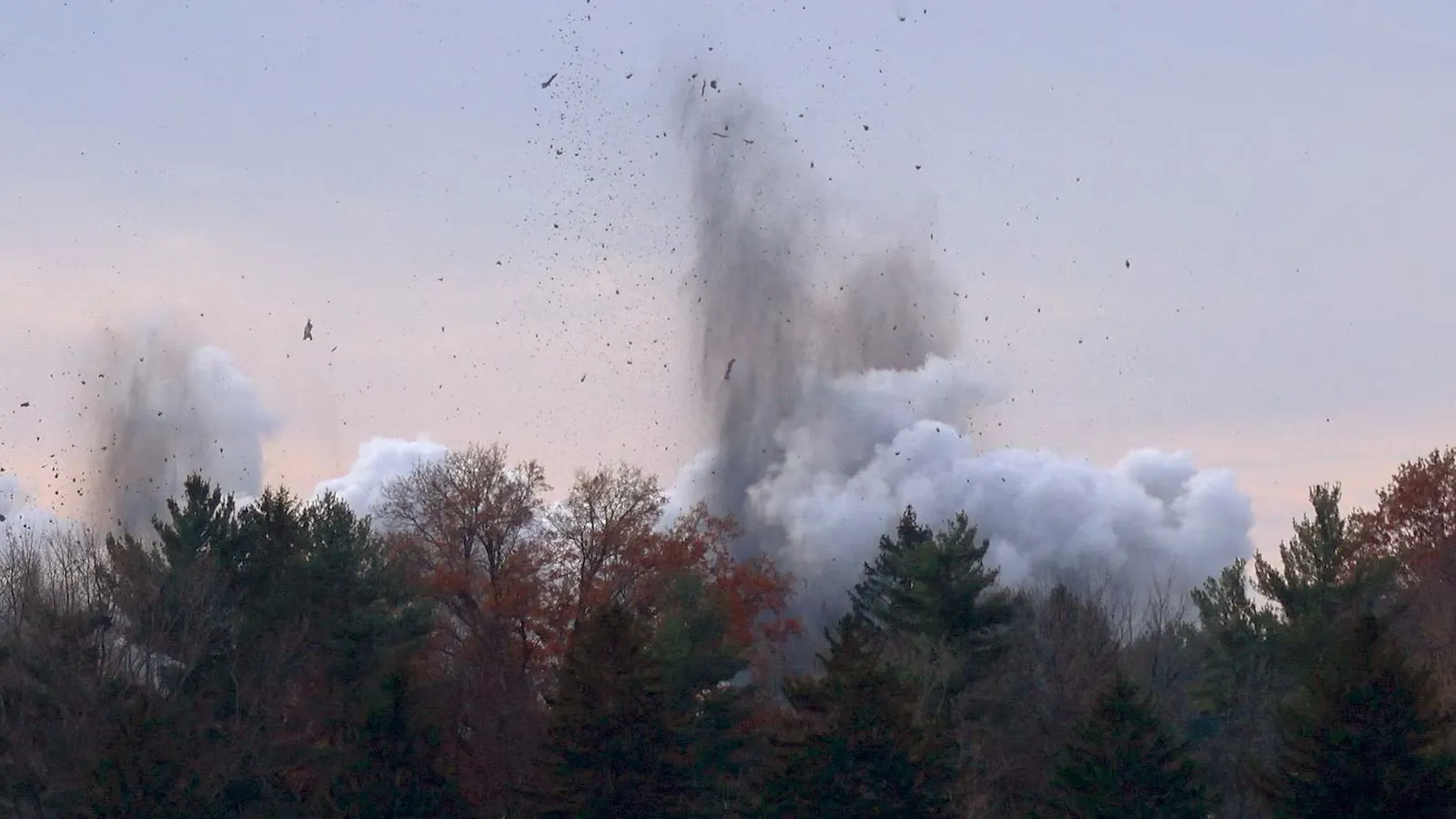 Photo: ABC News
Key points
The US Army detonated nearly five tons of degraded lead azide at its Iowa ammunition plant on 25 November after a federal appeals court allowed the blast.
The US Army detonated nearly five tons of lead azide at the Iowa Army Ammunition Plant in Middletown on 25 November, destroying 68 barrels of a material it said had become unstable. Two controlled detonations took place simultaneously at about 9 a.m. CT, the Army said. Lt. Col. Orlandon Howard said early indications suggested the operation was successful.
The blast ended a dispute that had run for days through federal court and had drawn objections from environmental organisations, medical groups and residents. The Army argued that the degraded explosive could detonate on its own during packing or moving, and that destroying it in place was the safest route. Opponents argued the blast could spread lead dust over a wide area.
What the monitors detected
The Environmental Protection Agency said in a statement posted about an hour after the detonation that real-time air monitors were reporting zero detection of airborne lead throughout the region. Fifteen minutes after the blast, the agency said four monitor stations in the area had detected no lead in the air.
Missouri Governor Mike Kehoe said initial analysis shared by federal partners and Iowa Homeland Security and Emergency Management indicated the mitigation measures appeared to have been successful and the explosion was well-contained. Iowa Governor Kim Reynolds called the operation successful and said the Army planned to share more information at a news conference set for noon ET.
Lead azide is the primary explosive used to detonate munitions such as grenades and artillery shells. The Army said the Middletown plant held about 68 barrels, or roughly 10,000 pounds, of the compound. The material had been stored in barrels in case the military needed it again, and the country's stockpile was brought to Iowa from bases around the country in 2009, according to Robert Cekada, director of the Bureau of Alcohol, Tobacco, Firearms and Explosives.
Why the stockpile degraded
The EPA said the explosives degraded over about 20 years in storage, a process called recrystallisation that made the material more susceptible to accidental detonation from friction or other movement. During an inspection in March, staff at the plant found the lead azide had partially crystallised, making it sensitive to friction and cold temperatures and creating the risk of spontaneous detonation.
Acting Secretary of the Army Adam Telle said at a news conference on 24 November that falling temperatures were making the explosives more volatile and raising the chance of a spontaneous explosion. He said the forecast for the following day was ideal to protect public health and safety across the region. Major General Eric Shirley, commanding general of the US Army Sustainment Command, said months of research found no other safe way to dispose of the barrels.
The Army worked with experts on measures to contain the blast, including a waterwall, foam barriers and gel blocks, according to Telle. The Army said precise deployment of aqueous foam blocks, two walls of four 16,000-gallon water tanks and gel blocks adjacent to the bunkers would absorb thermal energy and reduce airborne particulate emissions at the blast source. The materials were surrounded by concrete and sand barriers two stories high, and the Army planned to douse them with more than 100,000 gallons of water.
The court fight and the delay
The Army's guidance said surface deposition of the explosive material's hazardous dust and materials might cover a 148 square-mile zone outside the plant. Maps released on 24 November noted the dust cloud might travel as far as 100 miles, with the most potent effects likely within 30 square miles of the plant. Officials said wind on 25 November was expected to carry the plume southwest toward Missouri and away from Burlington, a city of just under 25,000 people on the Mississippi River.
The Iowa Environmental Council and the Sierra Club Iowa Chapter filed an emergency motion arguing the detonation could spread lead dust across a large area, potentially reaching communities more than 100 miles from the plant. In an order filed late on the night of 19 November, the Eighth Circuit Court of Appeals granted an administrative stay of the permit while it considered the request to halt the detonation.
The appeals court ultimately denied the emergency motion and lifted the administrative stay, allowing the operation to proceed. The court acknowledged the very real risks presented by the planned detonation but found the risk of an uncontrolled explosion more harmful. The Army had postponed the operation twice amid public concerns and the legal challenge, and the blast had originally been scheduled for the previous Friday.
The Army's public advisory recommended that Middletown residents and those in surrounding areas evacuate ahead of the blast out of an abundance of caution, and said those who left would be updated by phone once the all-clear was given. Officials encouraged residents within 5 miles of the site to evacuate. Tom Croci, the EPA's associate administrator for national security and operations coordination, told reporters on 24 November that the agency would monitor lead levels for as long as it took to be comfortable that levels were back to safe levels.
Frequently asked questions
What did the Army detonate in Iowa?
The Army detonated 68 barrels, or nearly five tons, of degraded lead azide at the Iowa Army Ammunition Plant in Middletown on 25 November. Lead azide is the primary explosive used to detonate munitions such as grenades and artillery shells.
Did the detonation release lead into the air?
The Environmental Protection Agency said real-time air monitors reported zero detection of airborne lead throughout the region about an hour after the blast. Fifteen minutes after the detonation, the agency said four monitor stations in the area had detected no lead in the air.
Why did the Army destroy the lead azide instead of moving it?
The Army said the material had degraded over about 20 years in storage and recrystallised, making it sensitive to friction and cold and at risk of spontaneous detonation. It determined that destroying the stockpile in place was safer than packing and moving it.