Army detonates 9,700 pounds of lead azide in Iowa
The US Army destroyed 68 barrels holding about 9,700 pounds of unstable lead azide at the Iowa Army Ammunition Plant in Middletown on 25 November, and the EPA reported zero airborne lead an hour later.
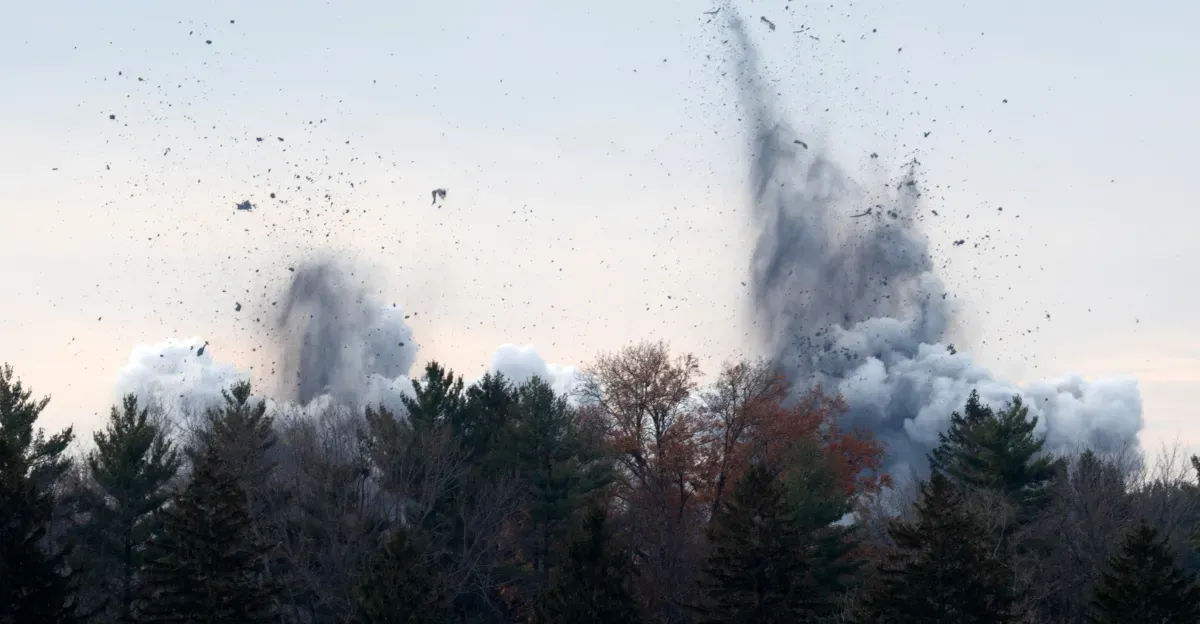 Photo: The Verge
Key points
The US Army detonated 68 barrels holding about 9,700 pounds of unstable lead azide in Middletown, Iowa, and the EPA reported zero airborne lead an hour later.
The US Army detonated 68 barrels holding about 9,700 pounds of lead azide at the Iowa Army Ammunition Plant in Middletown, Iowa, on 25 November, saying the material was too unstable to move. The EPA said its real-time air monitors reported zero detection of airborne lead throughout the region an hour after the blast.
The stockpile was the country's remaining supply of the material, which the Army has used in munitions for nearly a century. The Army began transitioning away from lead azide around 15 years ago because it can be difficult to transport and store, and the Iowa plant had held these barrels for more than 15 years.
Why the barrels had to go
Lead azide degrades over time, crystallising until it can detonate at ambient temperatures. An inspection by the Bureau of Alcohol, Tobacco, Firearms (ATF) last March found significant crystallization on the exterior of the barrels, and officials judged the stockpile at risk of spontaneous explosion. That finding drove the decision to destroy it in place rather than ship it elsewhere.
The Army stored the material in liquid form embedded in sawdust and burlap bags, adding water and ethanol to prevent freezing. Ahead of the blast, crews covered the aging earth-covered magazines holding the barrels with tarps and lead containment screens and flooded them with foam to limit the lead dust released into surrounding areas.
Walls made of four 16,000-gallon water tanks were installed to capture lead particulate. Colonel Aaron Teller, who led the explosives experts who carried out the detonation, said earthen-filled barriers extended well above the tops of the two bunkers, and a vent in the protective works was designed to send released material into an uninhabited area on the plant grounds.
Water tanks and foam
Teller said the last major disposal of lead azide occurred in 1977, when some 7,000 pounds of the substance were destroyed in an open-air blast in Colorado. In that case, 75% of the lead particulate remained at the site even with no mitigation measures, and he said steps were taken to better contain it in the Iowa detonation.
The Federal Emergency Management Agency supported a recommended, but voluntary, temporary relocation of all residents of Middletown and immediate surrounding areas, which began the day before the blast. A cone-shaped evacuation zone extends about five miles southwest of the plant to account for the post-explosion dispersion and deposition path of dust. Displaced residents will be lodged until Friday, 27 November.
Major General Eric Shirley, speaking at a press conference two hours after the blast, said: “I believe, absolutely, that we reduced, as close to zero as it’s absolutely humanly possible, the risk to the health and safety of the people of Middletown and the extended communities throughout Iowa.” He called the operation tremendously successful.
What the sampling will show
The full extent of any fallout may not be certain for at least a few days. Government, university and citizen monitoring projects are collecting air, soil and water samples. Peter Thorne, a professor of environmental health at the University of Iowa, estimated that more sensitive lab results could take about a week, and said soil samples measured before the detonation had low levels of lead.
Thorne said a 10-fold increase in soil lead 20 miles downwind would concern him. Scientists at Purdue University, nearly 300 miles away, put out a call for soil samples from Middletown. Jeffrey Catalano, a professor of earth and environmental sciences at Washington University in Saint Louis, said corn is poor at absorbing lead and that he is not worried about food produced in Iowa.
Patrick McNamara, a professor of environmental engineering at Marquette University, said municipal drinking water is unlikely to be affected because most treatment plants are designed to remove lead, though private wells and streams where livestock drink are more worrisome. Thorne said the university's efforts are meant to supplement federal monitoring and, if findings align, give the public confidence in them.
The detonation was initially scheduled for 20 November but was postponed for three days, after which President Donald Trump paused the operation again before ultimately allowing it to proceed. Iowa's incoming Democratic governor Rob Sand said the lead-up to the detonation should never have been so chaotic and unclear. Residents can return home once the all-clear has been given, with lodging funded until 27 November.
Frequently asked questions
What was detonated in Iowa?
The Army destroyed 68 barrels holding about 9,700 pounds of lead azide at the Iowa Army Ammunition Plant in Middletown on 25 November. Officials said the material was the country's remaining stockpile and was too unstable to move.
Did the detonation release lead into the air?
The EPA said its real-time air monitors reported zero detection of airborne lead throughout the region an hour after the blast.
When can Middletown residents return home?
Residents of Middletown and immediate surrounding areas were relocated voluntarily and will be lodged until Friday, 27 November. They can return home once the all-clear has been given.