Iran launches six drones at US radar base in Bahrain
Iran's Revolutionary Guards attacked a US radar at Bahrain's Riffa Air Base with six drones on 15 November, the second strike in three days.
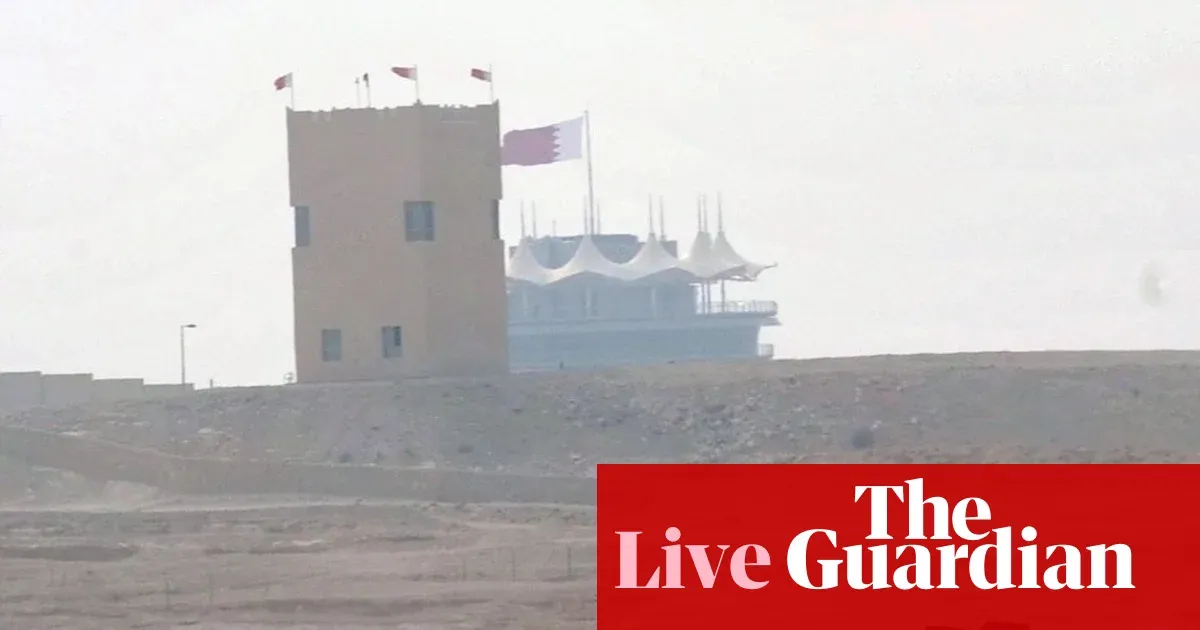 Photo: The Guardian
Key points
Iran attacked a US radar base in Bahrain with six drones on 15 November, the second strike in three days, as Gulf tensions escalate.
Iran's Islamic Revolutionary Guard Corps launched six drones at a US radar installation at Bahrain's Riffa Air Base early on 15 November, the second attack on the Gulf kingdom in three days. The Guards said the strike targeted a US air defence radar system and was retaliation for a US strike on a telecom tower in Sirik. Bahrain's air defence intercepted and shot down the drones, with no damage or casualties reported.
The attack came two days after a similar strike on 13 November, when two Iranian drones targeted a US early warning radar in Bahrain. The US military's Central Command said it shot down both drones, reporting no damage. Bahrain's foreign ministry said the attacks were a resumption of Iran's aggression, and the interior ministry urged residents to take shelter, the first such warnings since September.
Second strike in three days
Bahrain, home to the US Navy's Fifth Fleet, has been repeatedly hit by Iran since the war began on 28 February. The island nation has weathered thousands of Iranian drone and missile strikes, according to a foreign ministry statement. The ministry said Bahrain 'rejects turning its territory into an arena for settling scores and holds Iran fully responsible for these attacks and their consequences.'
The 15 November attack prompted strong condemnation from regional states. Saudi Arabia's foreign ministry said the attacks 'constitute a violation of international law and the principles of good neighborliness.' Qatar's foreign ministry called the attacks 'a dangerous escalation that will complicate efforts' to achieve stability. Jordan and Egypt also expressed solidarity with Bahrain, according to the state-run Bahrain News Agency.
The strikes are part of a broader conflict between Iran and the US, now in its ninth month. The US has maintained a naval blockade aimed at stopping Iranian oil ships from leaving the Persian Gulf, and has carried out missile and drone strikes on Iran's southern coastline. Iran has demanded control over the Strait of Hormuz, removal of the blockade and sanctions, unfreezing of its assets, and reparations.
Regional condemnation
US President Donald Trump has signalled he does not want to return to major combat, but US forces have carried out strikes on Iranian sites including Qeshm Island, home to a major Revolutionary Guard naval facility. The US and Gulf officials said the strikes are designed to stop Iran from attacking ships in the waterway. Trump has played down the significance of the strikes, calling them minor.
The US thinks Iran still has between 1,500 and 2,500 missiles in its arsenal, despite US-Israeli damage to its production facilities, according to US officials. The assessment, described as 'low confidence,' noted difficulties tracking Iran's stockpile and whether missiles are ready for launch. Iran has appeared to slowly rebuild its arsenal during lulls in fighting, using stockpiled components.
Iran's foreign minister, Abbas Araqchi, will be in Oman on Tuesday for talks with his Omani counterpart, according to Iranian state media. Oman, along with Qatar, has been a key negotiator in ceasefire and peace talks between Tehran and Washington. However, no movement on a deal has been seen, as both sides continue to exert economic pressure on each other.
Stalemate and next steps
The war began with surprise US-Israeli strikes that killed Iran's supreme leader, Ayatollah Ali Khamenei, and has led to months of failed diplomacy. The conflict has also drawn in Yemen's Houthis, who have swept almost the entire Red Sea coast and threatened the Bab el-Mandeb strait. The Southern Yemeni forces announced a redeployment towards Aden to secure the capital.
Trump plans to discuss the conflict at a trilateral meeting with his Chinese and Russian counterparts this week, an official said on Friday. The meeting comes as the war has contributed to Trump's steep reverse in midterm elections, which was partly blamed on the Iran war. The next dated event is Araqchi's talks in Oman on Tuesday, which may signal whether any progress is possible.
Frequently asked questions
What happened in the Iran drone attack on Bahrain?
Iran's Revolutionary Guards launched six drones at a US radar installation at Bahrain's Riffa Air Base on 15 November. Bahrain's air defence intercepted and shot down the drones, with no damage or casualties reported.
Why did Iran attack Bahrain?
Iran said the attack was retaliation for a US strike on a telecom tower in Sirik. It was the second attack on Bahrain in three days, part of ongoing skirmishes over the Strait of Hormuz and the broader US-Iran war.
What is the current status of US-Iran negotiations?
Negotiations remain at a stalemate. Iran's foreign minister will meet his Omani counterpart on Tuesday, but no movement on a deal has been seen. The US maintains a naval blockade and Iran demands control over Hormuz and sanctions removal.