Iraqi PM orders federal control of Kurdistan oil exports and crossings
Ali al-Zaidi ordered the federal Oil Ministry to approve all Kurdish crude and product exports and the Border Ports Authority to take over every crossing in the region on Tuesday.
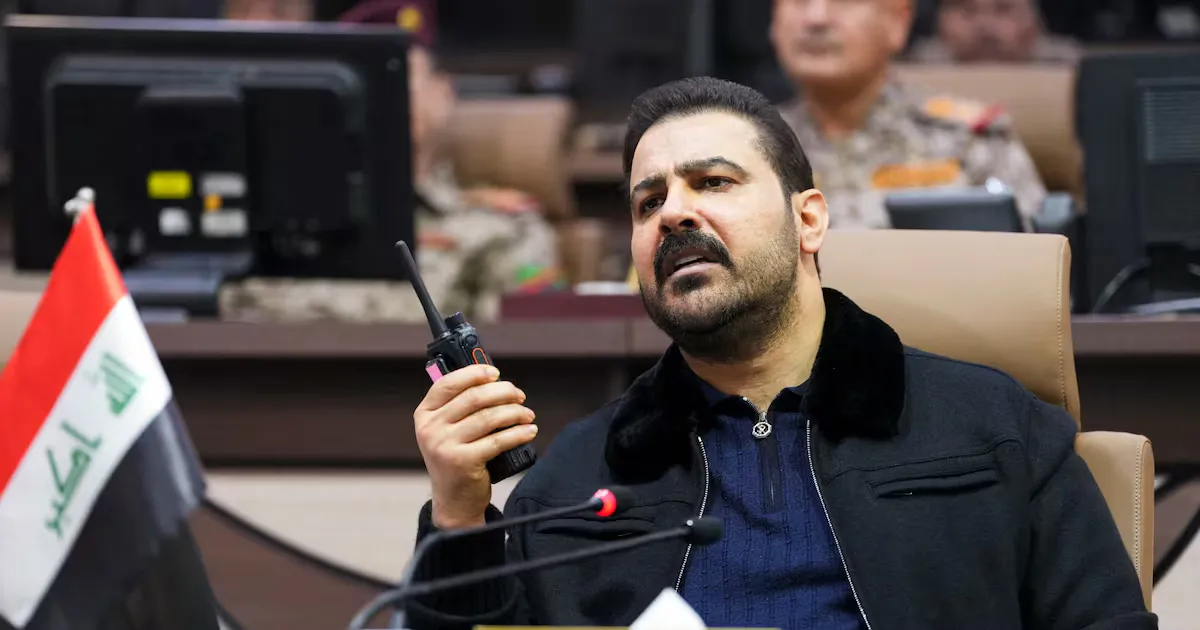 Photo: The National
Key points
Iraq's prime minister ordered the federal Oil Ministry to approve all Kurdish oil exports and the Border Ports Authority to take over every crossing in the Kurdistan region.
Iraqi Prime Minister Ali al-Zaidi ordered federal control over oil exports, border crossings and oilfields in the Kurdistan region and four disputed provinces, his office announced on Tuesday. The directives tell the Kurdistan Regional Government to approve exports of crude oil and petroleum products only through the federal Oil Ministry, "to prevent overlap of powers", and direct the Border Ports Authority to take over all crossings in the semi-autonomous region.
The orders are published as a list of directives to ministries and security agencies and cover three areas: Kurdistan and border crossings, security and border control, and technical monitoring of oil. The federal Oil Ministry is instructed to manage all ministry oilfields inside the administrative boundaries of Diyala, Kirkuk, Salahaddin and Nineveh whose security the Kurdistan region's forces provide.
Export approvals and border crossings
Under the first set of demands, the Kurdistan Regional Government must not grant approval for the export of crude oil and petroleum products except through the federal Oil Ministry. The Border Forces Command is to close all unofficial crossings on Iraq's international borders with neighbouring countries, including those into Kurdistan. The Defence Ministry is to deploy the 1st and 2nd Joint Interest Brigades to close unpaved roads linking the Kurdistan region to Diyala, Salahaddin, Kirkuk and Nineveh.
A second set of directives covers security and border control. The Interior Ministry is instructed to direct the Energy Police to take control of all oilfields and monitor them with cameras, including fields inside the federal government's administrative boundaries whose security the Kurdistan Regional Government provides. Concerned authorities are to prepare a mechanism regulating the movement of petroleum products between provinces and through border crossings, binding on all parties.
Smuggling investigation and suspensions
The third set concerns technical monitoring of oil. The orders call for adopting modern technology to protect and monitor oil pipelines and wells, including creating a national digital system to oversee oil lines and detect smuggling. The Oil Ministry is also instructed to install electronic meters on all operating oil wells in Iraq, giving federal authorities a measured record of output at each well.
The directives follow an oil smuggling investigation at the North Oil Company, the state company that operates fields in the north of Iraq. Al-Zaidi removed the head of the border crossings authority and suspended the North Oil Company's director general and his deputies pending further investigation, the state news agency said on Tuesday. The suspensions put the two agencies at the centre of the orders under interim leadership.
Pipeline dispute and enforcement gap
In a separate case, Iraqi officials accused Kataib Hezbollah, an armed group backed by Iran, of running an oil smuggling network in its stronghold of Jurf al-Sakhar, south of Baghdad. The group denied the accusation. The federal measures on metering, camera monitoring and a digital pipeline system respond to a smuggling problem that Baghdad has tied to armed groups as well as to the disputed fields.
The orders reopen a dispute over who may sell Kurdish oil. A disagreement over Kurdish authorities selling oil without Baghdad's approval halted pipeline shipments to Turkey for more than two years before the sides agreed in September 2025 to restart them. The new directives give the federal Oil Ministry the sole route for approving exports of crude oil and petroleum products from the Kurdistan region, replacing regional approvals.
The orders do not say how the federal government will enforce control of fields whose security the Kurdistan region's forces currently provide, and they name no date for the handovers. The Defence Ministry is to deploy the 1st and 2nd Joint Interest Brigades to close dirt roads between the four provinces and the Kurdistan region, according to the directives. The federal government has not published a timetable for the Border Ports Authority to assume control of the crossings.
The measures extend to the whole country's oil infrastructure, not only the north. Electronic meters are to go on all operating oil wells in Iraq, and the national digital system is to oversee oil lines across the country to detect smuggling. The mechanism for moving petroleum products between provinces and through border crossings is to bind all parties, including the Kurdistan region, once the concerned authorities prepare it.
The Kurdistan Regional Government has not issued a public response to the directives. The orders place the region's export approvals, its border crossings and the security of fields in four provinces under federal ministries, while the region's forces still guard those fields. The North Oil Company and the border crossings authority are meanwhile run by officials acting in place of the suspended director general and removed head.
Frequently asked questions
What did Iraq's prime minister order?
Ali al-Zaidi ordered the Kurdistan Regional Government to approve crude oil and petroleum product exports only through the federal Oil Ministry, the Border Ports Authority to take over all crossings in the Kurdistan region, and the Oil Ministry to manage ministry oilfields in Diyala, Kirkuk, Salahaddin and Nineveh under Kurdish security control.
Why did Baghdad issue the orders?
The directives follow an oil smuggling investigation at the North Oil Company. Al-Zaidi removed the head of the border crossings authority and suspended the North Oil Company's director general and his deputies pending further investigation.
What happened to Kurdish oil exports before?
A dispute over Kurdish authorities selling oil without Baghdad's approval halted pipeline shipments to Turkey for more than two years before the sides agreed in September 2025 to restart them.