Japan denies espionage as Russia detains journalist Imai until December
Japanese Prime Minister Sanae Takaichi said Japanese authorities do not engage in espionage in Russia, after the FSB detained Hokkaido Shimbun correspondent Yuki Imai in Yuzhno-Sakhalinsk on October 13.
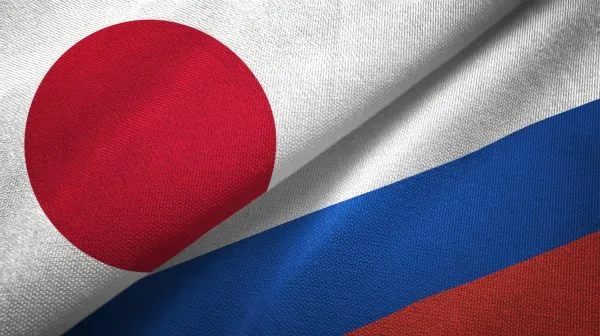 Photo: The Diplomat
Key points
Japan's prime minister denied espionage after Russia's FSB detained Hokkaido Shimbun journalist Yuki Imai in Sakhalin, with a Moscow court holding him until December 12.
Japan's Prime Minister Sanae Takaichi said Japanese authorities do not engage in espionage in Russia, responding to the detention of Hokkaido Shimbun correspondent Yuki Imai in Yuzhno-Sakhalinsk. Russia's Federal Security Service (FSB) announced on October 13 that it had detained the correspondent in the far-eastern Sakhalin region, and a Moscow court ordered his detention until December 12.
The detention matters because it is the first criminal espionage case against a Japanese journalist in Russia, and it lands on relations already frozen since Japan imposed sanctions after Russia's full-scale invasion of Ukraine in February 2022. Moscow designated Japan an "unfriendly country" and suspended peace treaty negotiations, so Tokyo now must defend a citizen and press freedom while keeping the channels open to seek his release.
What the FSB announced
The FSB alleged that Imai collected information about Russia's defence capabilities under instructions from Japanese intelligence. Russian state media said the information allegedly concerned residents of the Russia-controlled Kuril Islands, including islands claimed by Japan, who had been mobilised or volunteered to fight in Ukraine. The allegations have not been independently substantiated. Espionage convictions in Russia can carry prison terms of up to 20 years.
Russian authorities said Imai was apprehended a day before his planned departure from Russia and transferred to Moscow, where a court ordered his detention until December 12. The FSB published a video showing masked officers storming a hotel room, pushing a man to the floor and handcuffing him. Russian state television broadcast footage of masked officers handcuffing a man and his subsequent appearance in a Moscow courtroom.
Japan's foreign ministry summoned Russian Ambassador Nikolay Nozdrev to protest the detention and Moscow's unilateral announcement without prior explanation to Tokyo, again requesting prompt information and swift access. Foreign Minister Motegi Toshimitsu said on October 14 that Japanese diplomatic missions had requested information, humanitarian consideration, and fair and impartial treatment. Chief Cabinet Secretary Kihara Minoru acknowledged that Japanese officials had not yet been able to contact the detained journalist.
Tokyo's protest and denial
Russian Foreign Ministry spokesperson Maria Zakharova identified the journalist as Imai Yuki and accused Japan of using accredited journalists for intelligence gathering, linking the case to Tokyo's sanctions against Moscow and its defence buildup. She claimed this was not an isolated incident. "Attempts by Tokyo to use its correspondents in Russia … to gather information aimed at undermining the security of our state is regrettable," Zakharova said.
Imai held press accreditation issued by Russia's foreign ministry, and reporting on military recruitment and the human consequences of war is a legitimate journalistic activity. On October 5, eight days before the FSB announced his detention, Imai published an article on the Hokkaido Shimbun's website titled "A Glimpse of North Korea in Sakhalin," describing an encounter with two North Korean men in Yuzhno-Sakhalinsk. The Hokkaido Shimbun said it was still confirming the details and prioritising its correspondent's safety.
The arrest comes amid a spike in tensions after President Vladimir Putin visited one of the disputed Kuril islands in August 2026, known in Russia as Iturup and as Etorofu in Japan. Japan claims the four islands closest to its territory, the nearest less than 4km from Hokkaido. In 2019, a Kyodo News correspondent was detained in Vladivostok but was told to leave Russia within 72 hours and departed the following day.
Where the case goes next
Imai instead faces a criminal investigation and potentially years in prison. Russia's 2023 arrest of Wall Street Journal reporter Evan Gershkovich, sentenced to 16 years before a 2024 prisoner exchange, offers a precedent, though there is no evidence Moscow detained Imai for that purpose. Reduced independent reporting would make an already opaque relationship harder to understand, increasing the risk of misperceptions.
Japanese officials had not yet been able to contact the detained journalist as of October 14, and his detention runs until December 12. Japan retains interests in regional security, fisheries, and Russian energy supplies, including liquefied natural gas from Sakhalin, so Tokyo must protect its citizen while preserving diplomatic channels. The next dated milestone is the December 12 detention review.
Frequently asked questions
Who was detained by Russia and on what charge?
Hokkaido Shimbun correspondent Yuki Imai was detained in the Sakhalin region, with the FSB alleging he collected information about Russia's defence capabilities under instructions from Japanese intelligence. Espionage convictions in Russia can carry up to 20 years.
What has Japan said about the detention?
Prime Minister Sanae Takaichi said Japanese authorities do not engage in espionage in Russia. Foreign Minister Motegi Toshimitsu said missions requested information, humanitarian consideration and fair treatment, and the foreign ministry summoned Ambassador Nikolay Nozdrev.
How long will Imai be held?
A Moscow court ordered his detention until December 12. Russian authorities said he was apprehended a day before his planned departure and transferred to Moscow, where a court ordered pre-trial detention.