King Charles faces reparations protests in Bahamas on 27 October
King Charles III acknowledged "the great suffering of the past" at a Bahamas youth rally on 27 October 2026, as protesters waved placards demanding reparations and Commonwealth leaders prepared to discuss slavery compensation from 1 to 4 November.
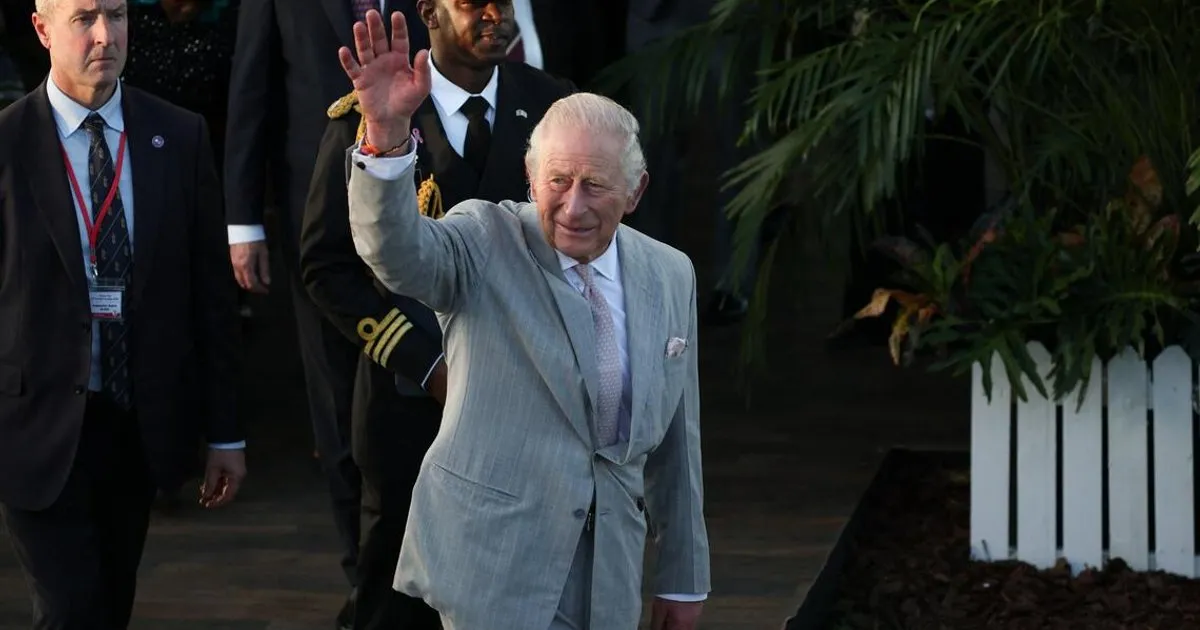 Photo: The Straits Times
Key points
King Charles III began a Caribbean tour in the Bahamas on 27 October 2026, acknowledging past suffering while protesters demanded reparations ahead of a Commonwealth summit.
King Charles III arrived in the Bahamas on 27 October 2026 for a nine-day Caribbean tour, his first official visit to the country as king, and acknowledged "the great suffering of the past" at a youth rally. Protesters near Clifford Park carried placards reading "pay what you owe us" and demanded reparations for slavery. The 77-year-old monarch is receiving treatment for an undisclosed form of cancer.
The Bahamas visit opens a tour that will also take Charles to Guyana and Antigua and Barbuda, where he will address the Commonwealth Heads of Government Meeting with Queen Camilla. The tour places the king at the centre of a growing demand from former colonies for an apology and reparations over the transatlantic slave trade, from which his ancestors profited for centuries. No modern British monarch has formally apologised for slavery.
What the king said at Clifford Park
Charles told the youth rally at Clifford Park, the site where the Bahamas gained independence in 1973, that some of the best of Bahamian culture was "born out of darkness." He said it was right to acknowledge the great suffering and injustices of the past in the islands and beyond. He previously called slavery the "darkest days" of British history and will address colonial issues at each stage of the trip.
The Bahamas government closed all public schools on the island of New Providence to welcome the king. Bahamian police and armed forces greeted him at Lynden Pindling Airport, some wearing pith helmets, and he greeted Governor-General Dame Cynthia A. Pratt and Prime Minister Philip Davis. Members of the Bahamas' Rastafarian community lined a road near Clifford Park demanding reparations, while a cheering crowd of students waved Bahamian flags inside the park.
Commonwealth Secretary-General Shirley Ayorkor Botchwey said reparations for slavery would be on the table at the summit in St John's, Antigua and Barbuda, running from 1 to 4 November. Botchwey said it "wouldn't hurt" for the king to apologise and said the "time has come" to discuss reparations, whether in financial payments or other forms. The Commonwealth has 56 member countries with Charles at its head.
Where the reparations demands stand
Guyana's President Irfaan Ali, who is scheduled to meet Charles during the visit, said that the king's recognition of the "darkest days" was a first step. "Now, moving to the apology is the next step," Ali said, demanding accountability from the former empire, which he said exploited the region, destroyed lives and created underdevelopment. Ali has said he wants an apology from Britain.
Charles also used his Bahamas speech to highlight climate threats facing low-lying islands, saying 90% of the Bahamas sits below two meters and that there is perhaps nowhere better to understand the reality of climate change. Botchwey said many countries affected by climate are not polluters yet feel the brunt of its effects, and that the summit will also touch on climate resilience schemes. Talks in St John's are expected to focus on climate, trade and development, though some Caribbean leaders have said slavery reparations should dominate.
Eric Carey, former executive director of the Bahamas National Trust, said the Save Exuma Alliance is fighting a development on Sampson Cay that he called ill-advised and out of scale, involving a massive sea wall and dredging of sea grass and coral reefs. The case is before the Bahamas Supreme Court, and Carey said he hopes Charles will raise awareness about the issue given his history of defending the environment.
Frequently asked questions
Why did King Charles face reparations demands in the Bahamas?
Protesters near Clifford Park carried placards reading "pay what you owe us" and demanded reparations for slavery, as former colonies press the king to take a new step toward making amends for colonisation and the transatlantic slave trade.
When will Commonwealth leaders discuss reparations?
Commonwealth Secretary-General Shirley Ayorkor Botchwey said reparations would be on the table at the summit in St John's, Antigua and Barbuda, running from 1 to 4 November 2026.
Has Britain agreed to apologise or pay reparations?
No. The British government has consistently rejected demands for either an apology or reparations, and the debt-laden UK has balked at financial compensation. No modern British monarch has formally apologised for slavery.