Russian bombing kills 24 at Ukrainian aid centre in Komyshuvakha
Russian aerial bombs killed at least 24 people at a school in Komyshuvakha, Zaporizhzhia region, on 2 November, hours after a local ceasefire expired.
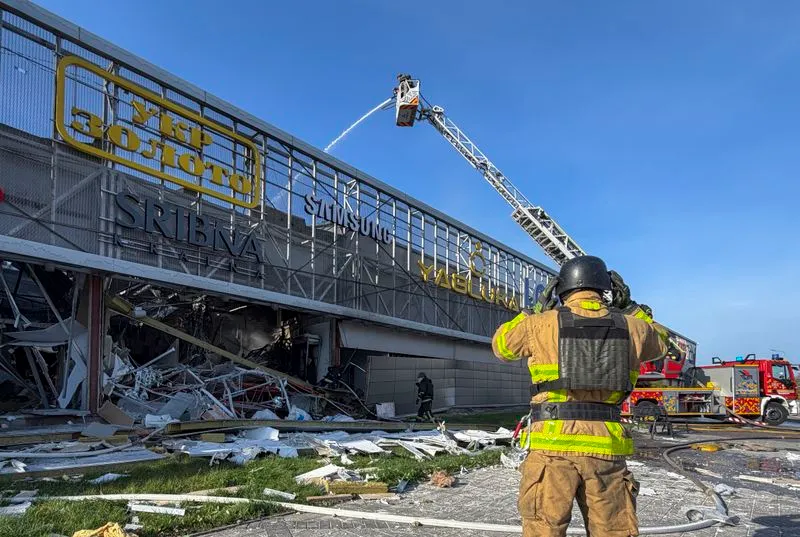 Photo: Daily Maverick
Key points
Russian aerial bombs killed at least 24 people at a school in Komyshuvakha, Ukraine, on 2 November, hours after a local ceasefire expired.
Russian forces bombed a school in the village of Komyshuvakha in Ukraine's southeastern Zaporizhzhia region on Monday, killing at least 24 people, Ukraine's emergency services said. The school was used for distributing humanitarian assistance, and two members of a rescue crew were among the dead, the emergency services said. President Volodymyr Zelenskiy, writing on Telegram, said Russian forces initially dropped aerial bombs on the school, then carried out a repeat strike with nine more bombs directly on the shelter where people had gathered. "The Russians could not have been unaware that every week residents who have remained in Komyshuvakha were receiving assistance right there," he wrote.
The attack and the toll
Regional head Mykhailo Semikin said at least nine 3,000kg aerial bombs hit the village, and 27 people were initially reported missing. The state emergency service later confirmed 24 deaths, including two rescuers and four police officers, and Zelensky later said 26 people were now known to have died. Five people were injured.
The attack occurred a day after the expiry of a six-day local ceasefire brokered by US first lady Melania Trump to bring aid into the embattled city of Oleshky to the southwest in Kherson region and evacuate residents wishing to leave. The truce was the longest pause in fighting between the neighbours in the war, now in its fifth year.
Ceasefire context
Zelensky said that after the Oleshky truce, "there was a moment when the next steps could have shown that progress toward peace was possible." He added: "With these killings, Russia is sending an entirely opposite signal: Russia is counting on more killings. There must be a response to this." The Russian military has not publicly commented on the strike. The Kremlin's spokesman Dmitry Peskov said Monday that Russia saw the Oleshky humanitarian mission as "successful," praising the "good cooperation between all sides" and singling out the role of its human rights commissioner Yana Lantratova.
Kyiv's military alleged that Moscow had used the pause in fighting to "fortify its positions." Peskov did not deny the accusation, saying: "This is a completely normal practice in such situations." He alleged the Ukrainian army had also used pauses in fighting in the past to regroup. Rescue teams were working at the scene, but Semikin said they had been forced to halt their operation a number of times because of Russian drone attacks in the area. Photographs posted online showed smouldering rubble strewn throughout the area, and there were fears the death toll would rise as people remained under the rubble.
What happens next
A day of mourning was declared for Tuesday across the entire Zaporizhzhia region. The attack came as US-led talks between Russia and Ukraine are set to resume this month, expected to be held in Abu Dhabi, with no major breakthrough expected, according to reports. Zelensky said that after a recent successful joint Russian-Ukrainian operation to evacuate civilians from Oleshky during the temporary ceasefire, "there was a moment when the next steps could show that peace is possible." He said the strike showed Moscow rejects de-escalation immediately following the conclusion of the Oleshky evacuation truce.
Frequently asked questions
What happened in Komyshuvakha on 2 November?
Russian forces bombed a school used for distributing humanitarian aid, killing at least 24 people, including two rescuers and four police officers. The attack involved at least nine 3,000kg aerial bombs, according to regional head Mykhailo Semikin.
Why did the attack happen after the ceasefire?
The attack occurred a day after a six-day local ceasefire in the nearby Kherson region expired. The truce, brokered by US first lady Melania Trump, had enabled evacuations from Oleshky. President Zelensky said the strike showed Russia rejects de-escalation.
How many people were killed and injured?
At least 24 people were killed, according to Ukraine's emergency services, with 27 initially reported missing. Five people were injured. President Zelensky later said 26 people were known to have died.