Ladybird ships alpha browser with engine built from scratch
The Ladybird project released an alpha build of its browser for macOS and Linux on 23 November, after more than four years of development on an independent engine.
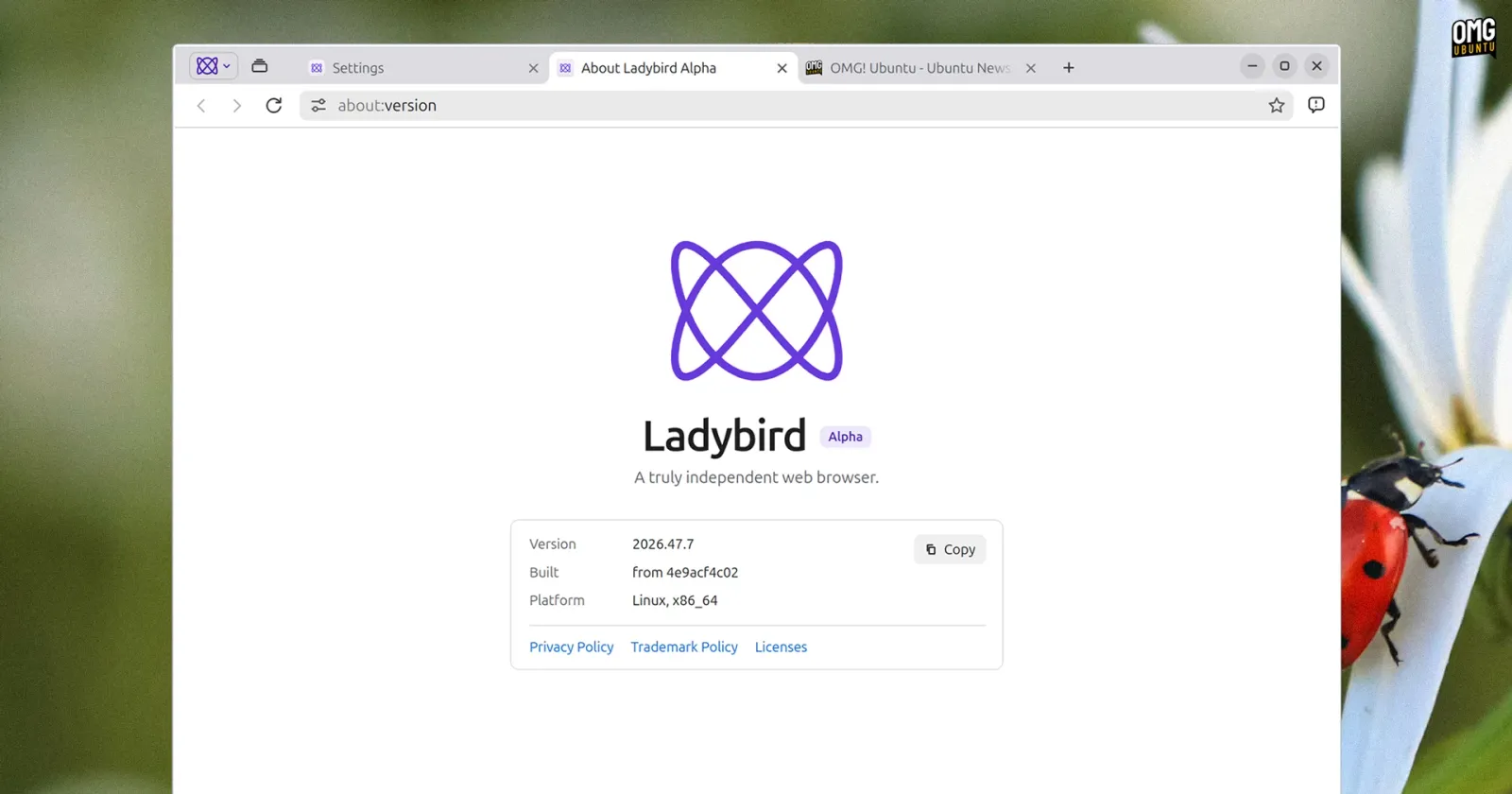 Photo: OMG! Ubuntu
Key points
Ladybird released an alpha browser for macOS and Linux on 23 November, built on an engine written from scratch rather than forked from Blink, WebKit or Gecko.
Ladybird, an independent web browser built on an engine written from scratch, released its first alpha for macOS and Linux on 23 November, developer Andreas Kling announced. The release follows more than four years of development and makes Ladybird the first browser in years to arrive with an entirely new engine.
Most browsers today run on one of three engines: Google's Blink, Apple's WebKit and Mozilla's Gecko. Blink powers Chrome, Edge, Opera and Brave, WebKit runs Safari, and Gecko runs Firefox. The company maintaining an engine decides how pages load and which web features exist at all, which is why an alternative engine is the point of the project.
Why a new engine matters
Ladybird's engine is neither a fork nor a derivative of any of those three. The project's GitHub states that "HTML, CSS, the DOM, layout, JavaScript and WebAssembly are all implemented from scratch". The stated goal is a modern engine that supports web standards but whose direction is not steered by commercial interests.
The project is run by the Ladybird Browser Initiative, a US nonprofit funded by donations and corporate sponsorships. Its website describes the aim as "an independent, fast and secure browser that respects user privacy and fosters an open web". The project lists sponsors including Proton, Cloudflare and 37signals. Kling described the release as "modest but functional" and said "some websites won't work" during the alpha. The team also makes no promises about security and wants researchers to try to break it.
What the alpha includes
Developer and blogger Simon Willison, who tested the alpha on release day, wrote that it felt fast and that most sites he tried worked. The alpha covers core browsing: a tab strip, optional vertical tabs, bookmarks, history, per-site settings, downloads and a built-in content blocker. There is no extension system and no option to import data from other browsers. Ladybird sets no default search engine, so users pick one, with options including Google, DuckDuckGo, Ecosia and Kagi Search.
The project's monthly report says automated coding agents pointed at the shared browser test suite made many small fixes that added up to tens of thousands of new passing tests. By that count Ladybird passes more of the Web Platform Tests than Safari Technology Preview, Apple's own test build. Ladybird also runs page layout on a separate thread, so animations keep moving while a heavy script runs, which the developers say no other browser does today. Web developers can test sites through WebDriver and the Firefox DevTools protocol.
Where it runs and what follows
Ladybird also runs page layout on a separate thread, so animations keep moving while a heavy script runs, something the developers say no other browser does today. Web developers can test sites through WebDriver and the Firefox DevTools protocol. Crash reports are sent only if the user agrees. The Mac version runs only on Apple silicon machines with macOS 14.4 or later, which leaves Intel Macs out. On Linux, Ladybird ships as a Flatpak and as native packages for Ubuntu 24.04 and newer and for Fedora 44 and 45, on both x86 and ARM processors. Ubuntu users can also install it from an apt repository on 24.04 LTS and 26.04 LTS.
There is no Windows build and no phone version. Kling says a Windows version will follow at a later stage, without a date. Willison said he would keep Ladybird for anonymous browsing but would not sign into GitHub or Gmail with it, and one of his more complex test apps, which relies on service workers, refused to start.
The browser passed Safari's test build on the shared test suite on 26 October. The alpha updates itself automatically. The project's own framing is that Ladybird has a long way to go and may not become most people's default browser; its backers argue that keeping a rival engine alive matters more than market share. Crash reports are sent only if the user agrees, and the project has set no date for a Windows version.
Frequently asked questions
What is Ladybird?
Ladybird is an independent web browser whose rendering engine was written from scratch rather than forked from Blink, WebKit or Gecko. It is run by the Ladybird Browser Initiative, a US nonprofit funded by donations and sponsorships.
Which systems can run the Ladybird alpha?
The alpha runs on macOS on Apple silicon machines with macOS 14.4 or later, and on Linux as a Flatpak and native packages for Ubuntu 24.04 and newer and Fedora 44 and 45. There is no Windows build and no phone version.
When will Ladybird support Windows?
Andreas Kling says a Windows version will follow at a later stage of the project, without a date. The alpha for macOS and Linux was announced on 23 November.