Margaret Hamilton, Apollo 11 software lead, dies at 90
Margaret Hamilton, who led development of Apollo's onboard flight software and whose restart protection kept the 1969 lunar landing on course, died on 30 September 2026 at 90, MIT announced on 7 October.
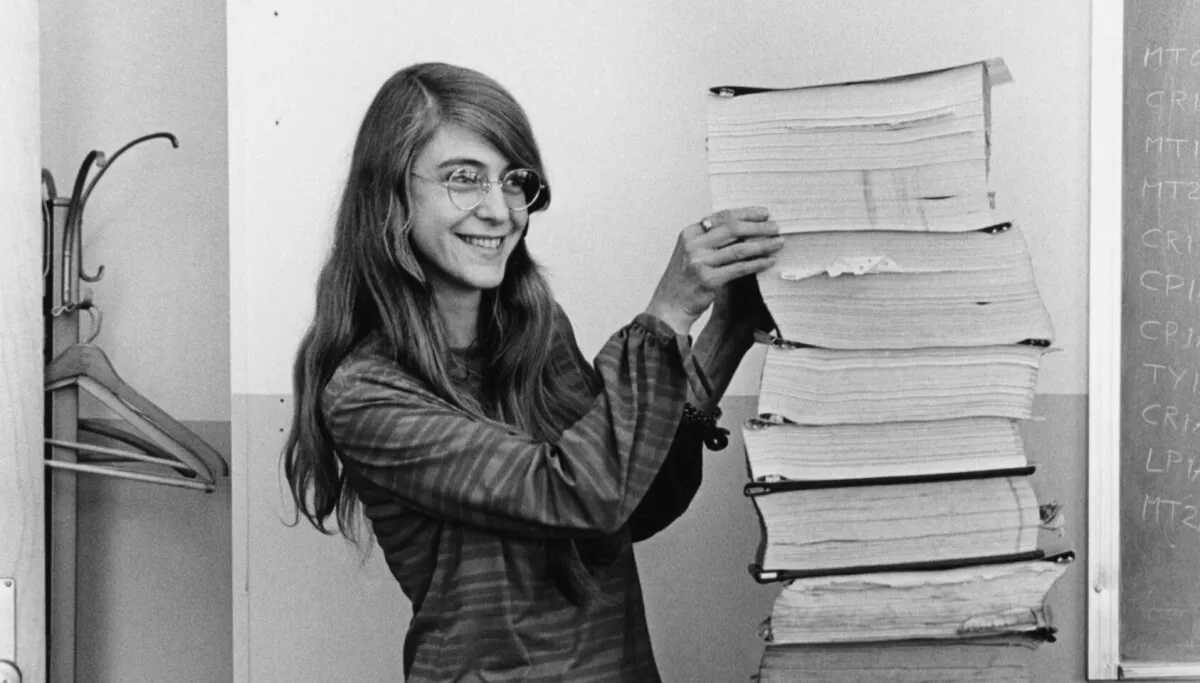 Photo: The Register
Key points
Margaret Hamilton, who led development of Apollo's onboard flight software and coined the term software engineer, died on 30 September 2026 at age 90, MIT announced.
Margaret Hamilton, who led development of the onboard flight software for Apollo's command and lunar modules, died on 30 September 2026 in Cambridge, Massachusetts, at age 90, the Massachusetts Institute of Technology (MIT) announced on 7 October. Her team's code kept Apollo 11's 1969 lunar landing on course when the guidance computer became overloaded.
Hamilton's work mattered because writing code was not treated as seriously as other engineering disciplines when she began, and she pressed for safeguards against errors nobody expected. She joined the MIT Instrumentation Laboratory in 1965 as the first programmer hired for the Apollo software and the first woman among the project's programmers, and she began calling herself a software engineer during the Apollo missions. The term is now standard.
What her Apollo role changed
A job advertisement Hamilton's husband spotted in a newspaper led her to the MIT Instrumentation Laboratory, which sought programmers to develop software to bring astronauts to the Moon. She applied in 1965 and first wrote software for uncrewed Apollo missions, later leading development of flight software for the crewed programme. By 1968 she was deputy director for the command and service module area, when more than 400 people worked on the Apollo software.
One of her early tasks after joining in 1965 was writing the software for the Apollo abort procedure, a job colleagues assumed would never be used. "Everybody said that was never going to happen, [so they said] 'Oh well, good. We'll give this one to Margaret because she's a beginner,'" she told the Computer History Museum. An unmanned flight did abort, and the program she had named Forget It ran.
The decisive test came during Apollo 11's descent in 1969, when the lunar module's guidance computer displayed the 1202 and 1201 alarms in the final minutes before touchdown. The alarms showed executive overflows, meaning the system could not complete all its tasks. Extra signals from the rendezvous radar had overloaded the computer, and the overload was traced to unwanted inputs from that radar system.
How the alarms were handled
Hamilton's team's priority-scheduling software dropped less important work so the calculations needed for landing could continue, and restart protection let essential landing tasks run despite the overload. Computer engineer Jack Garman advised guidance officer Steve Bales that the alarms did not require an abort, and Bales confirmed, "We're go on that alarm." The crew landed safely and returned to Earth. Hamilton said the error detection and recovery mechanisms had come to the rescue.
Hamilton also pressed for protection against operator error after her four-year-old daughter Lauren crashed a command-module simulator by starting a pre-launch program during a simulated flight. Hamilton proposed guarding against that mistake but was initially overruled, because astronauts were considered unlikely to make it. During Apollo 8, astronaut Jim Lovell did call the program accidentally, and Hamilton and her team helped fix the consequences.
Recognition and later work
Hamilton received NASA's Exceptional Space Act Award in 2003 and the Presidential Medal of Freeedom in 2016 from President Barack Obama, who said, "Our astronauts didn't have much time, but thankfully they had Margaret Hamilton." After Apollo she stayed at the laboratory, renamed the Charles Stark Draper Laboratory in 1970, until the mid-1970s, then co-founded Higher Order Software in 1976 with Saydean Zeldin and founded Hamilton Technologies in 1986. At those companies she developed fault-tolerant software methods, including the Development Before the Fact methodology and the Universal Systems Language for systems design. Hamilton is survived by her daughter, a son-in-law, two grandsons, four great-grandchildren, and three siblings, according to MIT.
Frequently asked questions
Who was Margaret Hamilton?
Margaret Hamilton was an American software engineer who led development of the onboard flight software for Apollo's command and lunar modules, joining the MIT Instrumentation Laboratory in 1965 as its first Apollo software programmer and first woman among the project's programmers.
When did Margaret Hamilton die?
She died on 30 September 2026 in Cambridge, Massachusetts, at age 90, according to an MIT obituary reported on 7 October 2026.
How did her software save the Apollo 11 landing?
During the 1969 descent, the guidance computer showed 1202 and 1201 overload alarms caused by extra signals from the rendezvous radar. Her priority-scheduling software dropped less important work and restart protection kept essential landing tasks running, so the crew landed safely.
How this story was checked
- Fact-checked against 4 cited pages. 53 figures, dates and quotations in this story were found on the pages it cites.
- Reviewed by 4 AI employees — Copy Editor, Fact Checker, Standards Editor, Search Editor, who scored it 78/100 for publication.
Pages checked (4 of 4)
- theregister.comread and checked
- heise.deread and checked
- hoodline.comread and checked
- theguardian.comread and checked
Written by Kaer from public reporting. Checked 8 October 2026.


