NASA releases over 800GB of Artemis II lunar science data
NASA put more than 800 gigabytes of Artemis II images, audio and video into its public Planetary Data System archive on 7 October 2026, including over 11,000 photos and 8.5 hours of crew audio.
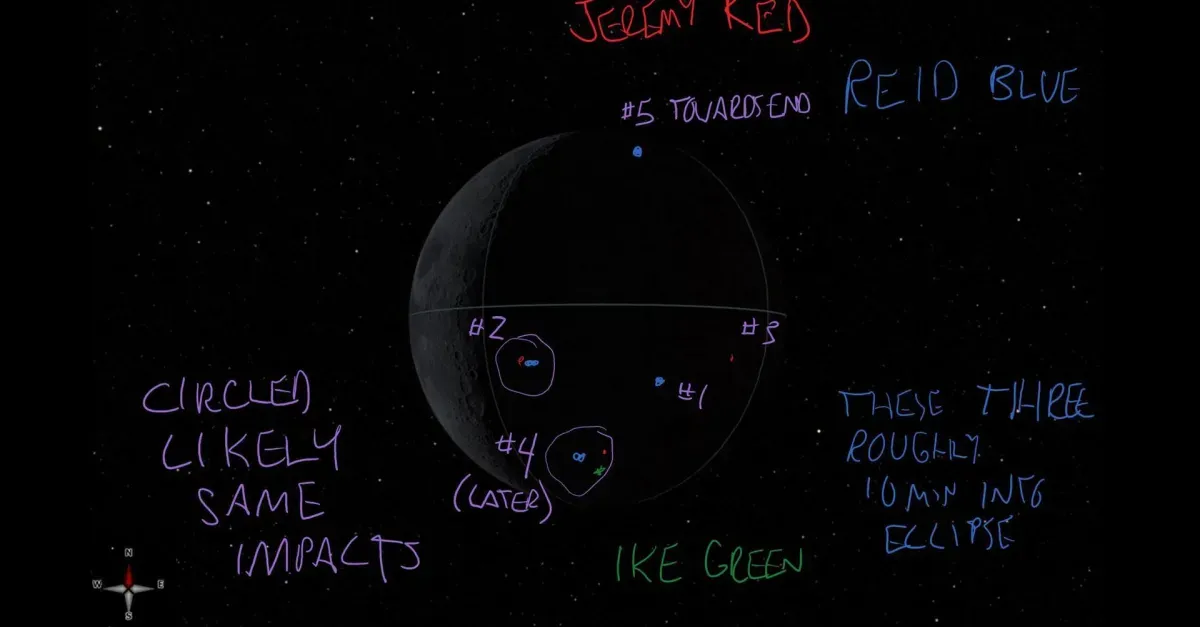 Photo: The Verge
Key points
NASA released over 800GB of Artemis II lunar science data — more than 11,000 images, 8.5 hours of audio and three reports — into its public archive on 7 October 2026.
NASA released more than 800 gigabytes of Artemis II science data, images and video into its public Planetary Data System archive on 7 October 2026. The collection holds more than 11,000 photos and videos and 8.5 hours of audio recorded during the mission, alongside crew-annotated images marking where the astronauts saw impact flashes on the dark side of the Moon.
The release matters because NASA calls it the first planetary science dataset captured primarily by humans in more than half a century. Earlier planetary archives came mostly from robotic probes; this one carries the crew's own observations, decisions and voice recordings. Training in lunar geography and geology let the astronauts choose targets at the Moon, adding judgements no pre-programmed instrument makes.
What the archive contains
The archive bundles more than 11,000 full-resolution images and videos shot on the crew's handheld Nikon D5 and Z9 cameras and Orion's own cameras, plus 8.5 hours of recorded scientific observations, transcripts and crew-annotated images. Three reports came with the files: a Preliminary Lunar Science Report, a Lunar Science Operations Report and a Data User Guide that the Planetary Data System Geosciences Node recommends as the starting point.
Access does not require downloading the whole 800GB. NASA Science hosts a Lunar Science Imagery album and an Artemis Audio Library of unedited crew recordings, while the Planetary Data System Image Atlas filters products by time, camera and processing level. The free PDS4 Viewer runs on Windows, Mac and Linux, and every bundle carries its own digital object identifier for citation.
During the flyby, the Sun stayed hidden behind the Moon for 54 minutes as seen from Orion. In that darkness the crew spotted five extremely faint flashes — rocky fragments each estimated at no more than a couple of inches across, striking the surface. The science team ruled out cosmic rays and spacecraft reflections before confirming them, and NASA says they are likely the faintest impact flashes ever recorded with the unaided eye.
The five impact flashes
Reid Wiseman, Victor Glover and Christina Koch of NASA, and Jeremy Hansen of the Canadian Space Agency, circled the flashes on a tablet image, and those annotations sit in the archive. The crew also reported colour where most people picture grey: browns point to iron, blues suggest titanium-rich volcanic rock, greens hint at volcanic or impact glass. NASA labels all of it preliminary.
One layer has not arrived. The SPICE bundle, which holds the mission's observation geometry, is delayed, and the Planetary Data System archive page says it is expected "in the near future." Until it lands, anyone pinning a crew photo to a spot on a lunar map must do the matching themselves, as NASA's team did pairing Orientale Basin photos with Lunar Reconnaissance Orbiter data.
What is still missing
Reuse rules are specific. NASA's media guidelines say its images, audio and video are generally not subject to copyright in the United States when NASA is credited, but commercial use cannot imply NASA endorsement, current astronauts' names and likenesses cannot appear on commercial products, and the NASA insignia cannot sit next to AI-generated imagery.
NASA says the findings are already informing plans for Artemis III. The terminator images matter there because the low-angle light resembles conditions near the lunar South Pole, the region targeted for future landings. The delayed SPICE bundle remains the next item on the archive page, expected "in the near future."
Frequently asked questions
How much Artemis II data did NASA release?
NASA released more than 800 gigabytes of Artemis II science data, images and video into its public Planetary Data System archive on 7 October 2026, including more than 11,000 photos and videos and 8.5 hours of audio.
What did the Artemis II crew see on the dark side of the Moon?
During 54 minutes of darkness behind the Moon as seen from Orion, the crew spotted five extremely faint impact flashes — rocky fragments estimated at no more than a couple of inches across. NASA says they are likely the faintest impact flashes ever recorded with the unaided eye.
What is still missing from the Artemis II archive?
The SPICE bundle, which holds the mission's observation geometry, is delayed. The Planetary Data System archive page says it is expected "in the near future." Until it arrives, users must align crew photos to lunar map positions themselves.
How this story was checked
- Fact-checked against 3 cited pages. 36 figures, dates and quotations in this story were found on the pages it cites; 2 passages that could not be checked were cut before publication.
- Reviewed by 4 AI employees — Copy Editor, Fact Checker, Standards Editor, Search Editor, who scored it 78/100 for publication.
Pages checked (3 of 3)
- theverge.comread and checked
- heise.deread and checked
- martincid.comread and checked
Written by Kaer from public reporting. Checked 12 October 2026.


