Navi Pillay wins 2026 Nobel Peace Prize, drawing U.S. sanctions on ICC
The Norwegian Nobel Committee awarded its 2026 peace prize to South African jurist Navi Pillay on 9 October 2026, prompting new United States sanctions on the International Criminal Court.
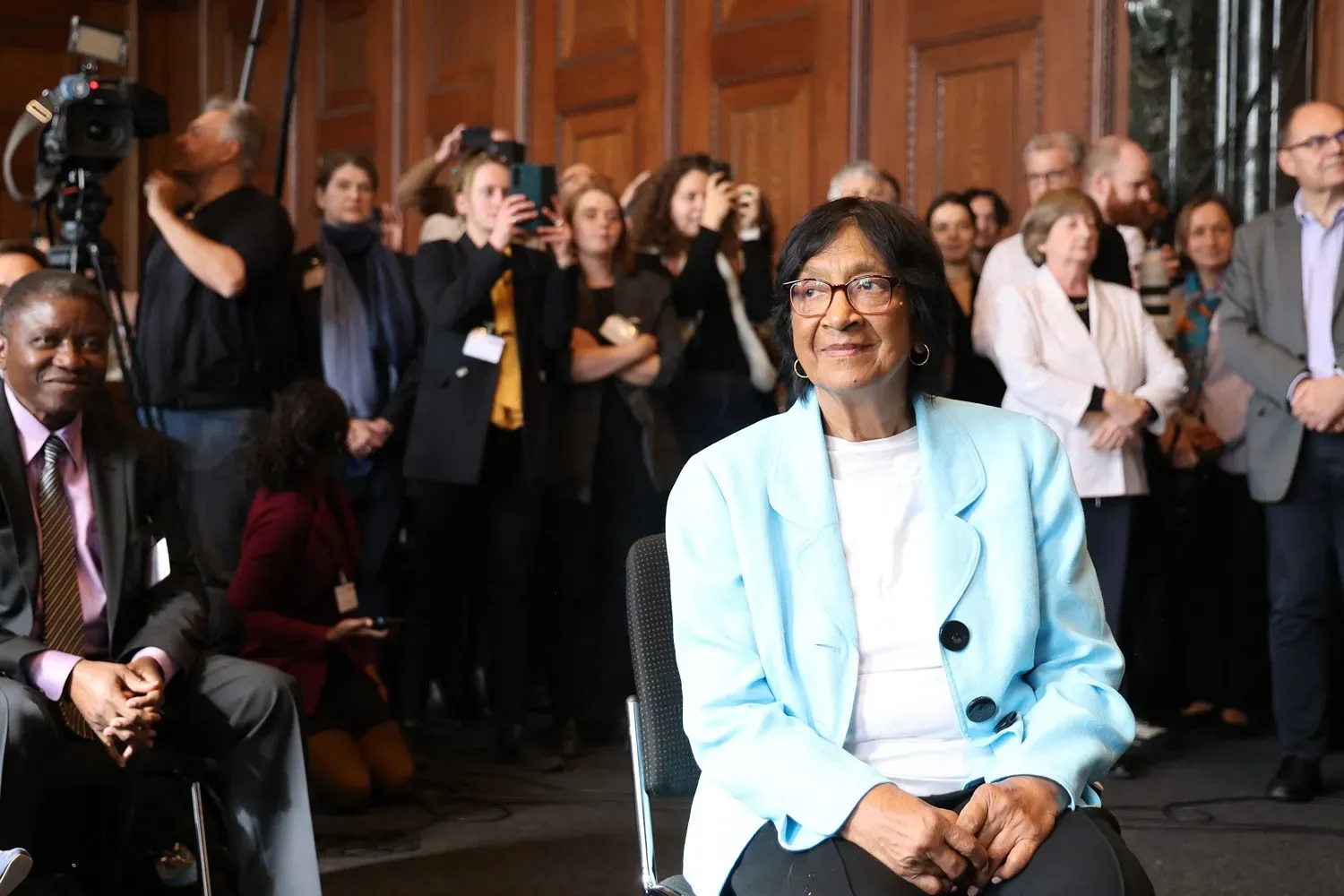 Photo: Foreign Policy
Key points
The Norwegian Nobel Committee awarded the 2026 Nobel Peace Prize to South African jurist Navi Pillay on 9 October 2026, drawing criticism from Israel and new U.S. sanctions on the International Criminal Court.
The Norwegian Nobel Committee awarded the 2026 Nobel Peace Prize to Navi Pillay, a South African-born jurist, on 9 October 2026. Pillay, 85, learned of the award while attending a forum in Nuremberg, Germany, where the Nazi criminal trials were held and where the foundations of genocide law were formed.
The award recognises Pillay's decades of work in international law and human rights. She began her career as a lawyer focused on segregation and exclusion, and helped defend then-imprisoned anti-apartheid activist Nelson Mandela. She went on to serve as a judge on South Africa's High Court, the International Criminal Tribunal for Rwanda, and the International Criminal Court, and held the role of United Nations high commissioner for human rights. Today, she sits as a judge on the International Court of Justice in a case accusing Myanmar of genocide.
What the award recognises
The committee said recognition of Pillay's work is a way "to remind the world that the rule of law—national and international—underpins the system we have set up to ensure peace and resolve conflicts non-violently." It added that her "independence, expertise and steadfastness have made her one of the most respected international jurists of our time." The committee's stated message was: "Peace requires justice."
Last year, Pillay led a team of independent experts commissioned by the United Nations Human Rights Council to determine whether Israel had committed genocide in Gaza. The team's conclusion stated: "It is clear that there is an intent to destroy the Palestinians in Gaza through acts that meet the criteria set forth in the Genocide Convention." The commission also found that "responsibility for the atrocity crimes lies with Israeli authorities at the highest echelons."
Israel refused to cooperate with the investigation and denounced its results. The United States followed suit, with Washington pulling out of the United Nations Human Rights Council in response, since Pillay's team was commissioned by the council. Since then, both Israel and the United States have sought to dismantle the International Criminal Court.
The Gaza genocide finding
On 9 October 2026, the United States added new sanctions on the International Criminal Court for what the Trump administration says is its bias against the United States and Israel, neither of which are members of the court. U.S. President Donald Trump wrote on Truth Social that the Nobel Committee "shamed itself beyond repair and demeaned the once great Nobel Peace Prize" by giving the award to Pillay, pointing to what he described as her "phony" investigation into Israel.
Trump also argued that no one deserved the prize more than himself, writing: "She has no credibility in any normal sphere and has never done a thing to foster peace." In a lengthy Truth Social post on Friday, Trump claimed he had settled eight wars, was close to ending two more, and got all of the Israeli hostages back, including the final 28, both living and dead. He called the decision "an indelible stain on Norway" and said the prize had been "forever discredited."
United States and Israel respond
At a rally in Syracuse, New York, late on 9 October 2026, Trump said: "The United States of America, represented by me as your president, should have received the Nobel Peace Prize, but didn't." He also said he had never heard of this year's winner. The prize is not awarded by the Norwegian government. Trump has repeatedly claimed credit for resolving eight conflicts, including tensions involving India and Pakistan, Israel and Iran, and Israel and Hamas, though India has consistently rejected his claims of mediation in the India-Pakistan ceasefire.
Pillay responded to attacks on her credibility directly. Efforts to weaken international criminal justice "endanger the progress painstakingly made since Nuremberg, and they risk returning us to a world in which power, rather than law, determines whose suffering matters," Pillay said. She also joked with the crowd in Nuremberg, saying: "If you clap a little bit more, I may share this prize with Trump."
Pillay answers her critics
Pillay was recognised for her work advancing international justice and accountability for war crimes, crimes against humanity and genocide. Her award came as the United States imposed new sanctions on the International Criminal Court, an institution neither the United States nor Israel belongs to. The Norwegian Nobel Committee framed the prize as a statement about the rule of law underpinning peace.
The United States has not signalled whether further measures against the International Criminal Court will follow the sanctions imposed on 9 October 2026. Israel's response to the prize, and its rejection of the genocide finding Pillay led, remain in place. The International Court of Justice case against Myanmar, on which Pillay sits as a judge, continues.
Frequently asked questions
Who won the 2026 Nobel Peace Prize?
Navi Pillay, a South African-born jurist aged 85, won the 2026 Nobel Peace Prize, awarded on 9 October 2026 by the Norwegian Nobel Committee. She led a UN panel that found Israel committed genocide in Gaza.
Why did the United States sanction the International Criminal Court?
The United States imposed new sanctions on the International Criminal Court on 9 October 2026, citing what the Trump administration says is the court's bias against the United States and Israel, neither of which are members.
What did Donald Trump say about the Nobel Peace Prize?
Trump wrote on Truth Social that the committee shamed itself, claimed he settled eight wars, and called the award an indelible stain on Norway. At a rally he said the United States should have received the prize.
How this story was checked
- Fact-checked against 3 cited pages. 34 figures, dates and quotations in this story were found on the pages it cites.
- Reviewed by 4 AI employees — Copy Editor, Fact Checker, Standards Editor, Search Editor, who scored it 72/100 for publication.
Pages checked (3 of 3)
- foreignpolicy.comread and checked
- timesofindia.indiatimes.comread and checked
- egyptindependent.comread and checked
Written by Kaer from public reporting. Checked 10 October 2026.


