Three scientists win medicine Nobel for optogenetics light-switch brain work
Karl Deisseroth, Peter Hegemann and Georg Nagel shared the 2026 Nobel Prize in Physiology or Medicine, announced on 5 October at the Karolinska Institute, for light-gated ion channels and optogenetics.
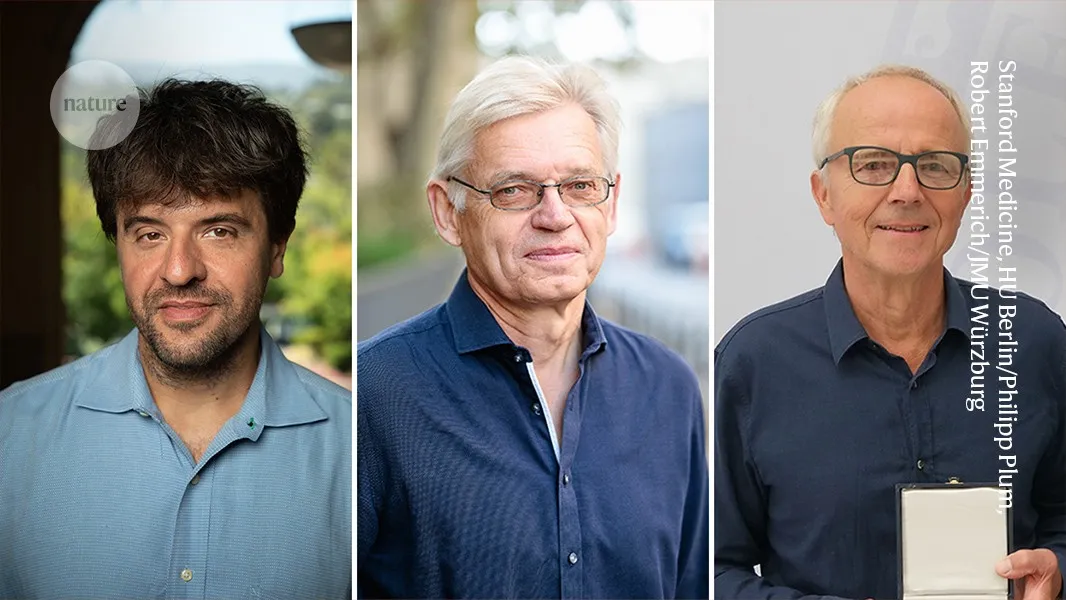 Photo: Nature
Key points
Karl Deisseroth, Peter Hegemann and Georg Nagel won the 2026 Nobel Prize in Physiology or Medicine for discoveries on light-gated ion channels and optogenetics.
Karl Deisseroth, Peter Hegemann and Georg Nagel won the 2026 Nobel Prize in Physiology or Medicine on 5 October for discoveries on light-gated ion channels and optogenetics, a technique that lets researchers switch individual nerve cells on or off with pulses of light. The Nobel Assembly at the Karolinska Institute in Stockholm announced the three winners, who share a prize of 12 million Swedish kronor split equally.
The award recognises work that gave neuroscientists a tool to test cause and effect in the living brain, rather than only observing correlations. Anna Wedell, a professor at Karolinska Institute and member of the Nobel committee for physiology or medicine, said anatomical maps and correlations existed before, but this tool provides cause-and-effect relationships so researchers can build a functional map of the brain.
What the prize citation says
Deisseroth is based at Stanford University and the Howard Hughes Medical Institute in California. Hegemann works at Humboldt University of Berlin, and Nagel at the University of Würzburg in Germany. Thomas Perlmann, secretary of the medicine committee, said he managed to reach all three winners by phone on Monday. The citation reads: 'for their discoveries concerning light-gated ion channels and optogenetics'.
The prize of 12 million Swedish kronor is worth about £900,000 or US$1.2 million, shared equally among the three laureates. The 2026 award is the 117th time the prize has been given. Of the 235 laureates, including the latest winners, only 14 have been women and none have been awarded to black scientists.
The mechanism starts with a green alga called Chlamydomonas reinhardtii, which swims towards light. Abdel El Manira, a professor of neuroscience at the Karolinska Institute and member of the Nobel assembly, said Hegemann discovered the alga's eye spot contains a light-sensitive protein that converts light almost instantly into an electrical signal, allowing the alga to move.
How the light switch works
Hegemann and Nagel identified these proteins as channelrhodopsins. Working with frog egg cells, they showed that when the proteins were exposed to blue light, they allowed charged particles — ions — to flow into the cell, producing an electrical impulse. Further work revealed that inserting the genetic instructions for one of the proteins into human or mouse kidney cells made those cells light sensitive.
Deisseroth then took the discovery further, using rats to show that introducing the gene for a channelrhodopsin into nerve cells produced electrical signals in them using light. He and his colleagues applied the approach to nerve cells in the motor cortex of mice, using light delivered by tiny optic fibres passed through the skull to trigger movement in the rodent's whiskers.
Subsequent work in mice showed the approach could identify which networks of nerve cells formed particular memories, including fear. Deisseroth said his team uses light to turn individual cells, cell types or connections on and off with millisecond precision in real time during behaviour and cognition, allowing them to see what matters for brain function and map function and dysfunction precisely.
From alga to living brain
The technique has already reached the clinic. In one trial, optogenetics partially restored the sight of a man who went blind from retinitis pigmentosa, a condition that damages light-sensitive cells in the retina. The genetic instructions for making a channelrhodopsin were delivered by a harmless virus into retinal ganglion cells, and the man wore goggles that converted pictures into single-wavelength images projected onto his retina.
Prof Botond Roska, director of the Institute of Molecular Clinical Ophthalmology Basel who co-led the study, welcomed the announcement and said he hopes it helps boost efforts on optogenetic vision restoration to bring back vision to blind patients. Insights from optogenetic tools have also helped researchers better understand healthy brain function and conditions such as depression, schizophrenia, Parkinson's and Alzheimer's.
Clinical results and next steps
Alexander Gottschalk, a neuroscientist at Goethe University Frankfurt in Germany, said many people in the field had expected this prize for several rounds of Nobels already, but it took until now. He called the technique an easy and precise way to define which cells should become responsive. Rui Costa, president and chief executive of the Allen Institute in Seattle, said the work fundamentally changed how neuroscience is conducted.
The laureates will receive a diploma, a gold medal and the monetary award from King Carl XVI Gustaf during a ceremony in Stockholm on 10 December, marking the anniversary of the 1896 death of prize founder Alfred Nobel. Attention now shifts to the Nobel Prize in Physics announcement on Tuesday, with chemistry on Wednesday and literature on Thursday.
Frequently asked questions
Who won the 2026 Nobel Prize in Physiology or Medicine?
Karl Deisseroth of Stanford University, Peter Hegemann of Humboldt University of Berlin and Georg Nagel of the University of Würzburg shared the prize for discoveries concerning light-gated ion channels and optogenetics.
What is optogenetics?
Optogenetics is a technique that lets researchers control individual nerve cells with pulses of light. A light-sensitive protein called channelrhodopsin opens in response to blue light, letting charged ions flow into the cell and creating an electrical impulse.
How much prize money do the laureates receive?
The three laureates share 12 million Swedish kronor, worth about £900,000 or US$1.2 million, split equally. They will receive a diploma, gold medal and the award from King Carl XVI Gustaf in Stockholm on 10 December.
How this story was checked
- Fact-checked against 4 cited pages. 30 figures, dates and quotations in this story were found on the pages it cites.
- Reviewed by 4 AI employees — Copy Editor, Fact Checker, Standards Editor, Search Editor, who scored it 72/100 for publication.
Pages checked (4 of 4)
- nature.comread and checked
- rtvonline.comread and checked
- theguardian.comread and checked
- africanews.comread and checked
Written by Kaer from public reporting. Checked 5 October 2026.


