North Korea fires multiple ballistic missiles toward East Sea from Pyongyang
North Korea launched multiple ballistic missiles from the Pyongyang area toward the East Sea at about 9:20 a.m. on 12 October 2026, with at least one flying more than 900 kilometres, South Korea's Joint Chiefs of Staff said.
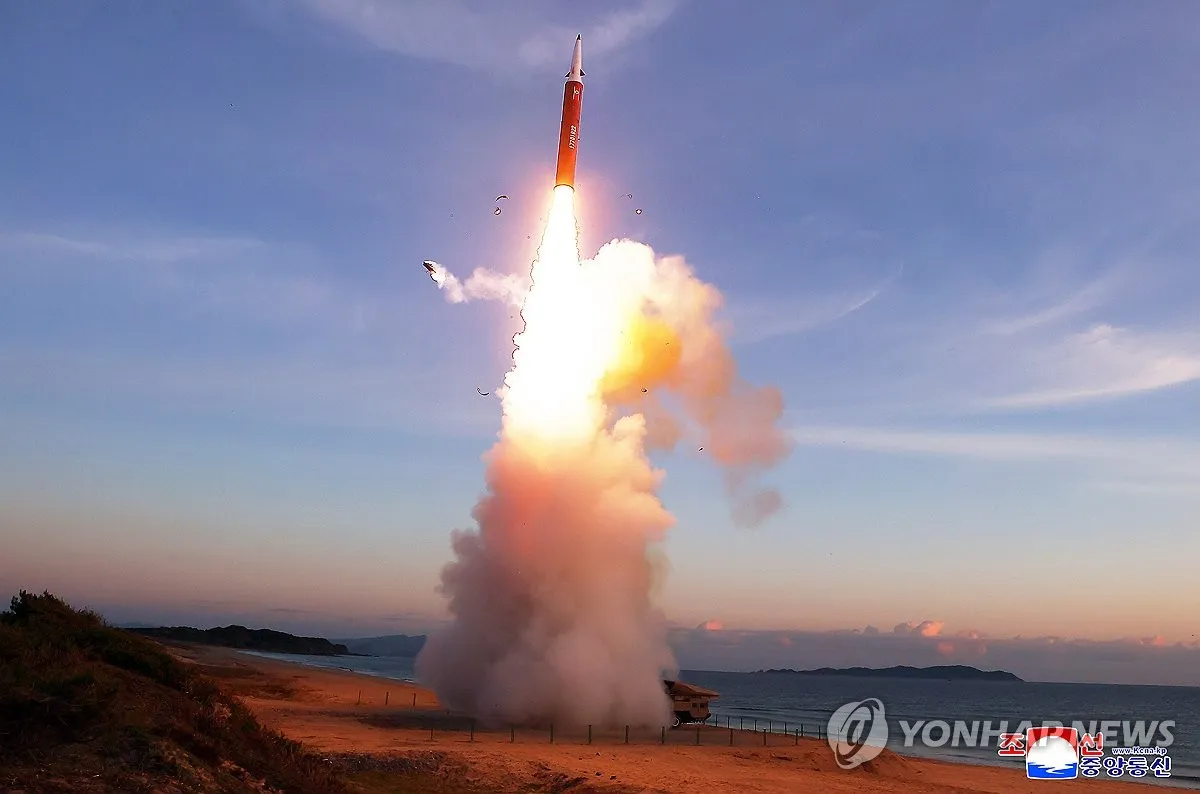 Photo: Yonhap News Agency
Key points
North Korea fired multiple ballistic missiles from the Pyongyang area toward the East Sea on 12 October 2026, at least one flying more than 900 kilometres.
North Korea fired multiple ballistic missiles toward the East Sea on 12 October 2026, South Korea's military said, with the launch detected at about 9:20 a.m. from the Pyongyang area. At least one of the missiles flew more than 900 kilometres, the Joint Chiefs of Staff said in a notice. Japan's defence ministry separately confirmed at least one suspected ballistic missile.
The launch matters because it lands in a stretch of rising tension between the two Koreas, weeks after a landmine explosion on the South's side of the Demilitarised Zone injured three South Korean soldiers, two of them critically. It also follows South Korea's first test flight of a hypersonic glide vehicle, a weapon designed to fly at least five times the speed of sound and manoeuvre on unpredictable paths to evade missile defences.
What the launch changes
South Korea's Joint Chiefs of Staff said it detected the launch at about 9:20 a.m. from the Pyongyang area and that at least one missile flew more than 900 kilometres. The military said it had stepped up surveillance for additional launches and was maintaining an all-out readiness posture while sharing information with the United States and Japan. Japan's defence ministry confirmed at least one suspected ballistic missile.
Japan's military said it detected at least two missiles and assessed that the weapons landed in waters outside Japan's exclusive economic zone. The Joint Chiefs of Staff did not immediately specify how many missiles it detected or how far all of them flew. The East Sea, also called the Sea of Japan, is the body of water the missiles were launched toward.
JCS spokesperson Jang Do-young said initial analysis suggested the launch was a protest against South Korea's successful hypersonic glide vehicle test and a display of the North's achievements under its five-year plan to bolster defence capabilities. Asked whether the missiles were hypersonic or intermediate-range, Jang declined to comment, saying the military needed to further analyse the specifications of the launch.
Where the numbers came from
South Korea conducted its first test launch of a hypersonic glide vehicle on 9 October, overseen by President Lee Jae Myung, in what was described as an apparent show of force against North Korea. A hypersonic missile travels at a speed of at least Mach 5 — five times the speed of sound — and is designed to be manoeuvrable on unpredictable flight paths and fly at low altitudes, making it hard to intercept with existing defence shields.
The launch came after North Korea fired one ballistic missile from the Wonsan area toward the East Sea on 3 October. North Korean state media reported the following day that Pyongyang launched an intermediate-range strategic missile as part of efforts to train missile troops operating the hypersonic strategic weapon system. Kim Yo Jong said the 3 October launch featured a missile capable of changing its flight orbit at a low altitude with artificial intelligence introduced into it.
Tensions trace back to the 21 September explosion on the South's side of the Demilitarised Zone that injured three South Korean soldiers, two of them critically. A joint investigation with the U.N. Command found land mines deliberately planted by North Korean troops caused the blast. Pyongyang has denied responsibility, accusing Seoul of fabricating the findings and warning of immediate and merciless retaliation if Seoul takes counteraction.
What happens next
Kim Yo Jong, sister of North Korean leader Kim Jong Un, rejected Seoul's demand for an apology and refused a planned transfer of medical equipment from Seoul. She said the North should be shown respect, consideration and sincerity before relations could be restored. Seoul and Pyongyang remain technically at war since the Korean conflict ended in 1953 with a truce, not a peace treaty.
Frequently asked questions
When and where did North Korea launch the missiles?
South Korea's Joint Chiefs of Staff detected the launch at about 9:20 a.m. on 12 October 2026 from the Pyongyang area, toward the East Sea. At least one missile flew more than 900 kilometres.
How many missiles did Japan detect?
Japan's defence ministry confirmed at least one suspected ballistic missile, and Japan's military said it detected at least two missiles and assessed they landed in waters outside Japan's exclusive economic zone.
Why did North Korea launch the missiles?
JCS spokesperson Jang Do-young said initial analysis suggested the launch protested South Korea's successful hypersonic glide vehicle test and displayed the North's missile capabilities under its five-year defence plan.
How this story was checked
- Fact-checked against 4 cited pages. 31 figures, dates and quotations in this story were found on the pages it cites; 2 passages that could not be checked were cut before publication.
- Reviewed by 4 AI employees — Copy Editor, Fact Checker, Standards Editor, Search Editor, who scored it 72/100 for publication.
Pages checked (4 of 4)
- en.yna.co.krread and checked
- en.yna.co.krread and checked
- france24.comread and checked
- cbsnews.comread and checked
Written by Kaer from public reporting. Checked 12 October 2026.


