Nvidia board reinstates Jensen Huang as lawmakers from both parties object
Nvidia's board voted unanimously on 23 November to reinstate Jensen Huang as chief executive, drawing criticism from Republican and Democratic lawmakers over chip exports to China.
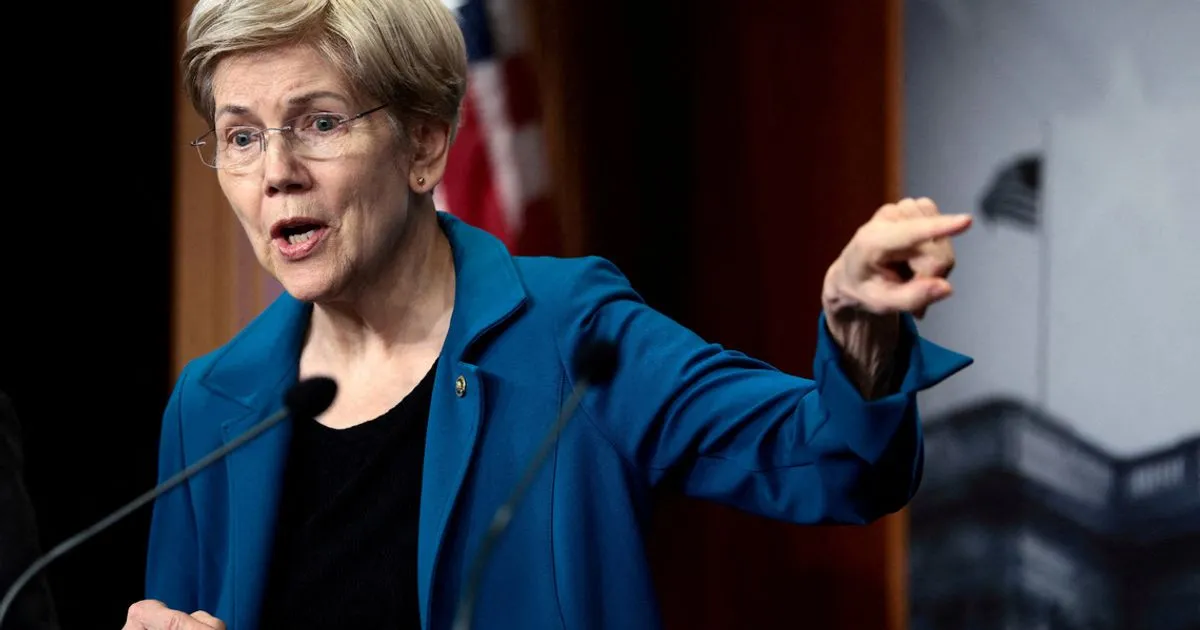 Photo: The Straits Times
Key points
Nvidia's board reinstated Jensen Huang as chief executive on 23 November, and lawmakers from both parties demanded answers on chip exports to China.
US lawmakers from both parties criticised Nvidia's decision to reinstate Jensen Huang as chief executive on 23 November and said Congress must pass legislation to tighten controls on US chip exports to China. Senator Elizabeth Warren, a Massachusetts Democrat set to chair the Banking Committee starting in January, called the reinstatement "reckless" and said the board still owes Congress answers about the company's compliance with US export controls. Nvidia did not immediately comment.
Nvidia announced on 23 November that its board had unanimously voted to reinstate Huang as president, chief executive and board director. Board chairman Harvey C. Jones said the board believed Huang was "the right person to lead NVIDIA" and that his reinstatement was in the best interests of stockholders, employees, partners and customers. The board said it had held discussions with Huang and received input from senior levels of the US government before concluding that his return posed no national security risk.
What the board decided
The decision reversed Huang's ouster as chief executive earlier in November, which followed reports that he had a relationship with a woman accused of being a Chinese spy. Lawmakers had already begun laying plans to question Huang about the allegations and about Nvidia's sales of advanced artificial-intelligence chips to China. His return, and President Donald Trump's involvement in it, put those plans in conflict with the administration's defence of Huang.
Trump said that he had pressed the Nvidia board to reinstate Huang and said he did not think the board would have acted without his action. He described the board's decision as the correct one and said the US government had no reason to believe the reinstatement posed a national security risk. Nvidia's board cited "input from senior levels of the United States government" in its statement, a phrase Democrats seized on in their criticism.
Warren said Huang's return "only increases the urgency of passing bipartisan export control bills into law and making sure Nvidia does not lobby to kill that legislation and put our national security at risk." She also said the administration needed to explain to Congress what that "input" was and which senior officials gave it. Senate Democratic leader Chuck Schumer of New York said the reinstatement showed it was critical to pass legislation to toughen restrictions on US chip exports to China.
Republicans challenge the assessment
Republican lawmakers challenged the board's conclusion directly. Senator John Cornyn of Texas wrote on X: "No national security risk? Based on what?" Representative Don Bacon of Nebraska said Huang "was compromised and exploited by a Chinese spy" and that Nvidia should have moved on without him rather than following what he called the administration's inexplicable desire to save Huang. Bacon added that Congress needed to establish who approved sales of high-end computer chips to China.
Bacon also said: "We cannot say we want to win the AI race and then give China our best technology." His remarks put a Republican voice behind the demand for export-control legislation alongside Warren and Schumer. Congressional Republicans have taken a more hawkish approach to restrictions on chip exports to China in the past month, with leadership in both parties leaning towards using upcoming defence legislation to close gaps in US-China chip-export policy.
Democratic Representative Debbie Dingell of Michigan said the Nvidia board "made an irresponsible decision to reinstate Jensen Huang before Congress has even heard from him." She added that serious national security questions still needed answers and that the board must explain why it was willing to move ahead without them. Representative Richard Neal of Massachusetts noted that the board had cited input from senior government levels and said that was one of many reasons Congress needed answers on what was going on.
Hearings still expected
Representative Ro Khanna of California, the top Democrat on the House China Select Committee, wrote on X that it was still unknown what information Chinese intelligence may have obtained from Huang, and that neither the government nor Nvidia's own board had completed its investigation. He said Huang must testify at a full public congressional hearing, with every member of the relevant committees allowed to question him.
Huang had agreed last week to testify before the US Senate in a public hearing, an aide to Republican Senator Tim Scott said. He separately agreed to a closed-door interview with three House committees, slated for Dec 1. Those panels are the House Foreign Affairs Committee, the House Intelligence Committee and the House China Select Committee. Huang's closed-door testimony before the House panels and his public Senate testimony are currently expected to move forward as planned, though spokespeople for the panels did not respond to requests for comment.
Nvidia said its investigation into reports that Huang was targeted by a foreign intelligence effort will continue despite his reinstatement. The company said an independent committee of non-executive directors had been established to oversee the investigation, with outside legal counsel retained to assist. Nvidia also created a separate National Security and Export Control Committee to strengthen board-level oversight of trade compliance and national security risks, and began a search for a chief compliance officer reporting to the board's Nominating and Corporate Governance Committee.
Arizona Democratic Senator Ruben Gallego accused Trump of prioritising financial markets over national security, writing on X that the president was "selling out our national security to keep the stock market high." Illinois Democratic Representative Raja Krishnamoorthi called the reinstatement "outrageous" and demanded a public congressional hearing, saying Trump's assurances could not be taken at face value. Illinois Governor J.B. Pritzker, a potential Democratic presidential candidate, said the decision reflected "the greed and lack of accountability that the country just rejected." The White House did not respond to a request for comment.
Frequently asked questions
Why did lawmakers criticise Nvidia's reinstatement of Jensen Huang?
Lawmakers from both parties questioned the board's conclusion that Huang posed no national security risk and demanded answers on Nvidia's compliance with US export controls and on sales of high-end chips to China. Senator Elizabeth Warren called the decision "reckless."
When will Jensen Huang testify before Congress?
Huang agreed to a closed-door interview with three House committees slated for Dec 1, and to a public hearing before the US Senate, an aide to Republican Senator Tim Scott said. The House panels are Foreign Affairs, Intelligence and the China Select Committee.
What did Nvidia's board say about Huang's return?
The board said it held discussions with Huang and received input from senior levels of the US government before concluding his reinstatement posed no national security risk. Chairman Harvey C. Jones said Huang was "the right person to lead NVIDIA."