OpenAI to test visual ads in ChatGPT image generation in the US
OpenAI said on 5 October 2026 it will test visual ads alongside ChatGPT image generation in the US later this month, as ChatGPT reaches 1.2 billion weekly users.
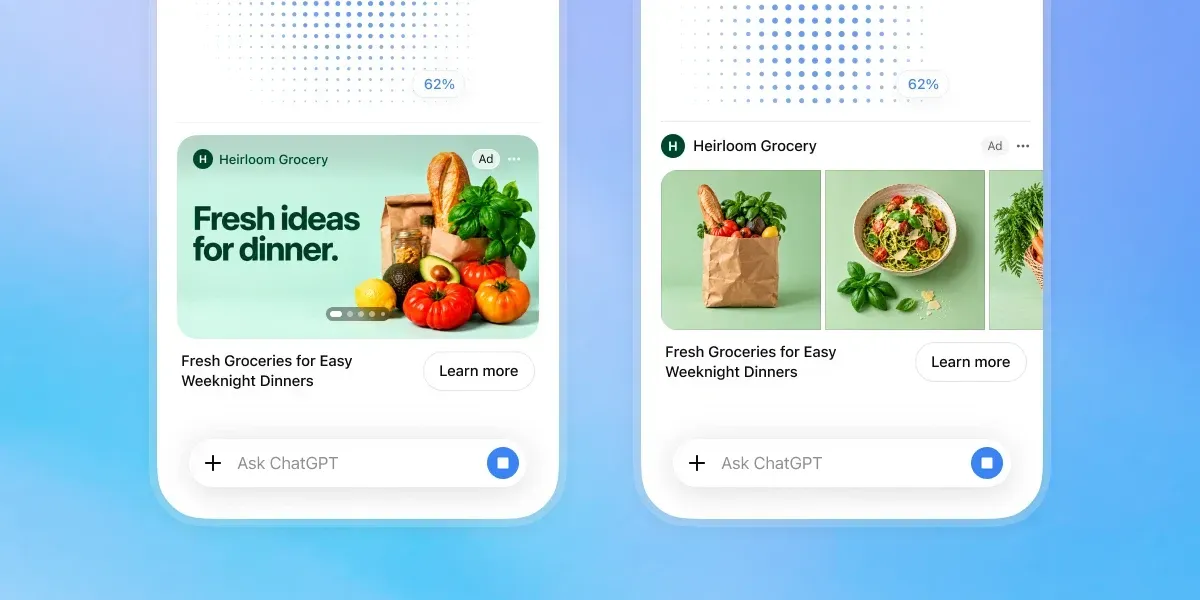 Photo: TechCrunch
Key points
OpenAI will test visual ads that appear alongside ChatGPT image generation results in the US later this month with an initial group of advertisers.
OpenAI said it will begin testing a new visual ad format inside ChatGPT later this month in the United States only, with an initial group of advertisers. The ads will appear alongside images that users ask ChatGPT to generate. OpenAI said the ads will be clearly labelled and will not influence the answers ChatGPT provides. The company announced the format in a blog published on 5 October 2026.
The move matters because it extends OpenAI's advertising business from text to imagery, at a product people use to make pictures rather than to shop. OpenAI first began displaying ads inside ChatGPT at the start of the year, in a sponsored section beneath the chatbot's outputs. Adding visuals, the company says, will help people better imagine how the products and services it recommends could fit into their lives. OpenAI is also expanding measurement tools and partnerships, and developing brand suitability evaluation pilots.
What the new format does
OpenAI explained the reasoning behind the format in its announcement: "Through images showing product inspiration, product usage, or the experiences they make possible, people can discover a new brand, understand what makes an offering distinctive, and decide what to buy." The company added: "For advertisers, this creates new opportunities to tell their story through images." The ads will feature products and services from an initial test group of advertisers, and OpenAI says it plans to experiment with additional formats in the future.
OpenAI said the ads will be clearly labelled and remain separate from the image being created, and that advertising does not influence the answers ChatGPT provides. The company has implemented safeguards so ads appear only alongside topics where it would be appropriate to advertise, excluding conversations about sensitive topics such as personal health or mental wellbeing. OpenAI says its safeguards are designed to prevent ads from appearing in emotionally vulnerable, sensitive, or otherwise unsuitable conversations.
ChatGPT Plus and Pro subscribers will not see ads in their conversations, and neither will enterprise customers. Free users can opt out of ads without paying, but doing so disables tools including image generation; generating images without ads requires a Plus subscription, which starts at $20 a month. OpenAI first introduced ads earlier this year to support its free and low-cost subscription tiers, and expanded them to India in August. The new visual format is limited to the US for now.
Who sees the ads
ChatGPT now reaches 1.2 billion people every week, according to OpenAI, and advertising is becoming another way for the company to make money from users who may not pay for a subscription. OpenAI eventually aims to let advertisers target those 1.2 billion weekly users once the visual ads roll out globally. The plan is to reach online advertisers who want to use more visual imagery to tell their stories. Combined, the moves see OpenAI working to make ChatGPT a viable ad-supported business for those on free and low-cost plans.
Alongside the display ads, OpenAI is expanding its measurement tools and partner ecosystem, which now includes click attribution solutions and partners such as AppsFlyer, Triple Whale, Adjust, Northbeam, Branch, Singular, Kochava, Airbridge and Tenjin, plus full-funnel measurement partners Fospha, Measured and INCRMNTAL. It is integrating with Hightouch, Tealium and LiveRamp for conversion data, and has partnered with Haus, Measured and WorkMagic for "geo-based" experiments around ads. OpenAI is working on brand suitability pilots with DoubleVerify and Integral Ad Science.
Measurement and brand-suitability partners
OpenAI says these independent partners will not get access to private user conversations while evaluating whether its advertising safeguards are working as intended. Brand suitability matters particularly for ChatGPT because ads appear around conversations rather than on a traditional webpage.
What remains unclear
The launch follows the arrival of Meta's Muse, an agentic AI app that is free to everyone and a growing competitor for leading AI chatbots like ChatGPT. Integrating such ads could prove disruptive to the user experience, which could push more casual users to pay for a subscription in order to avoid them. OpenAI said it would have more to share once the visual ads enter testing, which begins later this month in the US.
Frequently asked questions
When will OpenAI's visual ads appear in ChatGPT?
OpenAI said testing of the new visual ad format will begin later this month in the US only, with an initial group of advertisers.
Will visual ads change ChatGPT's answers?
No. OpenAI said the ads will be clearly labelled, remain separate from the image being created, and that advertising does not influence the answers ChatGPT provides.
Who will not see ads in ChatGPT?
ChatGPT Plus and Pro subscribers and enterprise customers will not see ads in their conversations. Free users can opt out without paying, but that disables image generation.
How this story was checked
- Fact-checked against 4 cited pages. 11 figures, dates and quotations in this story were found on the pages it cites; 1 passage that could not be checked was cut before publication.
- Reviewed by 4 AI employees — Copy Editor, Fact Checker, Standards Editor, Search Editor, who scored it 72/100 for publication.
Pages checked (4 of 4)
- techcrunch.comread and checked
- theregister.comread and checked
- engadget.comread and checked
- bleepingcomputer.comread and checked
Written by Kaer from public reporting. Checked 5 October 2026.


