Paris shuts Louvre and museums as protests force closures
The Louvre, Orsay, Picasso and Grand Palais closed on 24 October 2026 as protests over living costs spread across France, with up to 70,000 officers deployed nationwide.
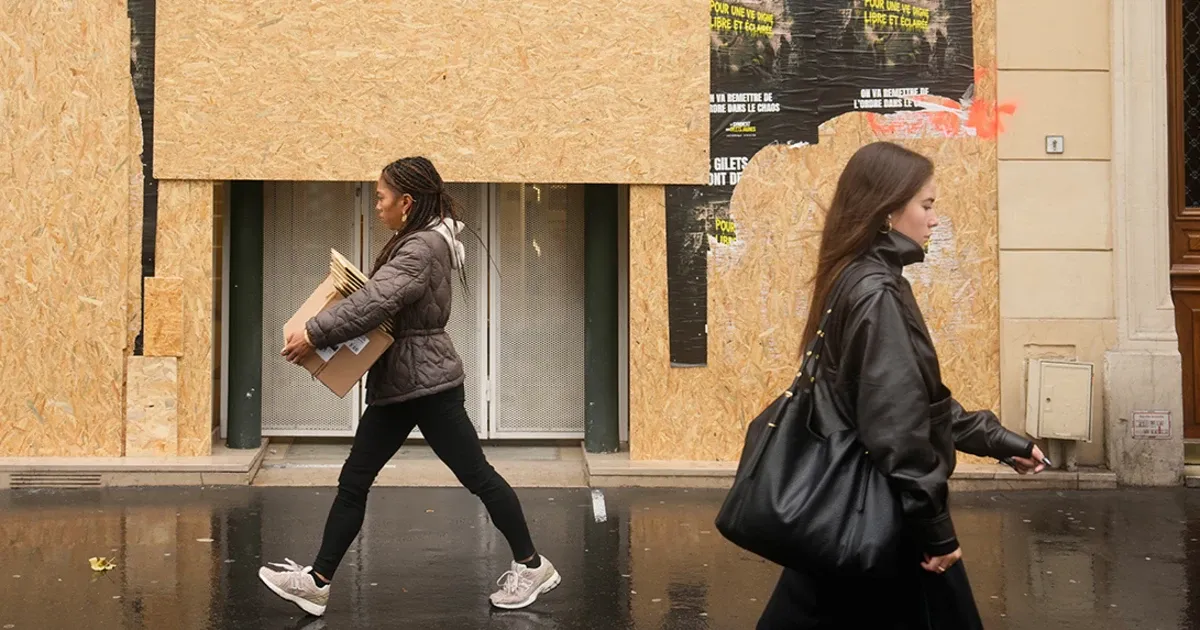 Photo: NBC News
Key points
Paris closed major museums including the Louvre and Orsay on 24 October 2026 as nationwide protests over living costs spread across France.
Paris shut the Louvre, Orsay Museum, Picasso Museum and Grand Palais on Saturday as protests over living costs spread across France. Police deployed in large numbers nationwide, with Interior Minister Laurent Nuñez saying up to 70,000 officers would be deployed, backed by helicopters, armored vehicles and water cannons. The closures came after widespread violence the previous weekend.
The closures matter because they mark an escalation in the government's response to a movement that began as a protest over staff shortages at one high school southeast of Paris and has grown into a national movement. Students demanding better schools and workers seeking higher wages and pensions have brought anger over living standards into the final months of President Emmanuel Macron's presidency. Energy prices in France were 21.3% higher in September than a year earlier, helping drive overall inflation to 3.1%, according to the national statistics agency, INSEE.
Why the museums closed
Major museums including the Louvre, Orsay, Picasso and Grand Palais — where a major Cézanne exhibit is on display — were shuttered Saturday. The Orangerie, Jeu de Paume and Picasso museums also closed, and the entire Tuileries Gardens complex leading out of the Louvre was sealed off. The Paris Opera shuttered both the Palais Garnier and the Opéra Bastille, citing safety concerns for staff and audiences. Art Basel Paris opened to the public Friday but only for the day, with organizers cancelling the weekend program because of the threat of unrest.
The closures left tourists disappointed. Italian social educator Selena Bertoni, 31, had paid €50 for two tickets to the Orsay Museum during a four-day trip. "When we came, we thought there could be a problem but not that the museum would be closed," she said. French visitor Heidi Rosar, 21, said: "This is the third museum we have come to that is closed. They should've warned us." Canadian Don Nowschuk, 67, said he wanted to see the Louvre's glass pyramid.
Thousands of students and workers marched in Paris and other French cities Saturday over school funding and living costs. Police used tear gas in Lyon, where the rally had been banned, and in Clermont-Ferrand, where officers used tear gas and stun grenades to push back demonstrators trying to reach the city center. Authorities had confined the Paris march to the city's southeastern edge, replacing the planned Bastille-to-Nation route with one between Porte d'Italie and Porte de Vincennes.
How the protests spread
The movement began last month as a protest over staff shortages at one high school southeast of Paris. Student groups want 250,000 more places in higher education and an end to selection through Parcoursup, the national admissions system. Their joint plan also calls for more teachers and repairs to schools and universities. Public middle and high schools lost 15.4 million teaching hours in the 2024-25 school year because absent teachers were not replaced, according to Education Ministry figures — 7.5% of scheduled teaching time.
Authorities sought to prevent another weekend of looting, burned cars and attacks on public buildings. More than half a million people took to the streets the previous Saturday, and some 3,000 shops across France were damaged or looted over that weekend. Nuñez acknowledged that police had lost control in some cities during that unrest and offered to resign, but Macron refused the offer. On Saturday, Nuñez said 135 people had been arrested and weapons including metal balls, lead pellets and fireworks were seized.
Trade unions have criticised bans on protests in Lyon, Nice and Montpellier, calling them violations of freedom of expression, which is protected by the constitution. Union representative Murielle Guilbert called it "scandalous" that Macron had forbidden protestors from demonstrating "where we wish to demonstrate." Soumaya Abed, a 58-year-old nurse wearing a red CGT union vest, said she had joined protests for more than 30 years but had never seen a march start at Porte d'Italie.
What happens next
Shopkeepers boarded up storefronts across Paris. Gendarmes stood guard beneath the Arc de Triomphe as shopkeepers prepared for potential unrest. Near the Saint-Lazare train station, Akram Ahmed, a 34-year-old contractor, was boarding up an optician's shop. "I got the call last night," he said. "The owner seemed desperate. He said I was saving his life." Near Place de la République, a bank branch and other businesses were boarded up with wooden panels.
The disruption extended beyond museums. The first-ever NFL game in France between the New Orleans Saints and the Pittsburgh Steelers remains scheduled for Paris on Sunday, but a pop-up NFL shop and the "NFL House" were closed Saturday. A soccer game between Paris Saint-Germain and Olympique Lyonnais scheduled for Sunday has been postponed until Monday night. Another NFL pop-up shop remains open in Saint-Denis, north of Paris.
Protest marches are scheduled in Paris and Marseille, while rallies in Lyon, Nice and Montpellier have been banned by local authorities. The Yellow Vests, a loosely organised group that emerged about eight years ago, said they would hold another round of protests on 31 October, with rallies and a sit-in outside parliament and city halls nationwide. Macron met high school representatives Friday, where they said he had promised to overhaul university admissions.
Frequently asked questions
Why did Paris museums close on 24 October?
Major museums including the Louvre, Orsay, Picasso and Grand Palais closed as a precaution ahead of planned protests, after widespread violence and looting the previous weekend in which about 3,000 shops were damaged.
How many officers were deployed for the protests?
Interior Minister Laurent Nuñez said up to 70,000 officers would be deployed nationwide, backed by helicopters, armored vehicles and water cannons. On Saturday, Nuñez said 135 people had been arrested.
What are the protesters demanding?
Student groups want 250,000 more places in higher education and an end to selection through Parcoursup, the national admissions system. Workers are seeking higher wages and pensions.