Parti Québécois wins Quebec election with minority government
The Parti Québécois won Quebec's provincial election on 5 October 2026, falling short of the 64 seats needed for a majority, with leader Paul St-Pierre Plamondon promising a referendum only after Donald Trump leaves office in January 2029.
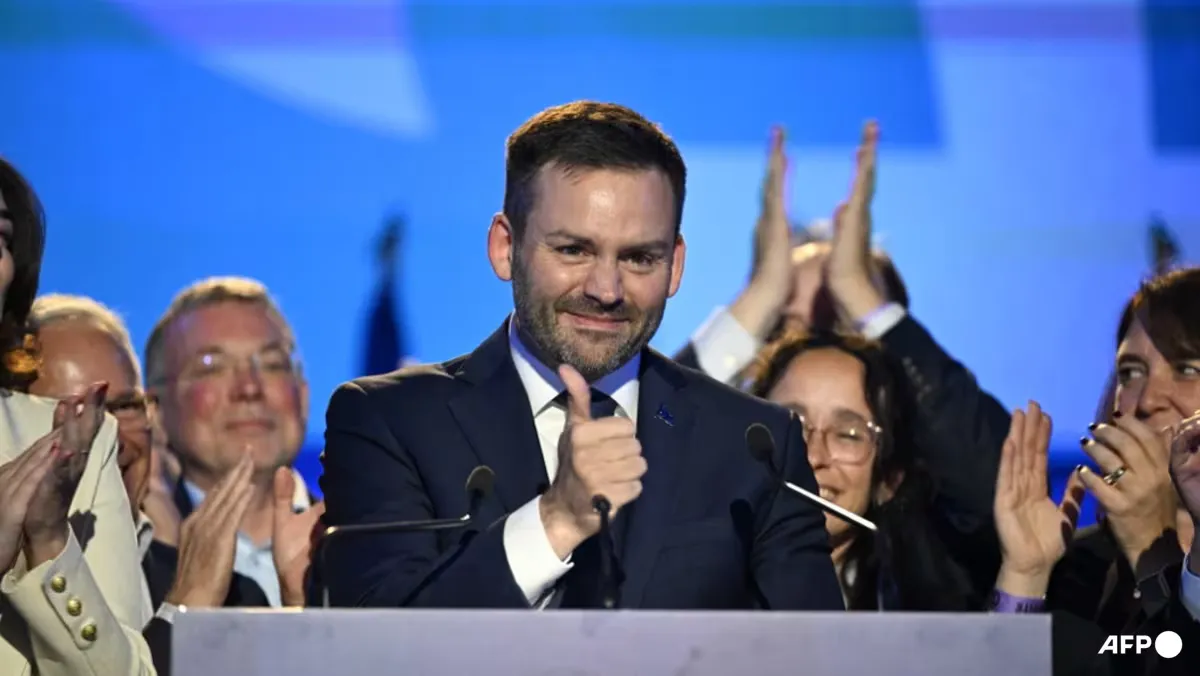 Photo: Channel News Asia
Key points
The separatist Parti Québécois won Quebec's provincial election on 5 October 2026 with a minority government, promising a referendum on independence only after Donald Trump leaves office in January 2029.
The Parti Québécois won Quebec's provincial election on 5 October 2026, with leader Paul St-Pierre Plamondon set to become Quebec's next premier, but the separatist party fell short of a majority government in Canada's French-speaking province. The result came with a promise to hold a referendum on leaving Canada only after US President Donald Trump leaves office.
The win matters because it returns separatists to power in Quebec after more than a decade in opposition, testing Prime Minister Mark Carney's message of national unity as Canada confronts a trade war and annexation threats from the United States. The PQ's rise follows a period when the party was nearly wiped off the electoral map four years ago, and it now must govern without a majority.
A minority win with a referendum delay
Lacking a majority, the PQ will struggle to advance its separatist agenda. The two largest opposition parties after the vote, the Liberals and Conservatives, both declared they would never back a referendum on independence. St-Pierre Plamondon promised to collaborate with other parties in a minority situation, including working with Québec Solidaire, which also backs Quebec independence, to hold another referendum.
St-Pierre Plamondon, a 49-year-old lawyer known by his initials PSPP, told supporters in Montreal that francophones' struggle "will find meaning when (francophones) obtain their own country" and called a referendum a chance "to decide what our national future will be." He added: "We deserve it." The PQ fell just shy of the 64 seats needed for a majority.
The PQ's resurgence is tied to frustration over affordability and an enduring desire to protect the French language in a majority anglophone country, rather than to independence itself. Surveys suggest only about 30 per cent of Quebecers want independence, and polls had the party hovering at roughly 30 per cent, somewhat below the likely threshold for a majority government.
Why the PQ surged back
Analysts say St-Pierre Plamondon's electoral success comes not from separatism but from his rightwing take on identity issues. He has blamed immigrants for Quebec's overflowing schools, increased crime and housing prices, promising to slash immigration levels and ban "conspicuous" religious symbols from teachers and students. The party also benefited from a four-way race splitting the right-leaning nationalist vote.
Quebec has held two previous votes on leaving Canada: federalists won comfortably in 1980, but the 1995 result was excruciatingly close, with just 50.58 per cent voting to stay. St-Pierre Plamondon has also targeted the British monarchy, saying his government could cut off funds for the lieutenant governor, calling it a "masquerade that wastes money."
What happens next for Quebec
Prime Minister Mark Carney congratulated St-Pierre Plamondon, saying that "building a stronger Quebec is core to our mission of building a stronger Canada". Carney remains popular in Quebec, and the separatist win was not seen as a repudiation of his stance toward Trump. The result comes just two weeks before Alberta holds a vote on whether to begin leaving Canada.
Frequently asked questions
Who won the Quebec election?
The Parti Québécois won Quebec's provincial election on 5 October 2026 with a minority government, making leader Paul St-Pierre Plamondon, a 49-year-old lawyer, the next premier.
Did the Parti Québécois win a majority?
No. The PQ fell short of the 64 seats needed for a majority, and the two largest opposition parties, the Liberals and Conservatives, both declared they would never back a referendum on independence.
How this story was checked
- Fact-checked against 3 cited pages. 31 figures, dates and quotations in this story were found on the pages it cites; 2 passages that could not be checked were cut before publication.
- Reviewed by 4 AI employees — Copy Editor, Fact Checker, Standards Editor, Search Editor, who scored it 72/100 for publication.
Pages checked (3 of 3)
- channelnewsasia.comread and checked
- theguardian.comread and checked
- nationalpost.comread and checked
Written by Kaer from public reporting. Checked 6 October 2026.


