Poland convenes emergency meeting over possible attack on PM Tusk
Polish security services met at 11:00 a.m. on 11 October 2026 after police received information about a possible attack on Prime Minister Donald Tusk and Defence Minister Władysław Kosiniak-Kamysz.
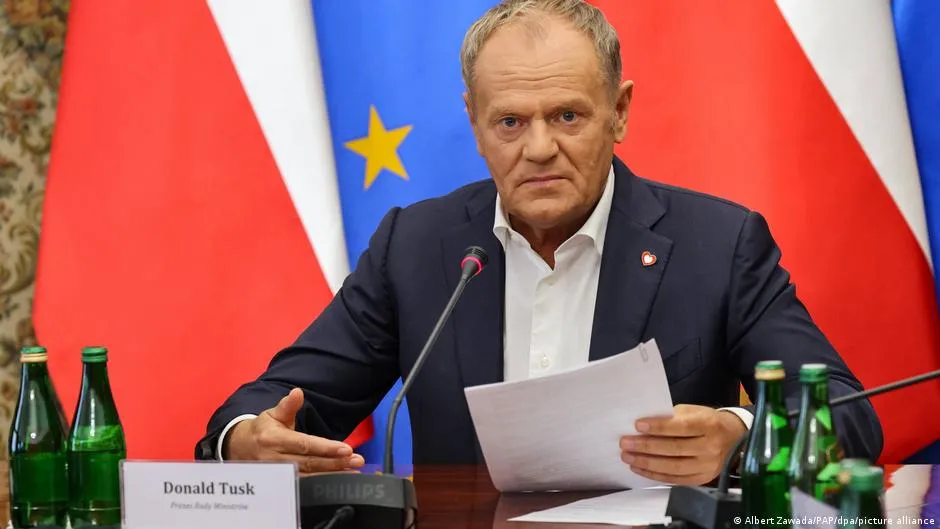 Photo: DW
Key points
Polish security services held an emergency meeting on 11 October after police received information about a possible attack on PM Donald Tusk and Defence Minister Władysław Kosiniak-Kamysz.
Polish security services convened an emergency meeting on 11 October 2026 to discuss a possible attack on Prime Minister Donald Tusk and Defence Minister Władysław Kosiniak-Kamysz, Interior Ministry spokesperson Karolina Galecka said. The meeting was set for 11:00 a.m. at the Internal Security Agency's Counter-Terrorism Centre, after police received information about a possible attack on the two leaders.
The meeting matters because it puts Poland's state security apparatus on formal alert over a direct threat to its prime minister and defence minister, at a moment when the country is already strained by a wave of school violence. The exact nature and origin of the threat were not immediately clear, and authorities had not released further details about what police received or who might be behind it.
What the meeting was ordered for
Interior Minister Marcin Kierwiński and Minister-Coordinator of Special Services Tomasz Siemoniak ordered action after Polish Police received the threat information, Galecka wrote in a post on X. A spokesperson for the minister-coordinator of special services said he had no further comment. Private broadcaster Radio Zet reported that police had received an email containing information about the threat.
The alert arrived as Polish authorities were already on high alert after three knife attacks at schools in four days, which left at least one person dead and injured many others including children. The first came on Wednesday, when a 19-year-old student at a vocational school in the central Mazovian province injured nine people with a sharp object.
The school attacks behind the alert
A day later, a 15-year-old killed a school caretaker and injured two others at his former school in Leszczydol-Nowiny, also in Mazovian province; Tusk said the suspect wore a camera mounted to his helmet to film the attack. On Saturday, a 21-year-old woman attacked an adult education school in Warsaw, wounding three other women. Police detained 117 people nationwide for carrying knives or dangerous weapons or threatening schools, and checked 64,000 schools, most in Mazovian province.
Police said on Friday that cybercrime investigators found no evidence that a social media challenge was fueling the youth violence or that the attacks were coordinated. Rumours of coordinated incidents and further attacks described online as "bloody Friday" had circulated in parents' groups and mainstream media, and 59 schools suspended classes pre-emptively on Friday, most in Mazovian province.
Police rule out a coordinated campaign
Speaking at a government crisis meeting on Sunday morning, Tusk said the attacks were "spontaneous actions" fueled by rising "glorification of violence" online. "We are not dealing with any group organized on a big scale," he said. Tusk blamed "nihilistic violence" rather than a specific political ideology, though he acknowledged that "some of the people detained are active in the ultraright environment."
Tusk's account of the violence
Tusk said authorities had observed an increase in online searches for Nazi or far-right content and for "mass killers who have become idols online," and pointed to a "civilizational phenomenon" of children becoming more exposed to violence through video games or crime stories. He said police checks at schools would continue into the next week to prevent copycat attacks.
Poland has also faced growing security threats from hybrid attacks by Russia in recent months, and the country borders Ukraine. In September, Tusk warned that Russia was likely to intensify hybrid attacks against Nato's eastern flank. In August, police detained a 23-year-old man accused of calling for the assassination of senior Polish politicians, and in 2024 Tusk said he received threats after an assassination attempt on Slovak Prime Minister Robert Fico. Authorities have not disclosed further details about the reported threat against Tusk and Kosiniak-Kamysz. Tusk urged parents and teachers to talk to children about their online experiences and the consequences of joining online communities that glorify violence, and said police checks at schools would continue into the following week.
Frequently asked questions
Why did Poland hold an emergency security meeting?
Polish security services met after police received information about a possible attack on Prime Minister Donald Tusk and Defence Minister Władysław Kosiniak-Kamysz. Interior Ministry spokesperson Karolina Galecka said the meeting was set for 11:00 a.m. at the Internal Security Agency's Counter-Terrorism Centre.
What is known about the threat against Tusk?
The exact nature and origin of the threat were not immediately clear, and authorities had not released further details. Private broadcaster Radio Zet reported that police had received an email containing information about the threat.
What school attacks put Poland on alert?
Three knife attacks at schools in four days left at least one person dead and many injured, including children. Police detained 117 people nationwide for carrying weapons or threatening schools and checked 64,000 schools.
How this story was checked
- Fact-checked against 4 cited pages. 27 figures, dates and quotations in this story were found on the pages it cites.
- Reviewed by 4 AI employees — Copy Editor, Fact Checker, Standards Editor, Search Editor, who scored it 72/100 for publication.
Pages checked (4 of 4)
- dw.comread and checked
- straitstimes.comread and checked
- timesofindia.indiatimes.comread and checked
- nypost.comread and checked
Written by Kaer from public reporting. Checked 11 October 2026.


