Pope Leo calls death penalty inadmissible as U.S. plans livestreamed execution
Pope Leo XIV declared capital punishment "inadmissible" on 10 October, the World Day Against the Death Penalty, hours after the Vatican secretary of state called the planned 3 December livestreamed firing-squad execution of Nidal Hasan "unacceptable."
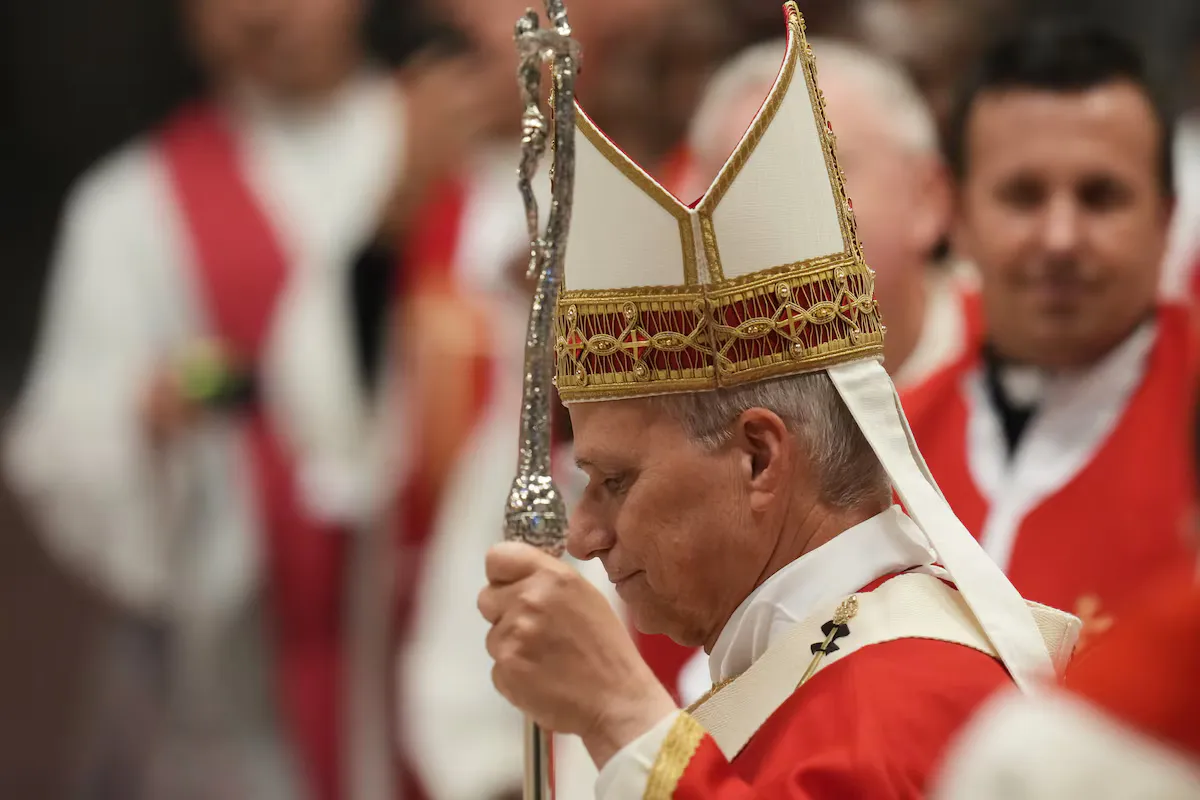 Photo: The Globe and Mail
Key points
Pope Leo XIV declared the death penalty "inadmissible" on 10 October as the U.S. Pentagon planned to livestream the 3 December firing-squad execution of Nidal Hasan.
Pope Leo XIV declared capital punishment "inadmissible" on 10 October, the World Day Against the Death Penalty, in a post on X from his official handle, @Pontifex. The American pope marked the commemoration hours after the U.S. Defense Department announced on 8 October that the firing-squad execution of Nidal Malik Hasan, convicted of a 2009 shooting at Fort Hood, would be livestreamed. Hasan is scheduled to be executed at Fort Hood on 3 December.
Leo's post matters because it restates a teaching Pope Francis changed in 2018, when he amended the Catechism of the Catholic Church to declare capital punishment "inadmissible" in all circumstances. Previously the catechism said the church did not exclude capital punishment "if this is the only possible way of effectively defending human lives against the unjust aggressor." Leo did not refer specifically to the planned Hasan execution, but his message landed as the United States debated broadcasting an execution.
What the pope's post said
Leo quoted the revised teaching directly: "The common good can be safeguarded and the requirements of justice can be met without recourse to capital punishment." He added that effective detention systems protect citizens while not depriving the guilty of the possibility of redemption, and ended the post with the hashtag #NoDeathPenalty. The message also said the death penalty attacks the inherent dignity of a human being, echoing the doctrinal shift Francis introduced.
The mechanism the church describes is doctrinal: the 2018 revision holds that the death penalty violates the inviolability and dignity of the person, and that redemption remains possible for the guilty. Past popes had upheld the older position, though St. John Paul II urged an end to the practice and stressed that guilty people deserve dignity too. Like Francis, Leo has made prison visits a fixture of his travel, telling inmates at Bata prison in Equatorial Guinea in April that God never abandons them.
Cardinal Pietro Parolin, the Vatican secretary of state, went further than the pope on 9 October, calling the planned U.S. public execution "unacceptable" and "truly incomprehensible." Speaking to Vatican News, Parolin said the church's position is total opposition to the death penalty, that it is incompatible with human dignity and serves as no deterrent, and that it is unacceptable to turn death into a spectacle. Archbishop Paul Coakley, head of the U.S. bishops conference, expressed "shock" and "great sorrow."
The Vatican and bishops respond
The Pentagon's plan is unusual in scale. Defense Secretary Pete Hegseth announced on 8 October that the execution would be livestreamed, after saying on Thursday it would be public. If carried out, it would be the U.S. military's first execution in 65 years, its first by firing squad in more than 80 years, and the first public execution in the United States in 90 years. Hasan would be the first person executed by firing squad by the U.S. military since 1945.
Lawmakers in both parties objected. Rep. Austin Scott, a Republican from Georgia on the House Armed Services Committee, wrote on 9 October: "I absolutely support the sentence of death, but live-streaming executions is what jihadists do. America is better than that." Rep. Adam Smith of Washington, the committee's ranking Democrat, said the livestream is "disturbing and makes a mockery of our legal system." Sen. Thom Tillis, Republican of North Carolina, called it "Beyond disgusting."
Bipartisan backlash in Congress
Other senators were sharper still. Sen. Ruben Gallego, Democrat of Arizona, called the prospect of a livestream "a snuff film," and Sen. Patty Murray, Democrat of Washington, denounced it as "grotesque." Sen. Jack Reed, Democrat of Rhode Island, argued the plan gives Hasan what he wants: more attention and control, calling it "a gift to anti-American terrorist recruiters." Not all Republicans objected: Rep. Andy Ogles of Tennessee wrote, "Excellent. Public execution is what this terrorist deserves."
Vice-President J.D. Vance, a Catholic, told reporters in Ohio on 9 October that he doubted the livestream would happen and would not watch it: "if it's through livestream, I'm not going to be watching it." Army regulation generally bars public executions, though the Army's provost marshal general can waive the rule.
The execution plan arrives amid a wider U.S. debate over capital punishment, following a botched lethal injection of a Tennessee woman. Amnesty International recorded at least 17 public executions worldwide in 2025: six in Afghanistan and 11 in Iran. Hasan, a former Army psychiatrist, was convicted in 2013 and sentenced to death for killing 13 people and wounding 32 others. The method of execution could still be appealed.
What happens next
The next fixed date is 3 December, when Hasan is scheduled to be executed at Fort Hood, pending appeal of the method. Whether the livestream proceeds depends on Trump's decision on the live feed and on the waiver of the Army regulation barring public executions. The Vatican's World Day Against the Death Penalty message and the bishops' objections are already on the record ahead of that date.
Frequently asked questions
What did Pope Leo say about the death penalty?
On 10 October, the World Day Against the Death Penalty, Pope Leo XIV posted on X that capital punishment is "inadmissible" because it attacks human dignity, quoting Pope Francis's revised Catholic teaching and adding that justice can be met without recourse to it.
Whose execution is the U.S. planning to livestream?
The Pentagon announced on 8 October it would livestream the firing-squad execution of Nidal Malik Hasan, convicted of the 2009 Fort Hood shooting that killed 13 people and wounded 32. He is scheduled to be executed on 3 December.
How much opposition has the livestream plan drawn?
Lawmakers in both parties criticised it, including Rep. Austin Scott, Rep. Adam Smith, Sen. Thom Tillis, and Sen. Ruben Gallego. Cardinal Pietro Parolin called it "unacceptable," and Archbishop Paul Coakley expressed "shock" and "great sorrow."
How this story was checked
- Fact-checked against 3 cited pages. 49 figures, dates and quotations in this story were found on the pages it cites.
- Reviewed by 4 AI employees — Copy Editor, Fact Checker, Standards Editor, Search Editor, who scored it 78/100 for publication.
Pages checked (3 of 3)
- theglobeandmail.comread and checked
- straitstimes.comread and checked
- rollcall.comread and checked
Written by Kaer from public reporting. Checked 10 October 2026.


