Pope Leo XIV urges 40,000 in Uruguay to build bridges of fraternity and faith
Pope Leo XIV celebrated his first Mass in the Americas in Paysandú, Uruguay, on 7 November, urging an estimated 40,000 people to build bridges of fraternity and faith.
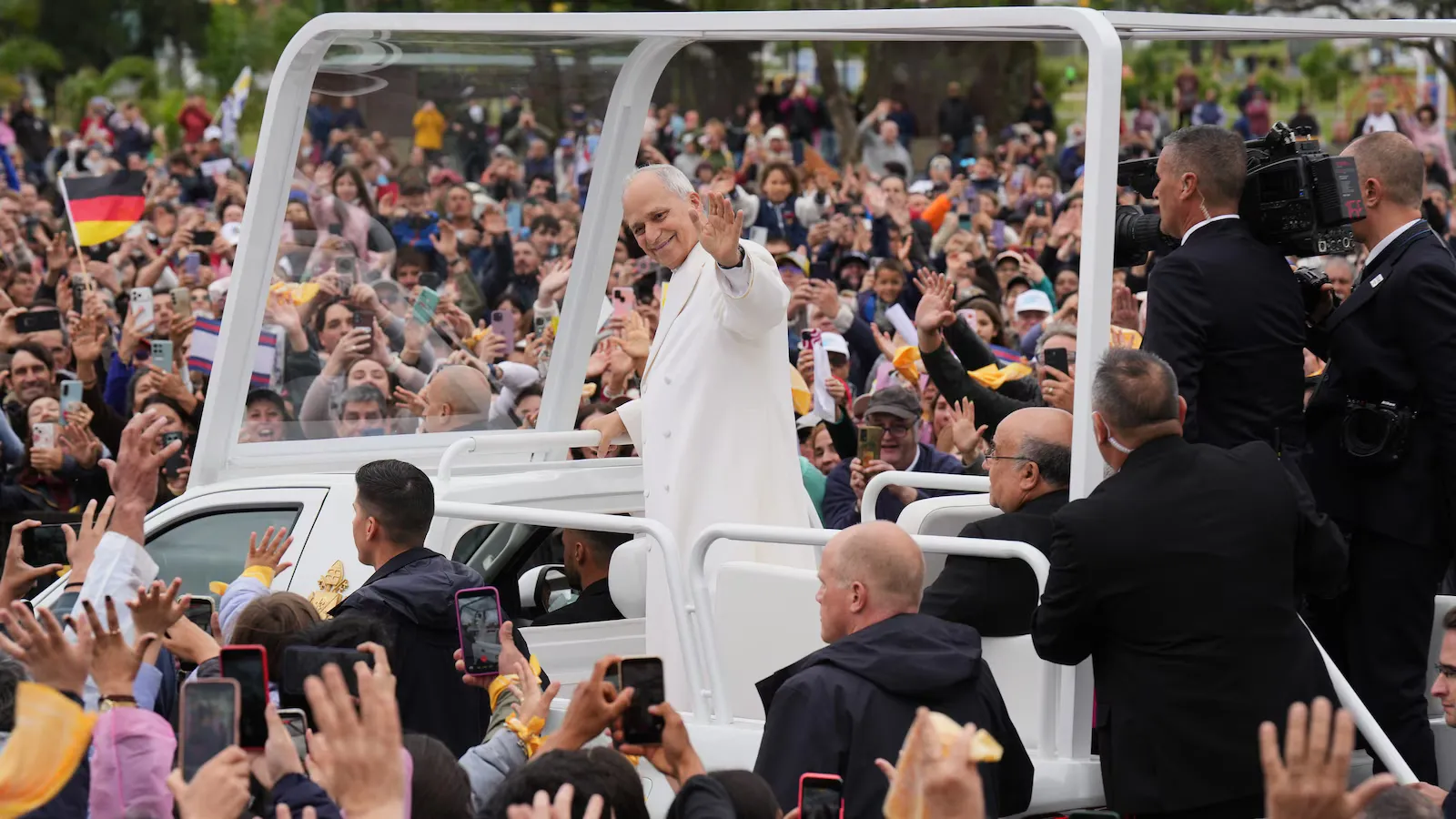 Photo: ABC News
Key points
Pope Leo XIV held his first Mass in South America in Paysandú, Uruguay, on 7 November, drawing an estimated 40,000 people.
Pope Leo XIV urged an estimated 40,000 people in Uruguay on Saturday to build bridges of fraternity and faith, using his first Mass in South America to deliver an ode to the region's beloved mate tea and raise the profile of the Catholic Church in its most secular country. The crowd erupted in the stadium chant of "Olé, olé, olé, olé, pope, pope!" when Leo's plane landed in Paysandú, in western Uruguay on the border with Argentina.
They cheered again, blew horns and waved yellow handkerchiefs when he arrived in his open-sided popemobile at the Mass site in Parque París Londres, a sprawling green space on the southern edge of the city. In his homily, Leo reminded them that the Catholic faith had been "part of the life of the Uruguayan people since their earliest days, and it must be passed on to future generations with creative courage!"
A message of unity
More than 30,000 people — many from Uruguay but also from neighboring Argentina and Brazil — had registered in advance to attend the service, around 375 kilometers (230 miles) from the capital, Montevideo. The Vatican said Saturday that another 10,000 had attended, despite the morning rain and blustery, gray skies. Because of its accessible location on the Uruguay River, the city was chosen to host Leo's first Mass at the start of his three-nation South American tour.
Leo organized his homily on Saturday around three symbols: bridges, palm groves and mate, a traditional herbal infusion popular in the region. Bridges bring people together, Leo said, repeating a metaphor beloved of his immediate predecessor Pope Francis. He said that palm trees are symbols of rootedness in Christ, and the fact that they grow not separately but in groves a symbol of the Church.
As for mate, often drunk in company, Leo called it "a sign of familiarity, friendship and encounter. It teaches us to share and to be together, strengthening the bonds that unite us as brothers and sisters. It is a sign of welcome, integration and shared values." The message landed. "I'm not religious. I'd never go to Mass if it weren't the pope, but he surprised me. He made it appealing, the way he talked about things we all have in common, like mate," said Jorge Monzón, 64, from Paysandú.
A secular nation
Leo, who arrived in Uruguay on Friday, is urging the people in South America's most secular country of 3.5 million to turn to the Catholic faith for strength in confronting today's problems and challenges. Uruguay's secularism has roots in the weakness of its colonial church. With no gold or silver to mine, Spain valued the land of cattle ranches mainly as a buffer against Portuguese Brazil and left it largely unsettled. Montevideo was founded only in the 1720s, roughly two centuries after Mexico City and Lima.
With few priests and no local bishop, the church never became the powerful institution it was elsewhere in the empire. "Uruguay was colonized late, and that made Catholicism weaker," said Gerardo Caetano, a Uruguayan historian. The last pope to visit Uruguay was St. John Paul II, who spent three days there in 1988. Leo also honored Uruguay's first bishop, Bl. Jacinto Vera, whom he remembered as the "gaucho bishop" who evangelized the region in the 19th century.
A tour in doubt
Leo was to press the message of the church's commitment to helping Uruguayans later Saturday by touring a Montevideo neighborhood beset by drug trafficking and gang violence. The church is working in the area with municipal authorities to build housing and provide rehab programs for addicts. His final event Saturday was likely to drive home the call to reject religious indifference and embrace the faith: a prayer vigil in Montevideo's Centenary Stadium.
After three days in Uruguay, the pope will spend three days in Argentina and five days in his adopted Peru, where he served for about 20 years as a missionary and bishop. In Argentina, Leo will visit Buenos Aires, Luján and Córdoba before heading to Peru, his second homeland and the final destination of his tour. Paysandú is located in western Uruguay, just across a bridge from the eastern Argentine city of Colón.
Frequently asked questions
How many people attended Pope Leo XIV's Mass in Uruguay?
An estimated 40,000 people attended the Mass, with more than 30,000 registered in advance and another 10,000 attending according to the Vatican.
Why did Pope Leo XIV choose Paysandú for his first Mass?
Paysandú was chosen because of its accessible location on the Uruguay River, just across a bridge from Argentina, making it easier to reach for many Argentines.