Ring launches $250 Drone Cam and $999 Rover Cam security robots
Ring Robotics debuts with a home security drone and an enterprise robot, shipping December 16 and January 27.
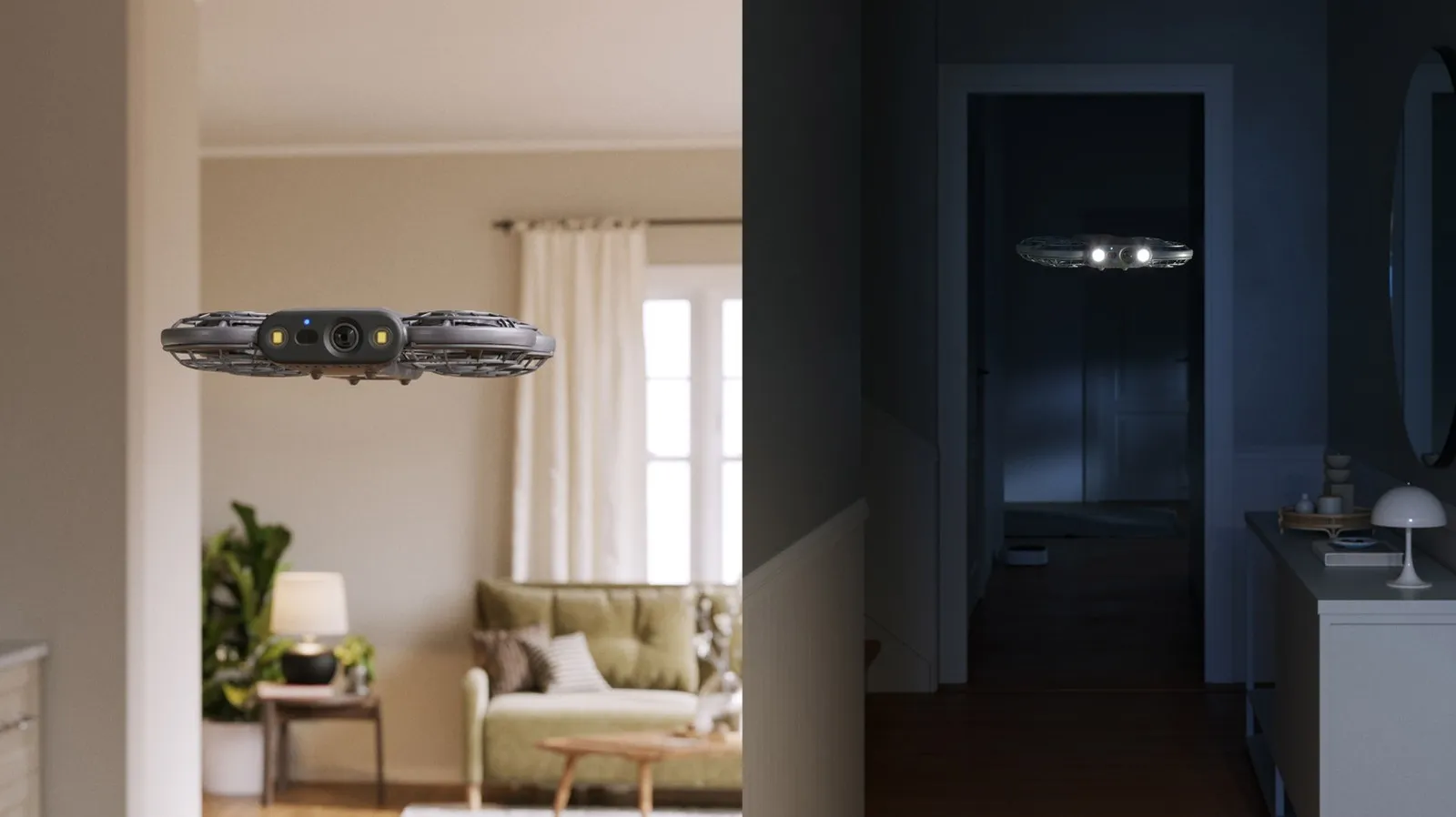 Photo: Engadget
Key points
Ring launched two autonomous security robots: the Drone Cam for homes and the Rover Cam for businesses.
Amazon-owned Ring launched Ring Robotics on 10 November, introducing the $249.99 Ring Drone Cam for homes and the $999.99 Ring Rover Cam for businesses. The Drone Cam ships on 27 January 2027, while the Rover Cam ships on 16 December. Both devices use Ring's new AI Pilot system for autonomous navigation.
Ring founder Jamie Siminoff said at a media briefing in New York that the company has worked on a drone concept since 2016, before Amazon acquired Ring in 2018. Previous attempts to launch a drone failed because the devices "just didn't work well enough," he said. The new Drone Cam weighs 165 grams and shoots 2K video.
AI Pilot navigation
AI Pilot leverages cameras, sensors, and cloud processing to map spaces and navigate autonomously. The system "maps the space, suggests patrol points, and autonomously navigates around obstacles," according to a Ring press release. This cloud-based approach lets the drone be lightweight and nimble, as it doesn't need local AI processors.
The Drone Cam flies on preconfigured schedules or responds to motion or leak sensors. Users can tap a spot on the Alexa Home Map to send the drone there. It has a 2K front camera, a 1080p underside camera, and LED lights for low-light illumination and deterrence. The drone's battery supports about eight to 10 minutes of air time, depending on altitude. When low on power or losing Wi-Fi, it lands or returns to its dock, where eight minutes of charging provides one minute of flight. The Rover Cam is slower and more deliberate, suited for routine surveillance.
Battery and charging limits
The Rover Cam, resembling Amazon's discontinued Astro robot, is designed for enterprise use like warehouse monitoring. It streams 4K video, spins 360 degrees, and has a periscope camera that extends up to 4 feet. It can patrol custom routes and investigate disturbances from other Ring devices. Ring says both devices have privacy and security built in. Videos are protected by TAKE (Throw Away the Key Encryption), which Ring calls its "strongest default encryption yet." The Drone Cam powers down in its base and only records when a flight is triggered.
Privacy concerns persist around Ring's surveillance products. Thorin Klosowski, a senior security and privacy activist at the Electronic Frontier Foundation, said people should "think through" how the drone will make others feel. He added, "I think the companies who make these sorts of surveillance products are invested in us feeling less safe at home."
The Drone Cam is loud by design, with propellers that emit a high-pitched whirring. Siminoff said this could deter intruders, as the moving lights resemble a security guard with a flashlight. The drone avoids people and objects, and runs a motor health check before each flight. The Drone Cam doesn't need FAA registration as it's below the 250-gram threshold and doesn't work outdoors. Siminoff said it complies with all US regulations and is assembled in Texas. The Rover Cam launches first on 16 December, followed by the Drone Cam on 27 January.
Frequently asked questions
What is the Ring Drone Cam?
It's a $249.99 indoor security drone that flies around your home on patrol schedules or in response to sensors. It shoots 2K video and uses AI Pilot for autonomous navigation.
When does the Ring Rover Cam ship?
The Rover Cam ships on December 16, 2026, for $999.99. It's designed for businesses and streams 4K video.
How does AI Pilot work?
AI Pilot uses cloud processing, cameras, and sensors to map spaces and navigate autonomously. It allows the devices to move between patrol points without direct user control.