Saudi, Turkish and Pakistani officials travel to Tehran for security talks
Saudi Defence Minister Prince Khalid bin Salman, Pakistan's Field Marshal Asim Munir and Turkey's intelligence chief Ibrahim Kalin will meet Iranian officials in Tehran on Monday, 26 October 2026, for talks on regional security.
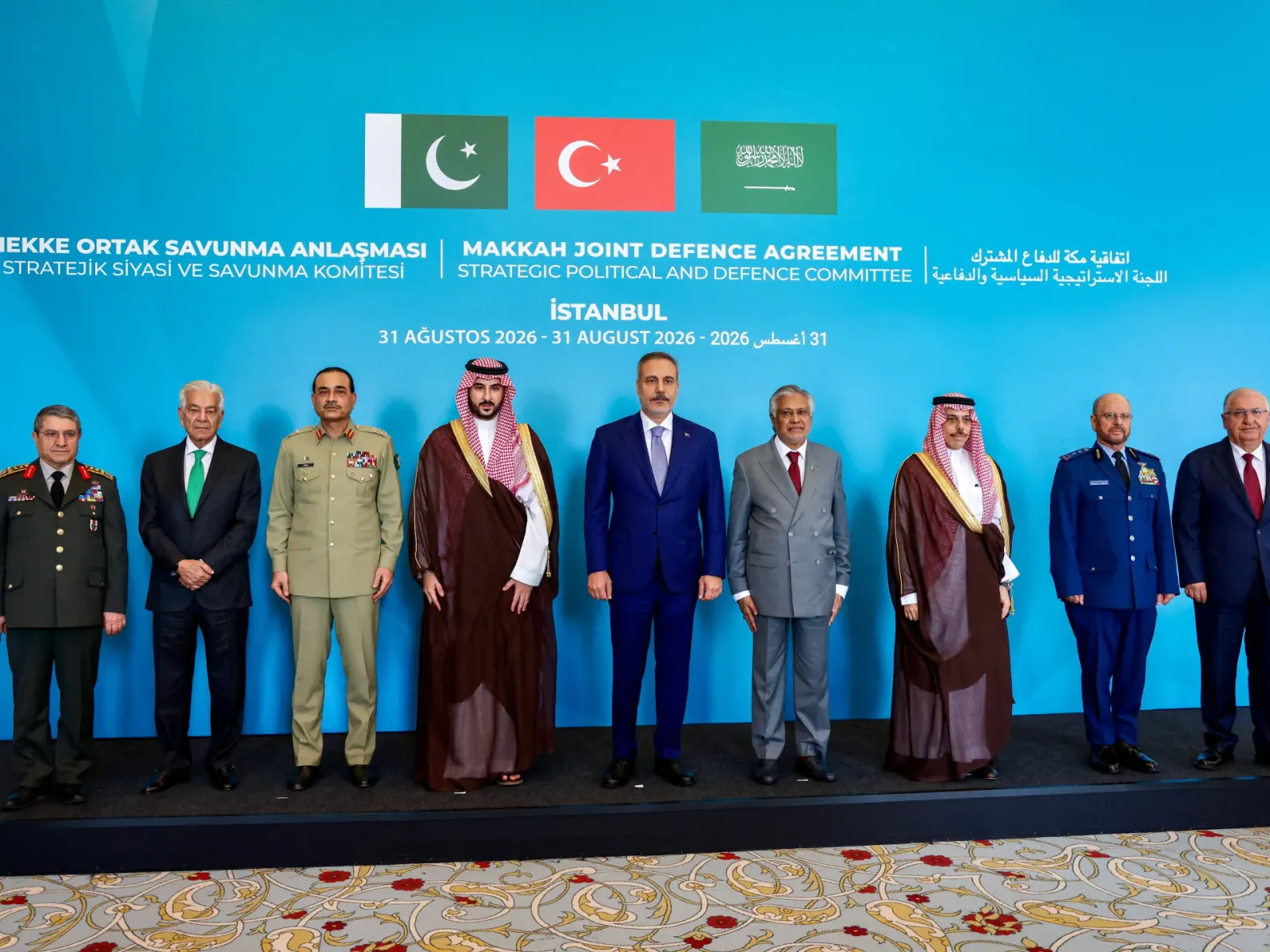 Photo: Al Jazeera
Key points
Saudi, Turkish and Pakistani senior officials will meet Iranian officials in Tehran on Monday for regional security talks.
Saudi Defence Minister Prince Khalid bin Salman, Pakistan's Field Marshal Asim Munir and Turkey's intelligence chief Ibrahim Kalin will travel to Tehran to meet Iranian officials on Monday, 26 October 2026, Iranian and Saudi authorities said. Iran's delegation will be led by Mohsen Rezaei, secretary of the Supreme National Security Council, and President Masoud Pezeshkian is also expected to participate.
The meeting is the first high-level contact between Iran and all three members of the Makkah Joint Defence Agreement — Saudi Arabia, Turkey and Pakistan — since Yemen's Iran-aligned Houthi armed group escalated attacks on Saudi Arabia. Saudi air defences intercepted another wave of missiles and drones on Sunday as fighting with the Houthis continued, according to Saudi officials cited in reporting on the talks.
Who is attending the Tehran meeting
Ali Bagheri Kani, deputy secretary of Iran's Supreme National Security Council, said the participating countries could take an effective step towards establishing regional security based on actors in the region. Iranian Foreign Ministry spokesperson Esmaeil Baghaei said the proposal for a four-country meeting was put forward by Pakistan's army chief, after which Tehran agreed to host it.
Saudi Deputy Minister for Public Diplomacy Rayed Krimly confirmed the meeting, saying the visit supports continued efforts by Makkah Pact allies for de-escalation and dialogue in support of mediation by Qatar and Pakistan. Baghaei said talks would focus on developments in Palestine, Lebanon and the wider region, and stress the importance of building trust among regional countries.
The talks follow eight months of war in the Middle East and recent US and Israeli threats of renewed attacks against Iran. War began when the United States and Israel launched surprise attacks on Iran while Washington and Tehran were negotiating Iran's nuclear programme. An April ceasefire ended the initial phase of bombardment, but the two sides have continued to vie for control of the Strait of Hormuz.
Why the meeting matters now
Through the Strait of Hormuz, about a fifth of the world's oil and liquefied natural gas used to travel. Iran claims control over the strait and regularly targets vessels crossing without its authorisation, while the United States has imposed a naval counter-blockade on Iranian ports. Diplomatic efforts remain stalled, especially since the collapse of a June deal that had laid out a pathway to a permanent settlement.
Saudi Arabia, Turkey and Pakistan signed the Makkah Joint Defence Agreement in August. Under the pact, an armed attack on one member is considered an attack on all three, and its first article commits the parties to using "all necessary means" to address threats to their territorial integrity, sovereignty or internationally recognised borders.
Ministers from the three Makkah Pact countries met in Riyadh earlier this month and agreed to ensure the rapid deployment of military forces and capabilities in Saudi Arabia. Pakistan approved the agreement last week, while ratification proceedings in Turkey's parliament remain underway. Field Marshal Munir visited Iran last week and met President Masoud Pezeshkian and other senior officials.
The Makkah defence pact and ratification
Separately, a Qatari mediation delegation has arrived in Tehran to convey demands from US President Donald Trump to Iranian officials, according to Iranian officials. A Qatari broadcaster reported that Iran is pressing for the restoration of its frozen assets and an end to the naval blockade imposed on the country. No specific agreements or outcomes from the planned talks have been announced.
Frequently asked questions
Who is attending the security talks in Tehran?
Saudi Defence Minister Prince Khalid bin Salman, Pakistan's Field Marshal Asim Munir and Turkey's intelligence chief Ibrahim Kalin will meet Iranian officials led by Mohsen Rezaei, with President Masoud Pezeshkian also expected to participate.
Why are the Tehran talks significant?
They mark the first high-level contact between Iran and all three Makkah Pact members since Houthi attacks on Saudi Arabia escalated, with Saudi air defences intercepting missiles and drones on Sunday.
What is the Makkah Joint Defence Agreement?
Saudi Arabia, Turkey and Pakistan signed it in August. Under the pact, an armed attack on one member is considered an attack on all three, and the first article commits the parties to using all necessary means to address threats.