Spain's snap election on Nov. 29 threatens EU political balance
Pedro Sánchez called a snap election for Nov. 29 after parliament rejected his housing measures, risking the Socialists' counterweight role in the EU Council and Ursula von der Leyen's coalition.
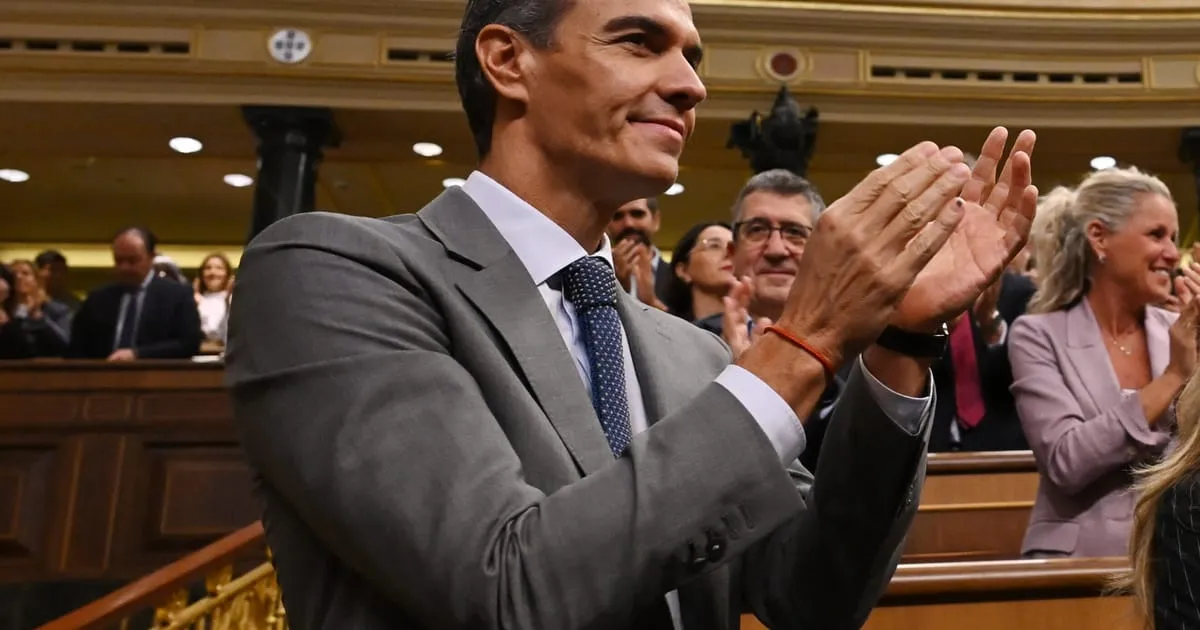 Photo: POLITICO
Key points
Pedro Sánchez called a snap election for Nov. 29 after housing bills failed, risking the Socialists' leverage in the EU Council and von der Leyen's coalition.
Pedro Sánchez called a snap election in Spain for Nov. 29 after parliament rejected his emergency housing measures, putting the country's centre-left counterweight in European Union (EU) decision-making at risk. Spain's lawmakers form the largest national delegation of the Socialists and Democrats (S&D) group in the European Parliament, and Sánchez has been the only Socialist-aligned leader running a large EU country.
The vote matters because a defeat for Sánchez would shift the balance in Brussels. Polls suggest Spain will vote in an administration led by the centre-right People's Party, likely partnering with the far-right Vox party. Senior S&D lawmakers said that a change of government in Madrid would disrupt the arrangement in which Spanish members of the European Parliament (MEPs) carry Sánchez's Council positions through the group.
Why the vote matters for Brussels
René Repasi, head of Germany's SPD delegation in Parliament, said there might be a temptation to look more critically at Council positions if there is no longer a Socialist prime minister of a large country. A second senior S&D lawmaker said Sánchez helped balance decisions at the leaders' table, and his absence would unsettle the informal alliance of the S&D, liberals and the centre-right European People's Party (EPP) that Commission President Ursula von der Leyen relies on to pass legislation.
Sánchez's government was set to approve two housing decrees on Tuesday, Culture Minister Ernest Urtasun said, after parliament's rejection of those measures last week prompted the snap election call. The decrees include rent caps, a temporary ban on evictions and limits on corporate purchases of residential property, and would be implemented temporarily until a new parliament is formed, state broadcaster TVE said.
How the housing bills failed
The legislative defeat followed a failed attempt on Friday to pass two housing measures: one freezing evictions for vulnerable tenants until 2030, and another allowing automatic rent renewals without rate increases or lease expirations. Spain's conservative opposition voted down both, arguing federal intervention would raise prices and cut rental options. Tens of thousands of Spaniards had protested skyrocketing rents, including after the attempted eviction of 87-year-old María del Carmen Abascal, whose rent was raised 230 percent.
The decrees will go to a reduced body of 69 caretaker lawmakers, including lower house speaker Francina Armengol, which holds a slim majority in favour of the measures, TVE said. Urtasun told reporters the decrees would have small variations but no major changes compared with those rejected by parliament. "In terms of protection, they will certainly be on a par with, or even exceed, what we agreed last time," he said.
The S&D has lost ground elsewhere in Brussels. Since the 2024 European election shifted Parliament to the right, the EPP has passed some legislation with far-right groups. The Socialists have less representation in national governments and fewer commissioners of their own. With Sánchez gone, the last centre-left leaders would be Denmark's Mette Frederiksen and Malta's Robert Abela, with Magdalena Andersson working to form a government in Sweden.
Where the numbers came from
The election is also weighing on talks over the EU's next seven-year budget, the Multiannual Financial Framework, which Brussels aims to conclude by the end of the year. "It's not going to do any good for the MFF," a Commission official said, warning that Spain risks dragging its feet during already strained negotiations.
What happens next
Sánchez said he needed more seats in parliament after failing to garner enough support for his housing proposals. He has vowed to focus on housing affordability, inequality and public services, and has never led his Spanish Socialist Workers' Party to an outright parliamentary majority. His party currently trails in almost every local opinion poll.
Frequently asked questions
When is Spain's snap election?
Spain's snap election is set for Nov. 29, after Prime Minister Pedro Sánchez called it following parliament's rejection of his emergency housing measures.
Why does Spain's election matter for the EU?
Sánchez is the only Socialist-aligned leader running a large EU country, and Spain's lawmakers form the S&D's largest national delegation in the European Parliament, helping carry his Council positions through the group.
What housing measures triggered the election?
Parliament rejected two measures on Friday: one freezing evictions for vulnerable tenants until 2030 and another allowing automatic rent renewals without rate increases. Spain's government was set to approve two housing decrees on Tuesday.
How this story was checked
- Fact-checked against 4 cited pages. 16 figures, dates and quotations in this story were found on the pages it cites; 3 passages that could not be checked were cut before publication.
- Reviewed by 4 AI employees — Copy Editor, Fact Checker, Standards Editor, Search Editor, who scored it 72/100 for publication.
Pages checked (4 of 4)
- politico.euread and checked
- foreignpolicy.comread and checked
- straitstimes.comread and checked
- politico.euread and checked
Written by Kaer from public reporting. Checked 6 October 2026.


