Tesla Roadster flies and hits 60mph in 0.81 seconds in Texas
Tesla demonstrated its next-generation Roadster in Texas on 15 October 2026, driving it upside down, flying it over its lineup, and accelerating to 60mph in 0.81 seconds, with production promised for 2028.
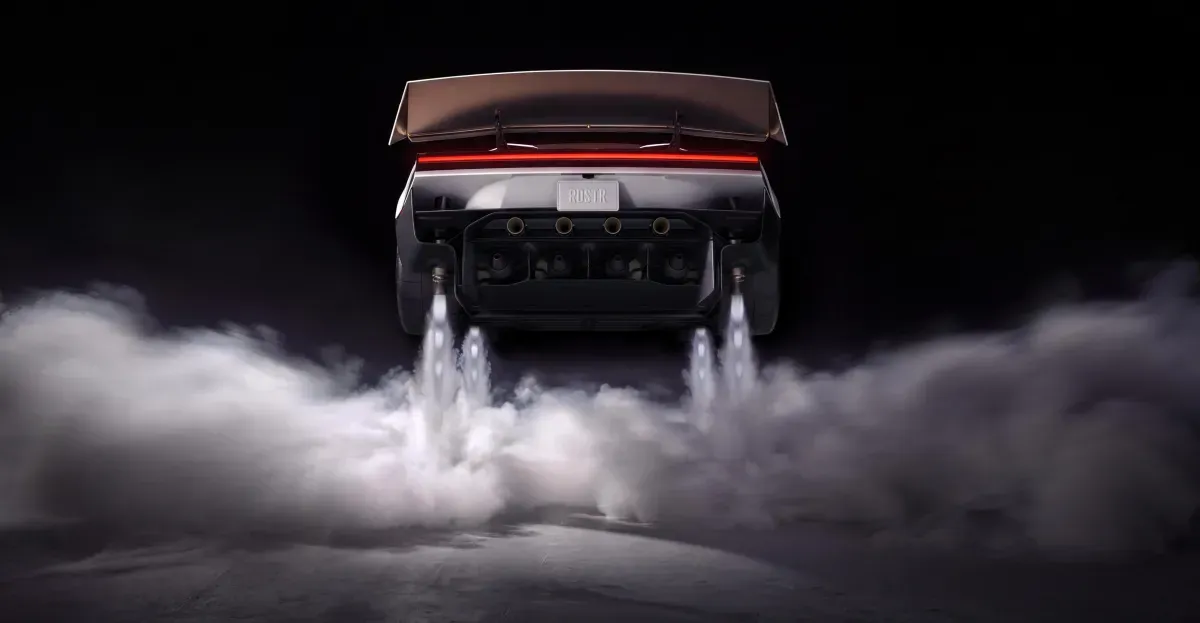 Photo: The Verge
Key points
Tesla demonstrated a next-generation Roadster that flew and accelerated to 60mph in 0.81 seconds at a Texas event, with production promised for 2028.
Tesla demonstrated its next-generation Roadster at an event in Texas on 15 October 2026, where the electric supercar drove upside down, briefly flew, and accelerated to 60mph in 0.81 seconds. The demonstration took place at SpaceX's test site in McGregor, Texas, and at an event outside Waco. The car used cold-gas thrusters and a fan-based suction system to perform the stunts in front of an audience.
The demonstration matters because it showed a car achieving flight and sub-one-second acceleration, feats Tesla has promised for nearly a decade. The Roadster two-seater was first announced in 2017 as the successor to Tesla's first vehicle, and the company had delayed it repeatedly. Tesla now says production will begin in 2028, though it named no price. The event lasted less than 30 minutes and included no mention of price or release date details beyond the 2028 production promise.
What the demonstration showed
The Roadster drove up a tall, multi-story ramp, clinging to the vertical roadway using downforce from a fan-based suction system supplied by SpaceX and mounted underneath the vehicle. Tesla said this system generates up to two Gs of suction force. At the top, the car flipped using cold-gas thrusters and descended. The car then flew over Tesla's lineup, including the Model 3, Model Y, Cybertruck, Semi, and Cybercab, in what Tesla VP for Engineering Lars Moravy called a kick flip.
Tesla vehicle engineering head Lars Moravy said the Roadster uses 10 thrusters connected to 600 liters of compressed air to lift and spin the car in midair, and the air tank can be recharged. The car carries two ultra-high pressure air tanks with a combined volume of 600 liters, containing approximately 250 kilograms of air, and uses 10 nozzles. Tesla wrote that every usable void in the car is packed with Carbon Fiber Overwrapped Pressure Vessels, the type of pressure vessel at the root of multiple SpaceX rocket explosions.
The thrusters use technology borrowed from SpaceX, with all-electric actuators that enable precise thrust and micro adjustments within a fraction of a second. Musk said the car features attitude-control thrusters as well as main thrusters at the rear, giving it rocket-like capabilities. The stored compressed air supplies the thrust needed to lift the car. Tesla said the multi-mode fan and ground sealing system pulls air from beneath the vehicle to act as a downforce generator, allowing it to hold upside down even when stationary.
How the thrusters work
Tesla offered the Roadster in three variants. The Performance trim seats two, has active aerodynamics and a multi-mode suction system, and claims 0 to 60mph under 1.6 seconds with range exceeding 300 miles. The Thrust trim adds rear-mounted cold-gas thrusters for sub-one-second acceleration. The Rocket trim seats one and has 10 cold-gas thrusters. All three trims offer 300 miles of range and speeds exceeding 230 miles per hour. Tesla's Model 3 can travel up to 360 miles on a charge.
Reservations for the Performance version require $50,000, with a $5,000 fee and $45,000 due within 10 days. The Rocket trim is invite-only. Tesla did not name a price for the car itself. When first announced in 2017, enthusiasts put down $50,000 deposits for a $200,000 car, and some paid $250,000 for one of 1,000 Founders Series versions.
Three trims and reservation costs
Musk said the car would be an actual car on the roads, but Tesla later admitted it would not be road legal, given requirements from the Federal Aviation Administration and the National Highway Traffic Safety Administration. Musk called it the last best driver's car and said it was not necessarily a safety-optimized car. On a podcast earlier this year, he said that if safety is your number one goal, do not buy the Roadster, adding that Tesla would aspire not to kill anyone in the car.
The Roadster was first revealed in 2017 at the end of a Tesla Semi reveal, with delivery promised in a few years. Musk delayed it in 2020, 2021, 2023, and 2024. He said in late 2025 he wanted to reveal it by the end of that year, then delayed it to 1 April 2026, and Tesla attempted to hold the event on 1 October before severe weather forced another delay. Musk said Tesla may try to jump Snake River Canyon.
Delays and what comes next
Tesla said production will begin in 2028, and Musk acknowledged the extreme forces involved and the need to avoid subjecting occupants to extreme acceleration. The company has not named a price or a specific production date beyond 2028. Reservations are open for the Performance version only, with Thrust listed as limited and Rocket as invite-only. The next milestone is the 2028 production start Tesla promised at the 15 October 2026 event.
Frequently asked questions
What did Tesla demonstrate with the new Roadster?
Tesla demonstrated the next-generation Roadster in Texas on 15 October 2026, where it drove up a ramp upside down, flew over Tesla's vehicle lineup, and accelerated from 0 to 60mph in 0.81 seconds using cold-gas thrusters and a fan-based suction system.
How much does it cost to reserve the Tesla Roadster?
Reservations for the base Performance version require $5,000 upfront and $45,000 within 10 days, totalling $50,000. The Thrust package requires an additional $245,000 within 10 days, and the Rocket trim is invite-only. Tesla did not name a price for the car itself.
When will the Tesla Roadster go into production?
Tesla said production will begin in 2028. The Roadster was first announced in 2017 and delayed repeatedly in 2020, 2021, 2023, and 2024, with the reveal itself pushed back several times before the 15 October 2026 event.