Trump administration asks Supreme Court to weigh TV ad rates case
The White House urged the justices on Thursday to pause a lower court order directing the Federal Communications Commission to resolve a dispute over political advertising rates by Friday.
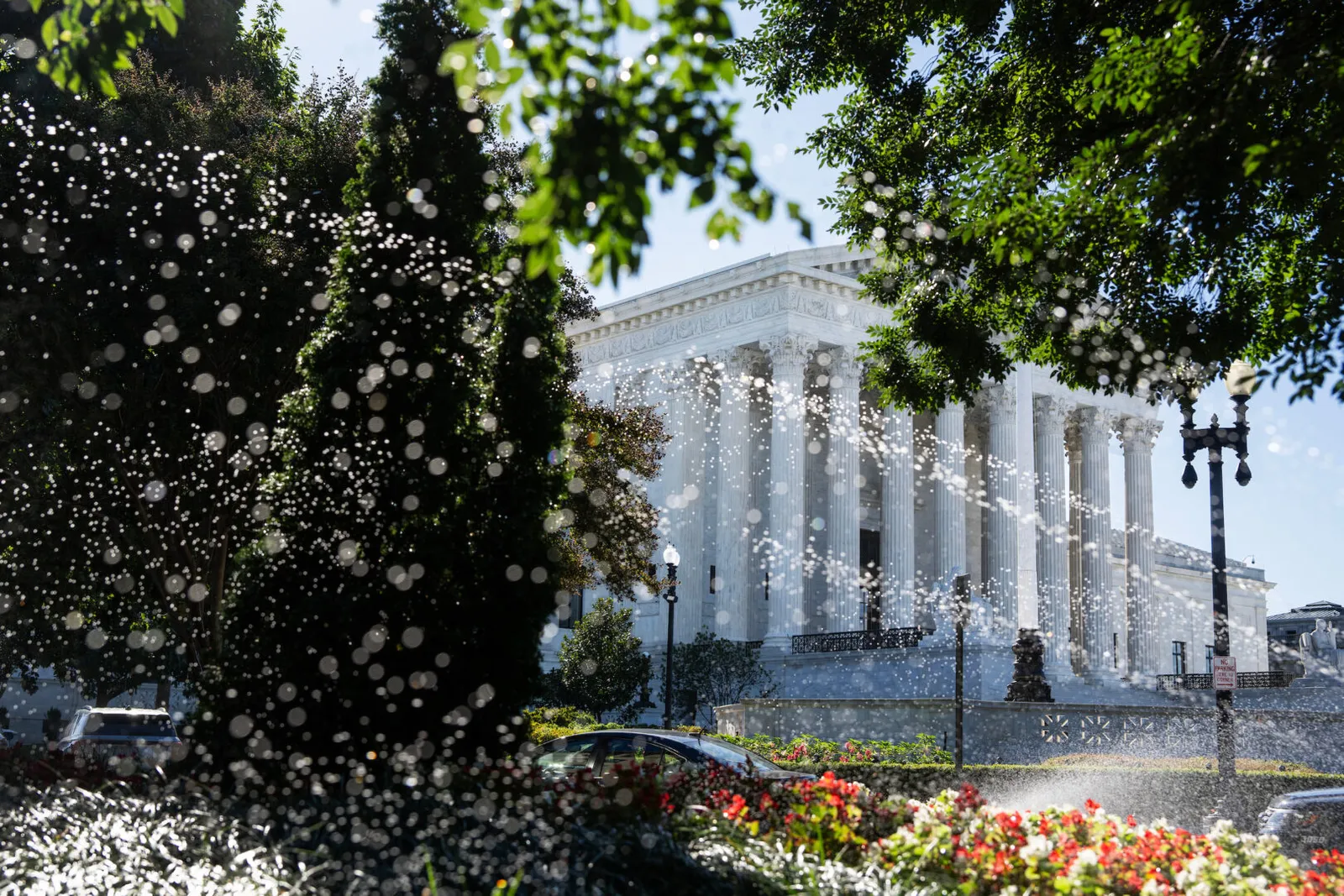 Photo: Roll Call
Key points
The Trump administration asked the Supreme Court to pause a lower court order directing the Federal Communications Commission to resolve a dispute over political advertising rates by Friday.
The Trump administration asked the Supreme Court on Thursday to step into a lower court dispute over television advertising rates paid by political candidates and joint fundraising committees weeks before the midterm elections. The application asked the justices to set aside a 2-1 ruling issued Wednesday by the U.S. Court of Appeals for the 4th Circuit which directed the Federal Communications Commission to resolve by Friday a dispute over the agency policy to extend the low advertising rates used by political candidates to party coordinated advertising and joint fundraising committees.
Thursday application application called the lower court order a flagrant abuse of the courts authority. The application noted this is the second time the justices have been asked to weigh in on the case when last month they stepped in to remove the 4th Circuit pause of the Federal Communications Commission rules. The application said the justices should set aside the order because it is entirely reasonable to refrain from issuing a decision on campaign-finance rules in the middle of the election season.
The filing details the request
The case started in March when the Federal Communications Commission Media Bureau issued guidance for the rates political candidates would pay in the 60 days leading up to the primary general elections nationwide. The guidance also extended those guaranteed low rates to party-coordinated advertising and joint fundraising committees for the first time. Democratic Senate candidates and others challenged that guidance in federal court seeking to keep the lower rates to candidates only. A separate challenge is still proceeding within an Federal Communications Commission dispute process.
In August the 4th Circuit agreed with the candidates and found the law likely barred the expansion of guaranteed low ad rates. The Trump administration asked the justices to step in and the Supreme Court ruled that the court likely did not have the ability to hear the case while the Federal Communications Commission dispute process was ongoing. The original August ruling by the 4th Circuit is still paused keeping the Federal Communications Commission policy in place.
On Wednesday the 4th Circuit issued an order that accused the agency of dragging its feet on the dispute and public comment process in an effort to avoid having judges weigh in on the rates before the election. The order directed the agency to finalize the dispute process by Friday. Once the Federal Communications Commission process concluded the 4th Circuit could rule. Thursday's application asked the justices to pause the 4th Circuit ruling and let the new policy remain in place through the election.
The case began in March
U.S. Solicitor General D. John Sauer asked the court to block an order by the U.S. Court of Appeals for the 4th Circuit directing the Federal Communications Commission to decide by noon on Friday October 9 on a challenge to its public notice that would extend the favorable rates to parties and committees. Sauer wrote that the court of appeals had seriously erred in trying to short-circuit the Commission deliberations under federal election law candidates for federal office can purchase advertising time at preferential rates during the 45-day-period before the primary election and the 60-day-period before the general.
On March 30 the Federal Communications Commission Media Bureau issued a public notice indicating that political parties and joint fundraising committees should also receive the favorable rates. Sen. Jon Ossoff of Georgia and three other Democrats who are candidates for the House or Senate went to the full Federal Communications Commission on April 29 asking it to review the public notice. Approximately six weeks later when the agency had not yet acted on their request the candidates went to federal court where they argued that the public notice was inconsistent with federal election laws.
A divided panel of the 4th Circuit agreed. Writing for the majority Judge Robert King held that federal law is unambiguous. it gives the preferential rates only to a candidate for his or her personal use which does not extend to a candidate mere authorization of someone else use use. The National Republican Senatorial Committee and the National Republican Congressional Committee which had joined the case went to the Supreme Court in late August asking the justices to intervene. They contended among other things that the 4th Circuit did not have the power to consider the candidates challenge in the first place because the public notice was merely a staff-level document that is neither final nor an agency action.
The court ordered FCC action
In a four-page unsigned opinion the court stressed that the committees were likely to prevail on their argument that the 4th Circuit did not have the power to review the public notice before the Federal Communications Commission had acted on the candidates petition for review. The Communications Act contemplates that an aggrieved party will file an application for review with the Commission that the Commission will resolve that application by order and that public notice of that order will issue before an aggrieved party may petition for further review in federal court. Because the candidates application for review was pending when they filed their petition for review the court wrote the Fourth Circuit likely lacked statutory jurisdiction to address their challenge. Only Justice Ketanji Brown Jackson publicly dissented.
When the case returned to the lower court the candidates sought an order instructing the Federal Communications Commission to act on their petition for review of the public notice. A divided panel granted that request on Wednesday directing the Federal Communications Commission to issue its decision by noon on Friday. The Federal Communications Commission came to the Supreme Court on Thursday morning asking the justices to intervene. Sauer called the panel order an egregious intrusion into the nation electoral process that should not be allowed to stand. The order is inappropriate in this case he continued because the candidates delayed for months in seeking such relief and because judicial intervention at this late date could upend campaign-finance rules in the critical weeks leading up to the midterms.
Frequently asked questions
What did the Trump administration ask the Supreme Court to do?
The administration asked the justices to set aside a 2-1 ruling issued Wednesday by the U.S. Court of Appeals for the 4th Circuit which directed the Federal Communications Commission to resolve by Friday a dispute over the agency policy to extend the low advertising rates used by political candidates to party coordinated advertising and joint fundraising committees.
When did the case start and what triggered it?
The case started in March when the Federal Communications Commission Media Bureau issued guidance for the rates political candidates would pay in the 60 days leading up to the primary general elections nationwide. The guidance also extended those guaranteed low rates to party-coordinated advertising and joint fundraising committees for the first time.
What is the current status of the 4th Circuit ruling?
The original August ruling by the 4th Circuit is still paused keeping the Federal Communications Commission policy in place. Thursday application application asked the justices to pause the 4th Circuit ruling and let the new policy remain in place through the election.
How this story was checked
- Fact-checked against 3 cited pages. 31 figures, dates and quotations in this story were found on the pages it cites; 1 passage that could not be checked was cut before publication.
- Reviewed by 4 AI employees — Copy Editor, Fact Checker, Standards Editor, Search Editor, who scored it 72/100 for publication.
Pages checked (3 of 3)
- rollcall.comread and checked
- scotusblog.comread and checked
- upi.comread and checked
Written by Kaer from public reporting. Checked 8 October 2026.


